Bird
Bird
Peregrine Falcon
Falco peregrinus
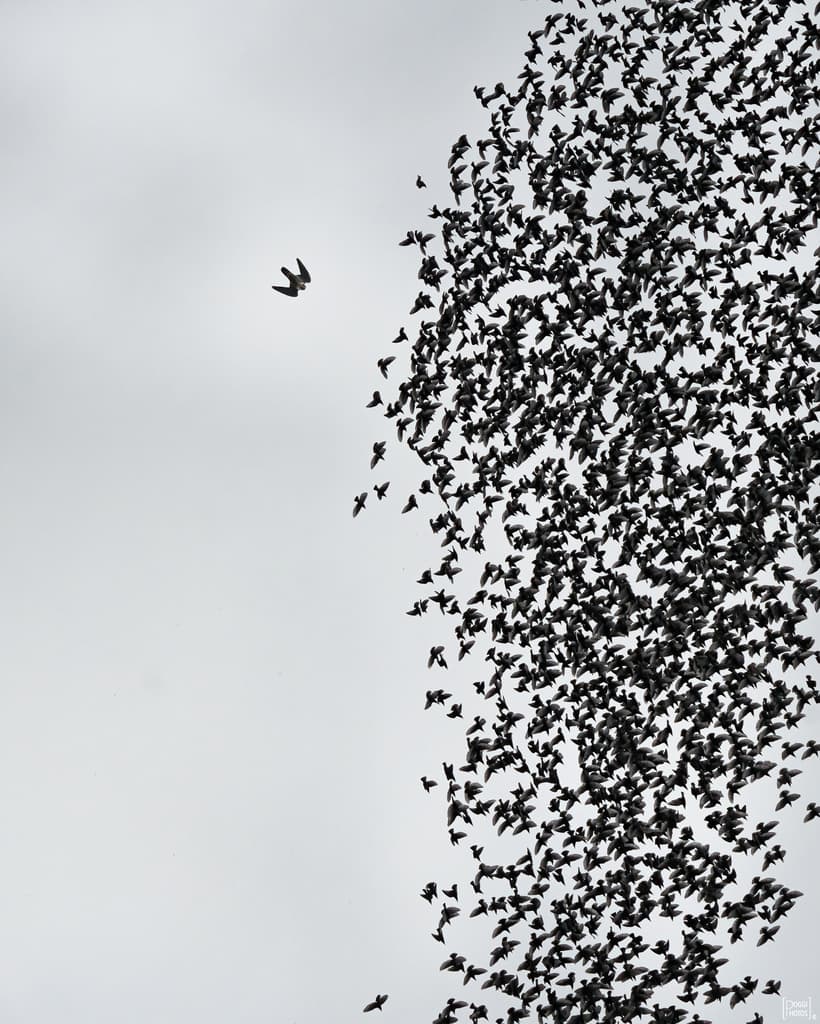
Photo: Ron Knight · Beachy Head, Sussex, UK (CC BY 2.0)
The Peregrine Falcon is the fastest animal on Earth, capable of reaching speeds exceeding 320 km/h in a hunting stoop, and one of the most widely distributed birds in the world.
The Peregrine Falcon is the fastest animal on Earth, capable of reaching speeds exceeding 320 km/h in a hunting stoop, and one of the most widely distributed birds in the world. In Trinidad and Tobago it occurs as a non-breeding seasonal visitor, present from roughly August to April as birds from North American and Arctic breeding populations move south for the northern winter. It hunts shorebirds, pigeons, and wading birds across T&T's coastlines and wetlands, and is one of the most sought-after sightings among birdwatchers visiting the islands.
Identification
The Peregrine Falcon measures 34 to 50 cm with a wingspan of 89 to 120 cm, females noticeably larger than males. The upperparts are slate-blue to dark grey, the underparts pale with dark barring. The head has a distinctive dark "helmet" pattern with broad black moustachial stripes descending from the eye, giving a masked appearance. The tail is barred grey and white. Juveniles are browner above with streaked underparts. In flight the pointed wings and relatively short tail are characteristic of all falcons; the peregrine is stockier and broader-winged than the much smaller Bat Falcon also present in T&T.
Hunting and Flight
The Peregrine Falcon hunts almost exclusively in the air, typically by climbing high above its prey before folding its wings and diving in a near-vertical stoop that generates extraordinary speed. It strikes prey with closed talons, stunning or killing the bird outright. In level flight the wingbeat is rapid and powerful. Primary prey in T&T includes shorebirds such as sandpipers and plovers, pigeons, and occasionally bats. It may also pirate prey from other raptors. Peregrines are intensely territorial and will vigorously defend a hunting territory during their T&T wintering period.
Status in T&T
The Peregrine Falcon is a non-breeding visitor to Trinidad and Tobago from approximately August to April, with occasional year-round records. It is most often seen along coastlines, at wetland sites such as Caroni and Nariva, and near coastal towns where pigeon populations are high. The species is listed on CITES Appendix I and is fully protected under the Conservation of Wild Life Act in T&T. Globally it recovered strongly after near-collapse caused by organochlorine pesticides (DDT) in the mid-20th century, and populations are now stable.
Threats
- Organochlorine and rodenticide accumulation through prey
- Habitat disturbance at breeding cliffs (outside T&T)
- Illegal shooting and falconry trapping