Bird
Bird
Pauraque
Nyctidromus albicollis
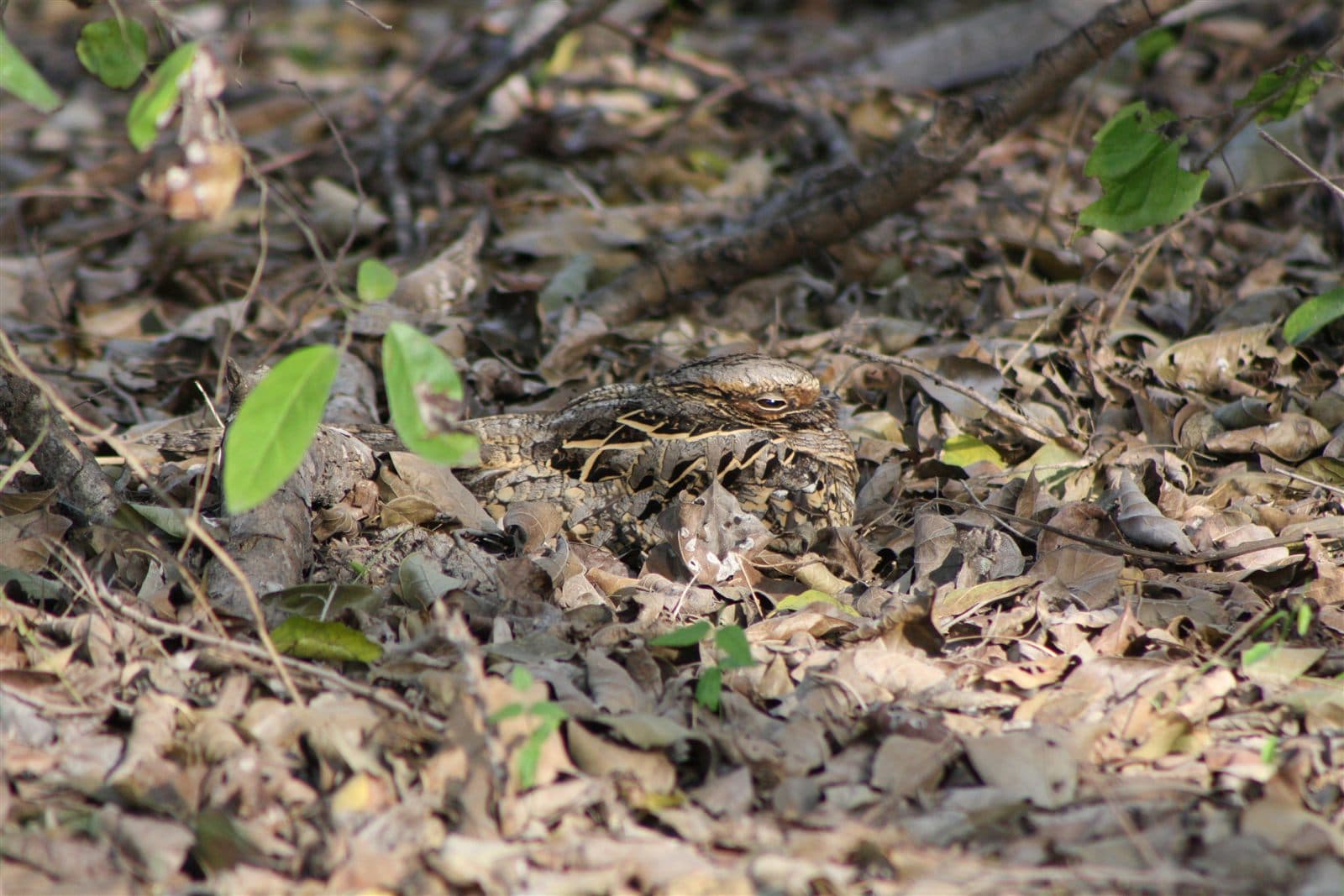
The Pauraque is Trinidad's most familiar nightjar, most often revealed at night by the twin red glow of its eyeshine caught in a flashlight or car headlights along forest tracks and roadsides.
The Pauraque is Trinidad's most familiar nightjar, most often revealed at night by the twin red glow of its eyeshine caught in a flashlight or car headlights along forest tracks and roadsides. Its distinctive, whistled call is one of the most commonly heard night sounds in T&T's forests and semi-open country.
Identification
A medium-sized nightjar around 22 to 28 cm long, with intricately patterned grey, brown, and black plumage that provides near-perfect camouflage against leaf litter and bare ground by day. In flight, males show a broad white band across the outer wing and white outer tail feathers, both largely concealed at rest. The eyes reflect a bright orange-red eyeshine when caught in torchlight, the most reliable way to locate the bird at night. It typically rests directly on the ground or on low, open perches such as tracks and trails.
Ecology
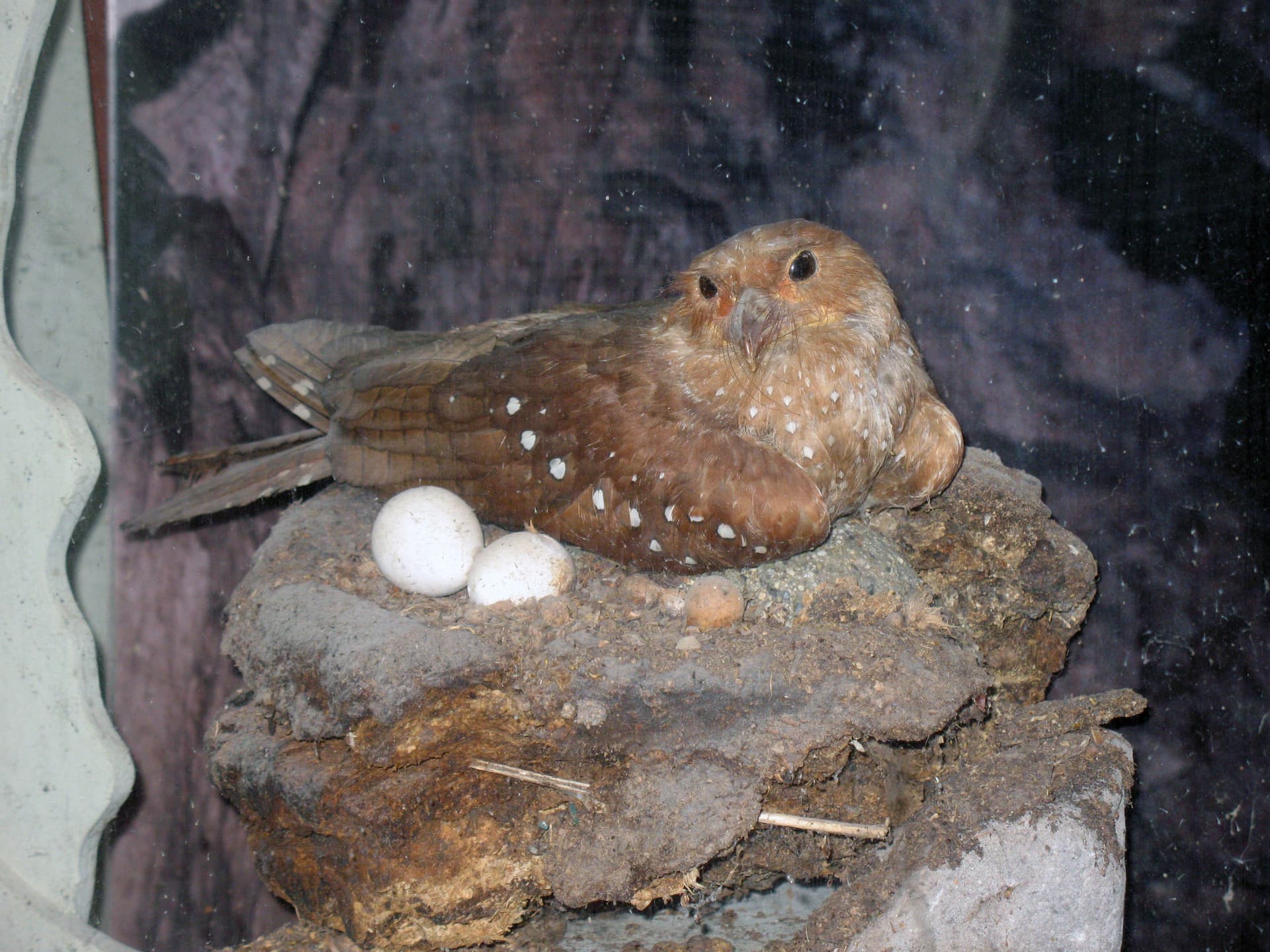
Strictly nocturnal and crepuscular, the Pauraque hunts moths, beetles, and other flying insects, sallying from a ground perch or low branch and returning to the same spot after each capture. By day it relies entirely on camouflage, remaining motionless on leaf litter or bare soil where its cryptic plumage renders it almost invisible until flushed at extremely close range. The male's call, a clear, whistled "pur-WEE-oo" often rendered locally as its name, is delivered repeatedly from the ground at dusk and through the night, especially in the breeding season. No nest is built; eggs are laid directly on bare ground or leaf litter.
Status in T&T
Common and widespread on Trinidad in forest edge, secondary growth, plantations, and semi-open country with bare ground or leaf litter for roosting, and also present on Tobago. It is not threatened and adapts well to disturbed and agricultural landscapes. It is protected under the Conservation of Wildlife Act and is not a game species; the main risk to the species is vehicle strikes, as birds frequently rest on quiet roads and tracks at night.
Threats
- Vehicle strikes on roads and tracks used as night roosts
- Loss of leaf-litter ground habitat to development
- Domestic cat and dog predation near settled areas