Bird
Bird
Oilbird (Diablotin)
Steatornis caripensis
The Oilbird is one of the most extraordinary birds in the world and one of Trinidad's most celebrated wildlife spectacles.
The Oilbird is one of the most extraordinary birds in the world and one of Trinidad's most celebrated wildlife spectacles. The only nocturnal, fruit-eating bird known to navigate by echolocation, it roosts and nests in large colonies deep inside limestone caves, most famously in Dunston's Cave at the Asa Wright Nature Centre in the Arima Valley. Its name derives from a historic practice by which indigenous peoples and early colonists harvested the fat oil-rich chicks as a source of cooking oil and lamp fuel.
Identification
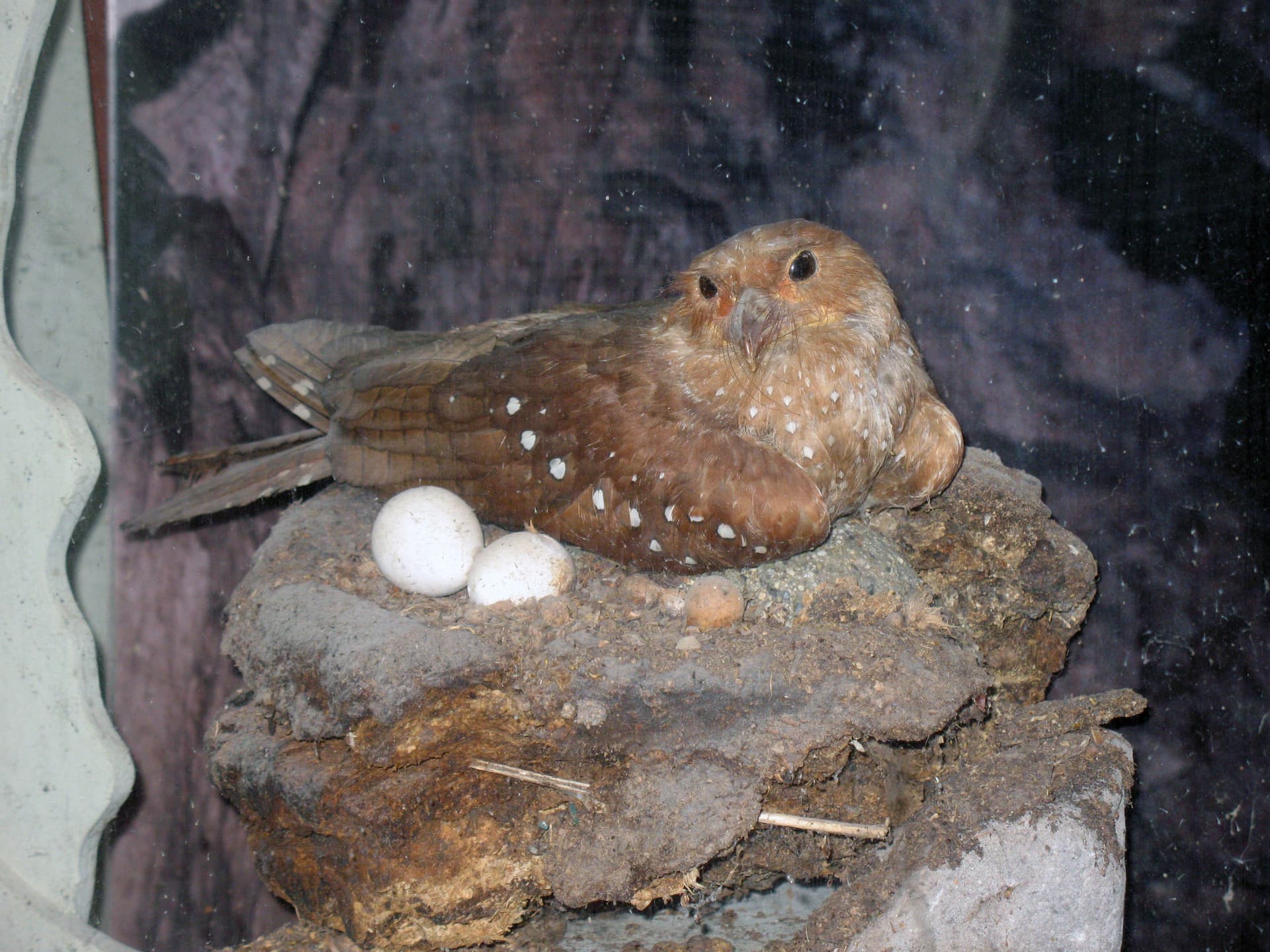
The Oilbird is a large, distinctive bird measuring 40 to 49 cm, with rich chestnut-brown plumage spotted with white, a broad rounded wing, a strongly hooked bill, and large, forward-facing eyes adapted for low-light vision. In flight the wings appear long and hawk-like. Inside its cave roosts, the Oilbird produces a constant stream of harsh, screeching calls and rapid series of low-frequency clicks used for echolocation, making colonies extraordinarily loud. It is the sole member of the family Steatornithidae and has no close relatives.
Ecology
Oilbirds are strict frugivores, feeding exclusively on the oily fruits of palms, laurels, and related trees that they locate by smell as well as sight during nocturnal foraging flights that may extend 100 km or more from the roost. They carry fruit in the bill back to the colony and regurgitate seeds, making them important long-distance seed dispersers for large-fruited forest trees. Nesting takes place on ledges deep inside caves; the mud-and-regurgitate nest platform is added to over successive years. Chicks accumulate fat deposits that once pushed them well above adult weight, making them a historically significant food source. Echolocation clicks produced in caves are audible to the human ear, distinguishing Oilbirds from most other echolocating animals.
Trinidad and Conservation
Trinidad holds one of the most accessible Oilbird colonies in the world at Dunston's Cave, Asa Wright Nature Centre, which has been continuously monitored since the mid-20th century and has become a flagship site for birding tourism. The species is fully protected under the Conservation of Wild Life Act and may not be taken, disturbed, or captured. The colony's long-term stability depends on maintaining the integrity of the surrounding Northern Range forest, which provides the fruit resources supporting foraging birds across a vast nocturnal range.
Threats
- Disturbance of cave roost sites
- Loss of Northern Range forest cover
- Reduction in fruit-bearing tree diversity
- Historical harvesting of chicks