Bird
Bird
Ochre-bellied Flycatcher
Mionectes oleagineus
The Ochre-bellied Flycatcher is a small, plain, easily overlooked bird of Trinidad's forest understorey, notable for a lekking mating system unusual among small flycatchers, in which males gather to display and sing from favoured perches to attract females.
The Ochre-bellied Flycatcher is a small, plain, easily overlooked bird of Trinidad's forest understorey, notable for a lekking mating system unusual among small flycatchers, in which males gather to display and sing from favoured perches to attract females.
Identification
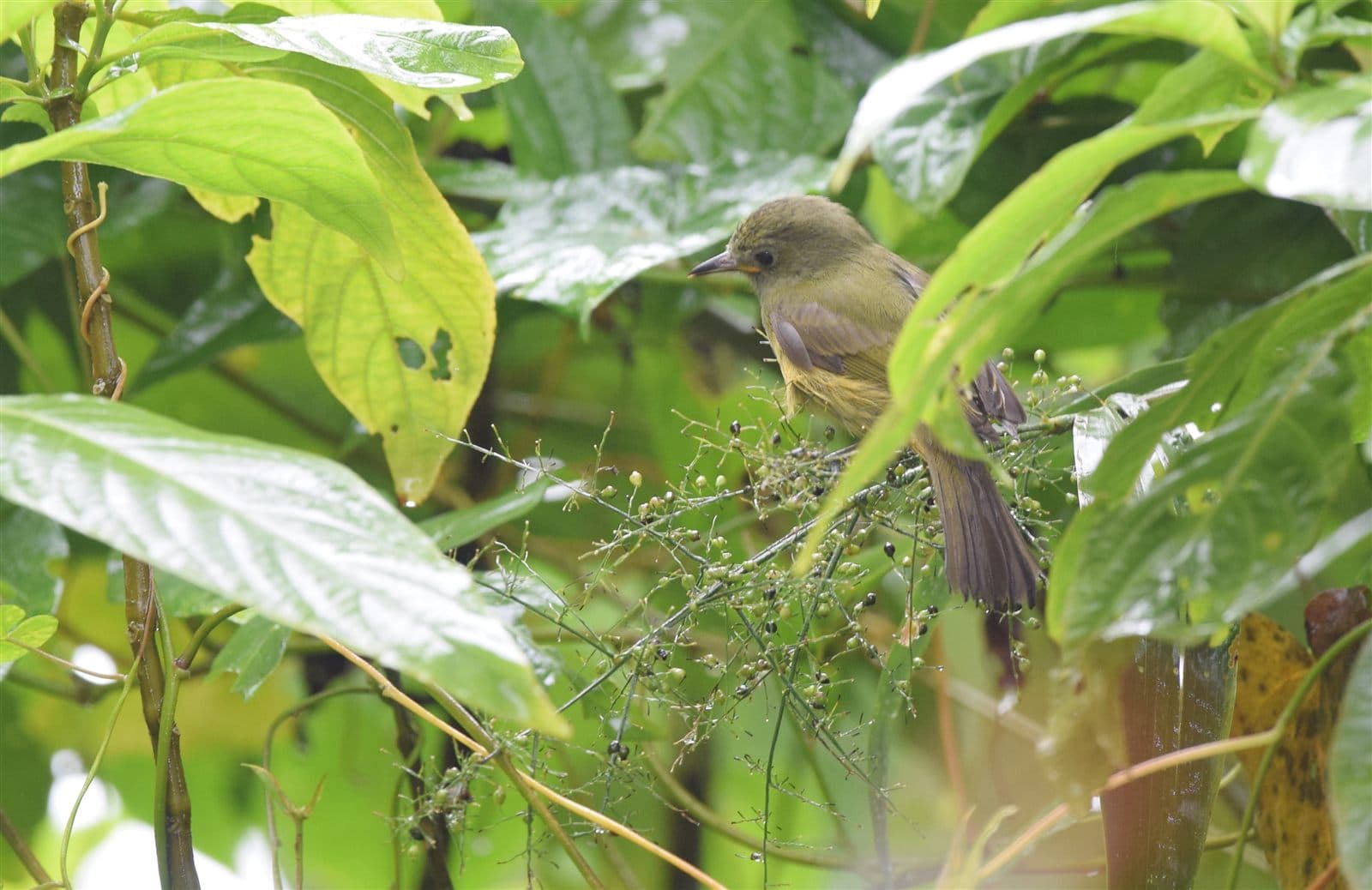
A small flycatcher around 12 to 13 cm long, olive-green above with a warm ochre-buff wash on the belly, from which the common name derives, and lacking the strong facial markings or wing bars typical of many small flycatchers. Its plain, understated plumage and quiet, unobtrusive habits make it easy to overlook against dense understorey foliage.
Ecology
The Ochre-bellied Flycatcher feeds on small fruit and insects, foraging quietly through the forest understorey and often at forest edge, gleaning food from foliage rather than through active aerial sallying typical of many flycatchers. Unusually for the family, males display at small leks, performing wing-snapping displays and vocalisations from low perches to attract females, who alone build the nest and raise the young without male involvement.
Status in T&T
Common in forest understorey and forest edge across Trinidad. It is not threatened. It is protected under the Conservation of Wildlife Act and is not a game species.
Threats
- Forest understorey clearance and degradation