Mammal
Mammal
Neotropical River Otter
Lontra longicaudis
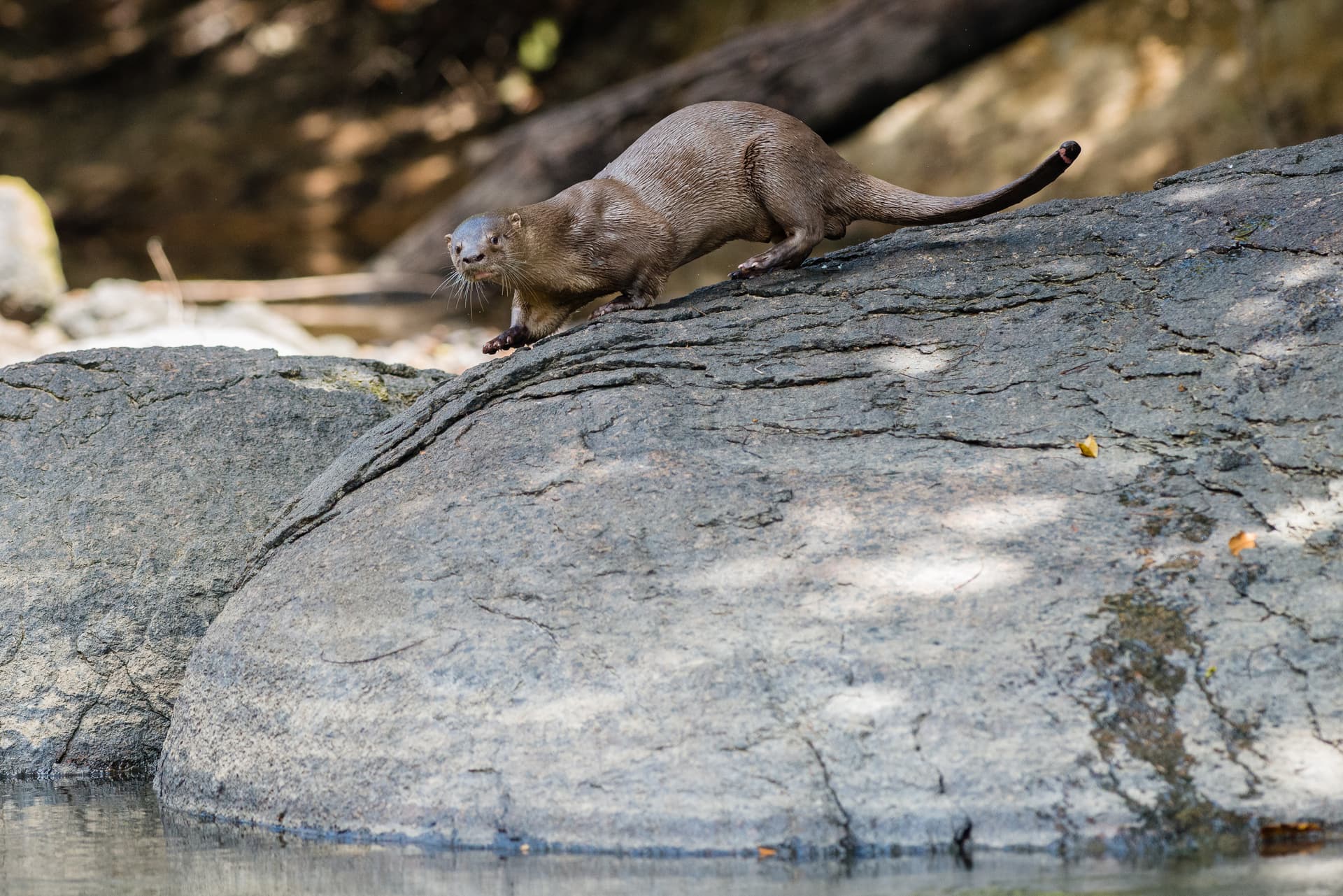
The Neotropical River Otter, known locally in Trinidad as the 'water dog', is a shy, semi-aquatic carnivore of the island's clean, fast-flowing rivers and forested streams.
The Neotropical River Otter, known locally in Trinidad as the 'water dog', is a shy, semi-aquatic carnivore of the island's clean, fast-flowing rivers and forested streams. It is the only otter native to Trinidad and Tobago, though its presence is confirmed only in Trinidad. Sleek and elusive, it is rarely seen and serves as an indicator of healthy freshwater systems.
Identification
The Neotropical River Otter has a long, streamlined body covered in short, dense, shiny fur that is dark grayish-brown above and paler, often whitish, around the muzzle, throat and chest. Adults measure roughly 90 to 150 cm in total length, with the thick, muscular tail making up about a third of that.
The rounded head, small ears, webbed feet and powerful tapering tail are all adaptations to an aquatic life. In the water it moves with fluid, undulating strokes, and it is often detected by tracks, droppings (spraints) or a fleeting glimpse rather than prolonged sightings.
Ecology
This otter is a freshwater specialist, favouring clean, well-oxygenated, fast-flowing rivers and forested streams, as well as coastal wetlands and estuaries. It dens in burrows along riverbanks, beneath tree roots or among boulders, and tends to be solitary and secretive.
Its diet is dominated by fish and freshwater crustaceans such as crayfish, supplemented opportunistically by crabs, large insects, amphibians and small vertebrates. Because it depends on unpolluted water with abundant prey, a thriving otter population signals a healthy river system.
Status in T&T
In Trinidad the Neotropical River Otter persists in the rivers and streams of the Northern Range, including the Cumaca, Madamas, Grande Riviere, Matelot and Matura watersheds, along with associated wetlands. Its presence in Tobago has not been confirmed.
Globally the species is listed as Near Threatened on the IUCN Red List and is afforded the highest level of trade protection under CITES Appendix I. In Trinidad it is threatened chiefly by water pollution, sedimentation and the loss or degradation of riparian habitat through development, quarrying and agriculture.