Fish
Fish
Flying Fish
Hirundichthys affinis
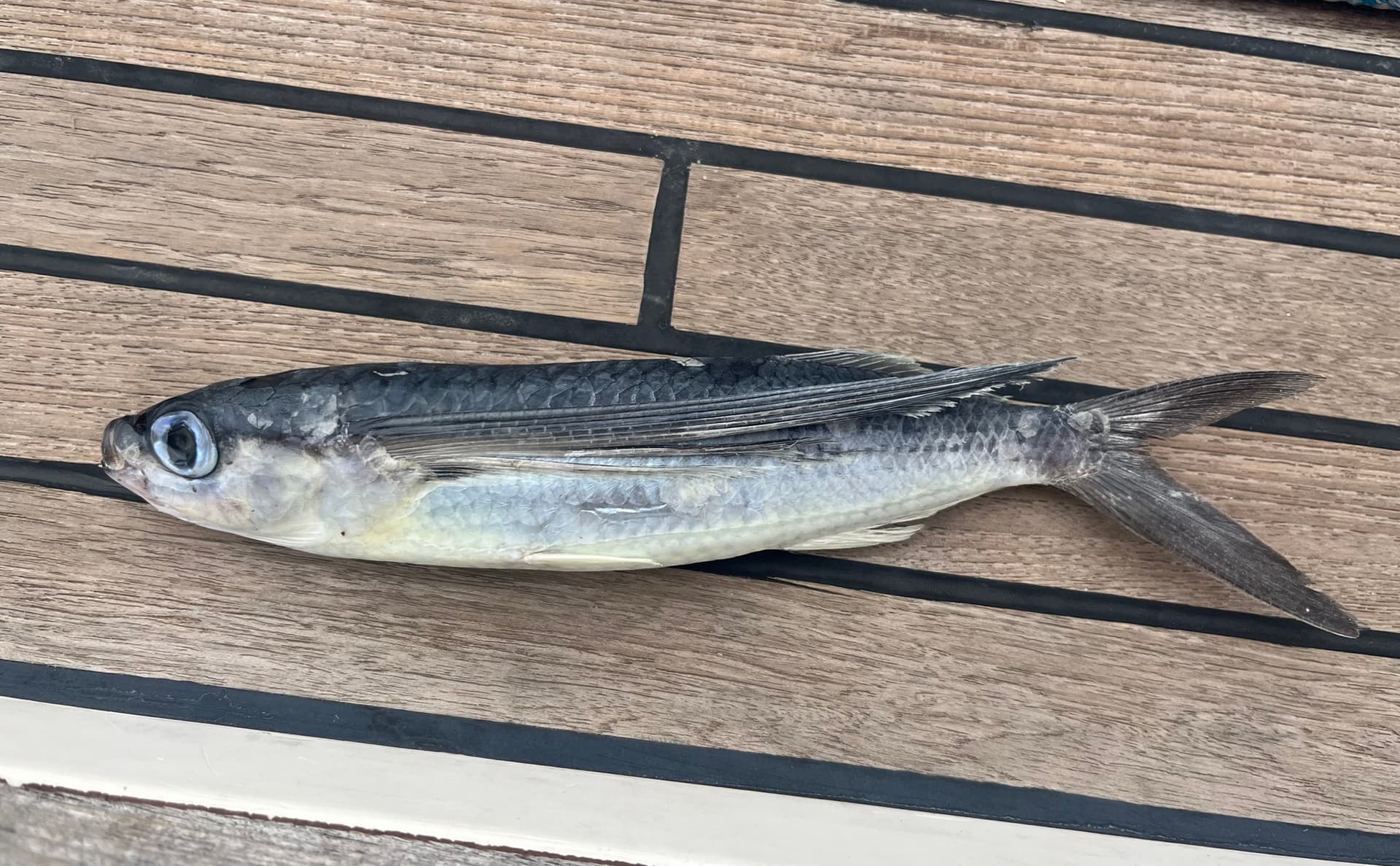
The Flying Fish is an iconic species of the waters around Tobago, capable of gliding well above the sea surface on greatly enlarged, wing-like pectoral fins to escape predators, and is celebrated locally as a signature food fish.
The Flying Fish is an iconic species of the waters around Tobago, capable of gliding well above the sea surface on greatly enlarged, wing-like pectoral fins to escape predators, and is celebrated locally as a signature food fish.
Identification
A slender, streamlined fish around 25 to 30 cm long, silvery-blue above and white below, with greatly enlarged pectoral fins that extend well past the body when spread, functioning as gliding wings. The lower lobe of the tail fin is elongated and provides thrust for launching from the water.
Behaviour
When pursued by predators such as dolphinfish or tuna, it builds speed underwater before breaking the surface and gliding on outstretched pectoral fins, sometimes covering tens of metres and using rapid tail beats against the water to extend or redirect a glide. It feeds on plankton near the surface of open, offshore waters and travels in loose schools.
Status in T&T
Abundant in the offshore waters around Tobago, historically and culturally significant as the basis of Tobago's flying fish fishery and a defining local dish. Not considered globally threatened, though subject to fishing pressure and occasional disputes over shared regional fishing grounds.
Threats
- Fishing pressure
- Disputes over shared regional fishing grounds