Invertebrate
Invertebrate
Morpho Butterfly
Morpho helenor
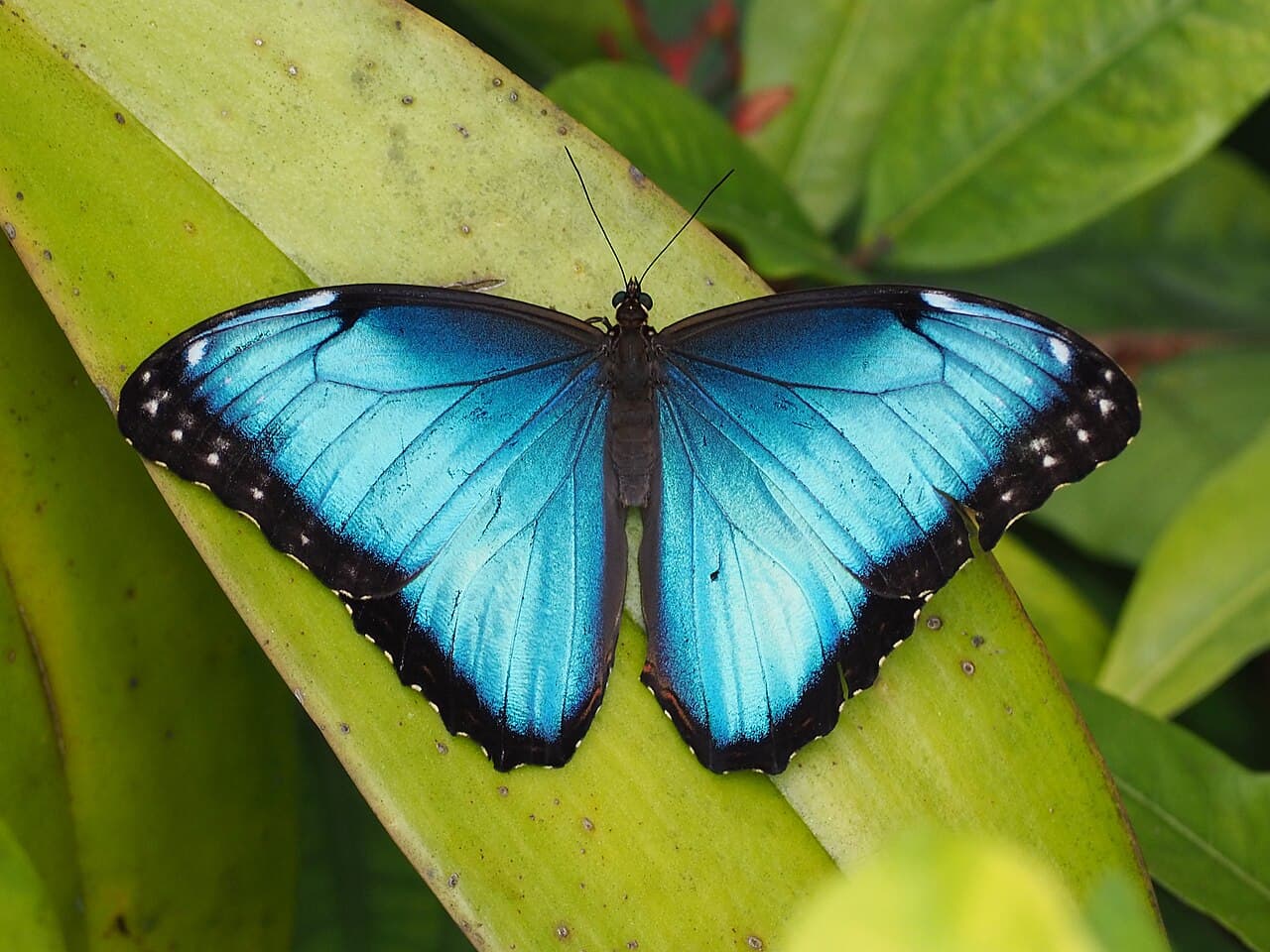
The Morpho Butterfly is among the most spectacular insects in Trinidad and Tobago's forests, its dazzling iridescent blue wings flashing brilliantly in sunlit forest clearings and along trails, then vanishing instantly when it lands and folds them shut.
The Morpho Butterfly is among the most spectacular insects in Trinidad and Tobago's forests, its dazzling iridescent blue wings flashing brilliantly in sunlit forest clearings and along trails, then vanishing instantly when it lands and folds them shut.
Identification
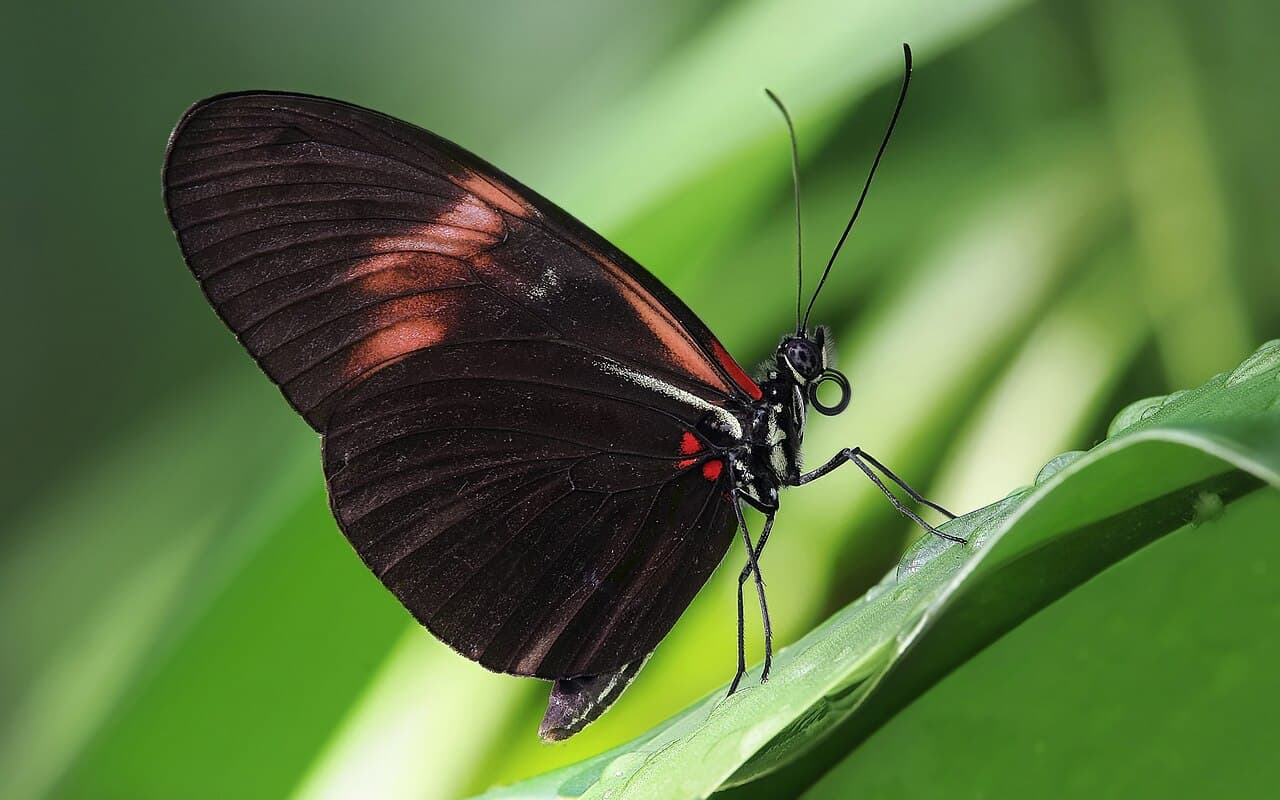
A large butterfly with a wingspan of 12 to 20 cm, the upper wing surface a brilliant iridescent blue produced entirely by microscopic light-scattering scale structures (structural colour) rather than pigment, meaning the true colour of the wing tissue underneath is actually dark brown. The undersides, seen only when the wings are folded at rest, are cryptic brown with large eyespots that provide effective camouflage and may startle potential predators.
Ecology
Adults fly with a distinctive slow, bounding, unpredictable flight pattern along forest trails and streams, thought to make them harder for birds to intercept despite their conspicuous colour in flight. They feed on fermenting fruit, tree sap, and occasionally animal dung rather than flower nectar, using a proboscis suited to liquid rather than nectar feeding. Caterpillars feed on a range of forest legume host plants and are themselves camouflaged and often gregarious, in contrast to the strikingly visible adults.
In Trinidad and Tobago
Common in forested areas on both islands, a highlight for ecotourists and photographers thanks to its dramatic colour-shifting flash of blue in flight, which appears and disappears instantly depending on viewing angle relative to the sun.
Threats
- Forest clearance
- Collection for the butterfly trade