Invertebrate
Invertebrate
Helicopter Damselfly
Megaloprepus caerulatus
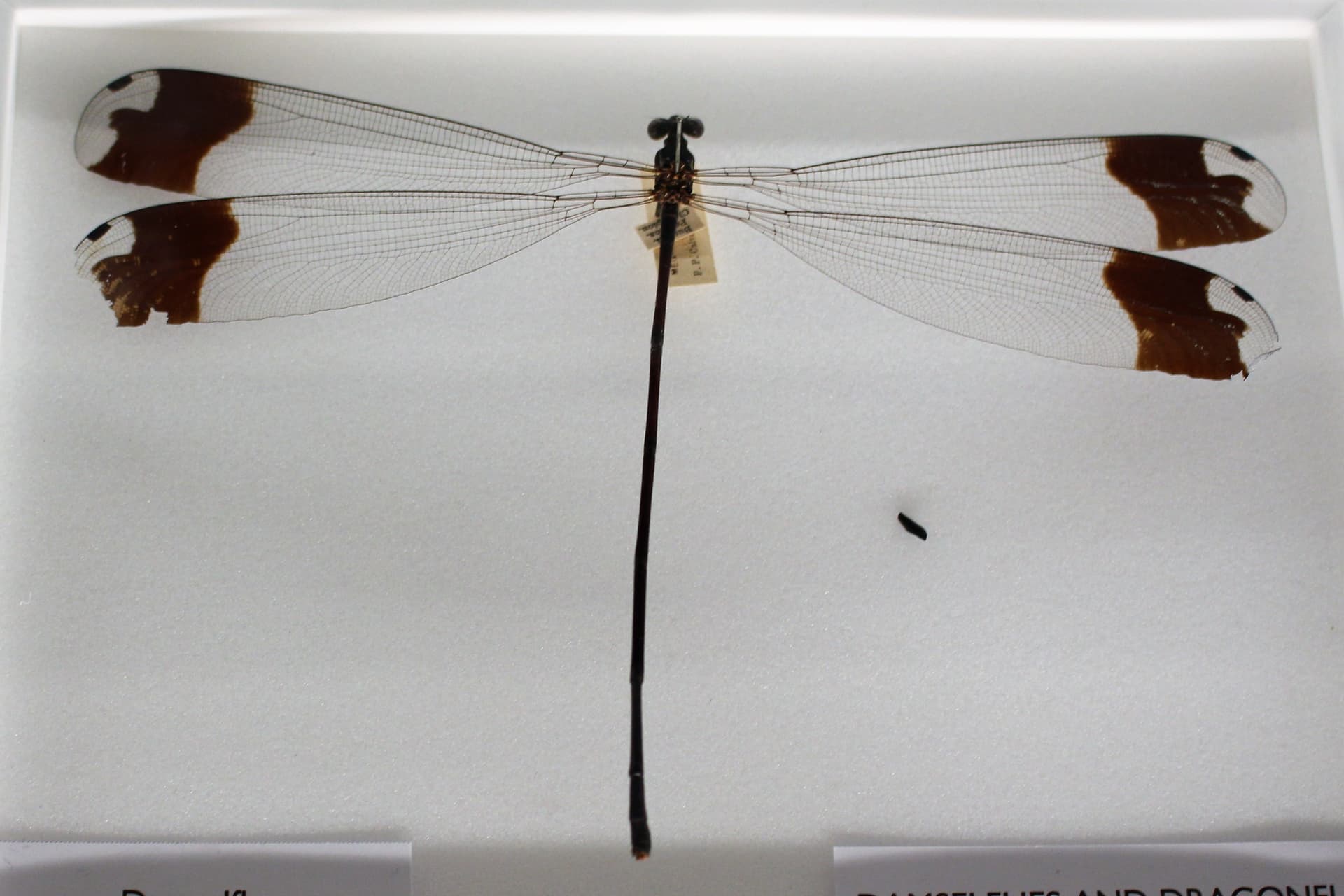
The Helicopter Damselfly is one of the largest damselflies in the world, an enormous, slow-flying forest insect of Trinidad that hunts spiders directly out of their own webs in a remarkably deliberate, hovering flight.
The Helicopter Damselfly is one of the largest damselflies in the world, an enormous, slow-flying forest insect of Trinidad that hunts spiders directly out of their own webs in a remarkably deliberate, hovering flight.
Identification
An exceptionally large damselfly with a wingspan that can exceed 18 cm, among the largest of any damselfly on Earth. The body is metallic blue-green, and the wings carry broad, dark blue-black bands, particularly striking in males, with a slow, fluttering flight quite unlike the fast darting flight of most dragonflies and damselflies.
Behaviour
Flies with a slow, hovering, helicopter-like flight through the forest understorey, specialising in plucking web-building spiders directly from their webs, a highly unusual hunting strategy among odonates. Breeding takes place in water-filled tree holes, where the larvae develop, sometimes as top predators within these small, isolated aquatic habitats.
Status in T&T
Found in mature, undisturbed forest across Trinidad with abundant tree holes for breeding. Not considered threatened, though dependent on old-growth forest structure. It is protected as native wildlife under the Conservation of Wildlife Act.
Threats
- Loss of old-growth forest with abundant tree-hole breeding sites