Invertebrate
Invertebrate
Mangrove Oyster
Crassostrea rhizophorae
The Mangrove Oyster grows in dense clusters attached to the prop roots of red mangroves in Trinidad and Tobago's coastal wetlands, forming an important local fishery and a natural water filter for estuarine ecosystems.
The Mangrove Oyster grows in dense clusters attached to the prop roots of red mangroves in Trinidad and Tobago's coastal wetlands, forming an important local fishery and a natural water filter for estuarine ecosystems.
Identification
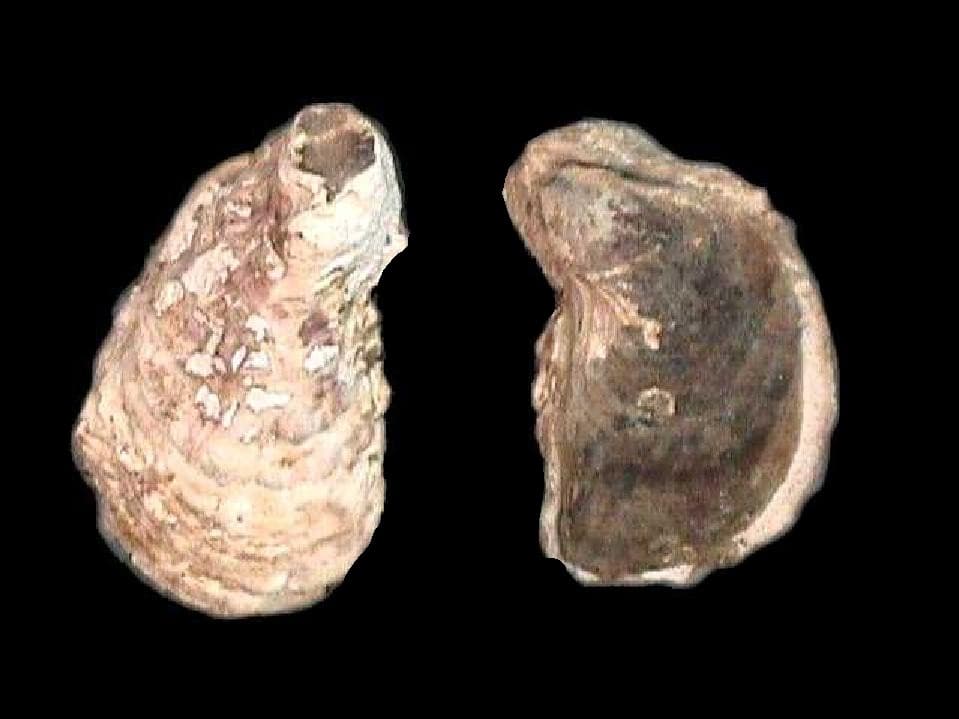
An irregularly shaped bivalve with a rough, greyish, elongated shell, typically found cemented permanently in dense clusters to mangrove prop roots and other hard intertidal surfaces, with individual oysters often overlapping and fusing together over years of growth.
Ecology
A filter feeder, drawing large volumes of estuarine water through its gills to extract plankton and suspended organic matter, a process that plays a measurable role in maintaining water clarity within mangrove creeks. Dense clusters attached to mangrove prop roots also add three-dimensional habitat structure, providing shelter and surface area for other small invertebrates, juvenile fish, and algae.
In Trinidad and Tobago
Harvested traditionally from mangrove creeks in Trinidad, notably around the Caroni Swamp and other coastal wetlands, supporting small-scale local fisheries and a long-standing tradition of hand-harvesting oysters directly from exposed prop roots at low tide.
Threats
- Mangrove clearance
- Overharvesting
- Water pollution affecting filter feeders