Bird
Bird
Lineated Woodpecker
Dryocopus lineatus
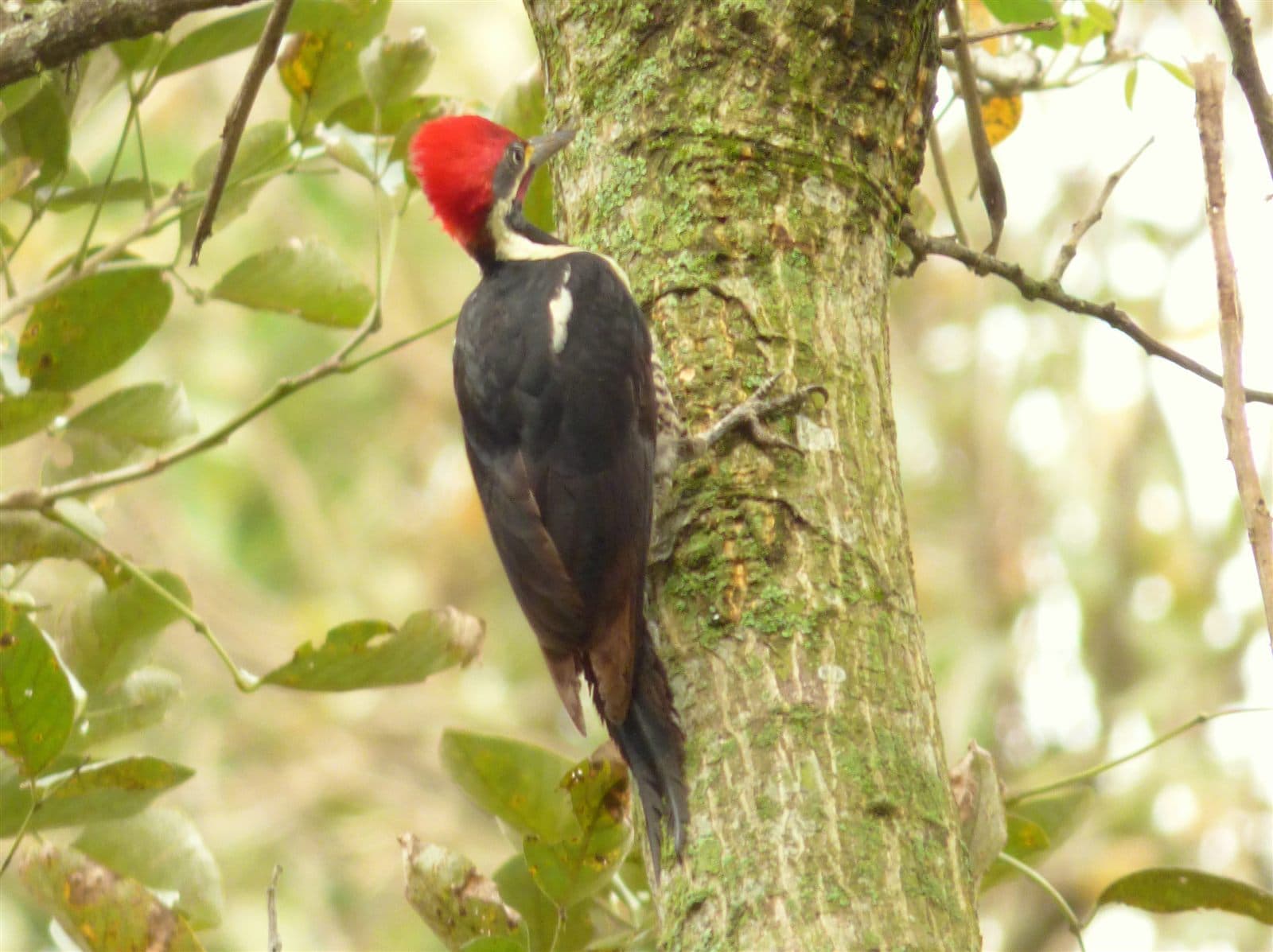
The Lineated Woodpecker is a large, dramatic, red-crested woodpecker of Trinidad's forests, closely resembling the famous Pileated Woodpecker of North America and delivering powerful, resonant drumming that carries widely through the forest canopy.
The Lineated Woodpecker is a large, dramatic, red-crested woodpecker of Trinidad's forests, closely resembling the famous Pileated Woodpecker of North America and delivering powerful, resonant drumming that carries widely through the forest canopy.
Identification
A large woodpecker around 31 to 36 cm long, mostly black with bold white striping down the sides of the neck and a prominent, pointed, bright red crest running the length of the crown. Males show a red malar stripe extending forward from the bill that females lack, and the underparts show fine black-and-white barring. Its size and colouring make it one of the most conspicuous woodpeckers in T&T forests.
Ecology
The Lineated Woodpecker forages by excavating deeply into dead and decaying wood for wood-boring beetle larvae, ants, and termites, using powerful blows capable of tearing large sections of bark and rotten wood from tree trunks. Its loud, resonant drumming and calls carry over considerable distances through the forest, used to advertise territory and attract or communicate with a mate. Nests are excavated as a large cavity in a dead tree trunk, often reused across seasons.
Status in T&T
Found in mature and secondary forest across Trinidad, tolerating moderately disturbed woodland provided sufficient large dead trees remain for foraging and nesting. It is not threatened. It is protected under the Conservation of Wildlife Act and is not a game species.
Threats
- Loss of large dead trees for foraging and nest cavities
- Forest fragmentation