Reptile
Reptile
Large Coral Snake (Coreuil)
Micrurus lemniscatus diutius
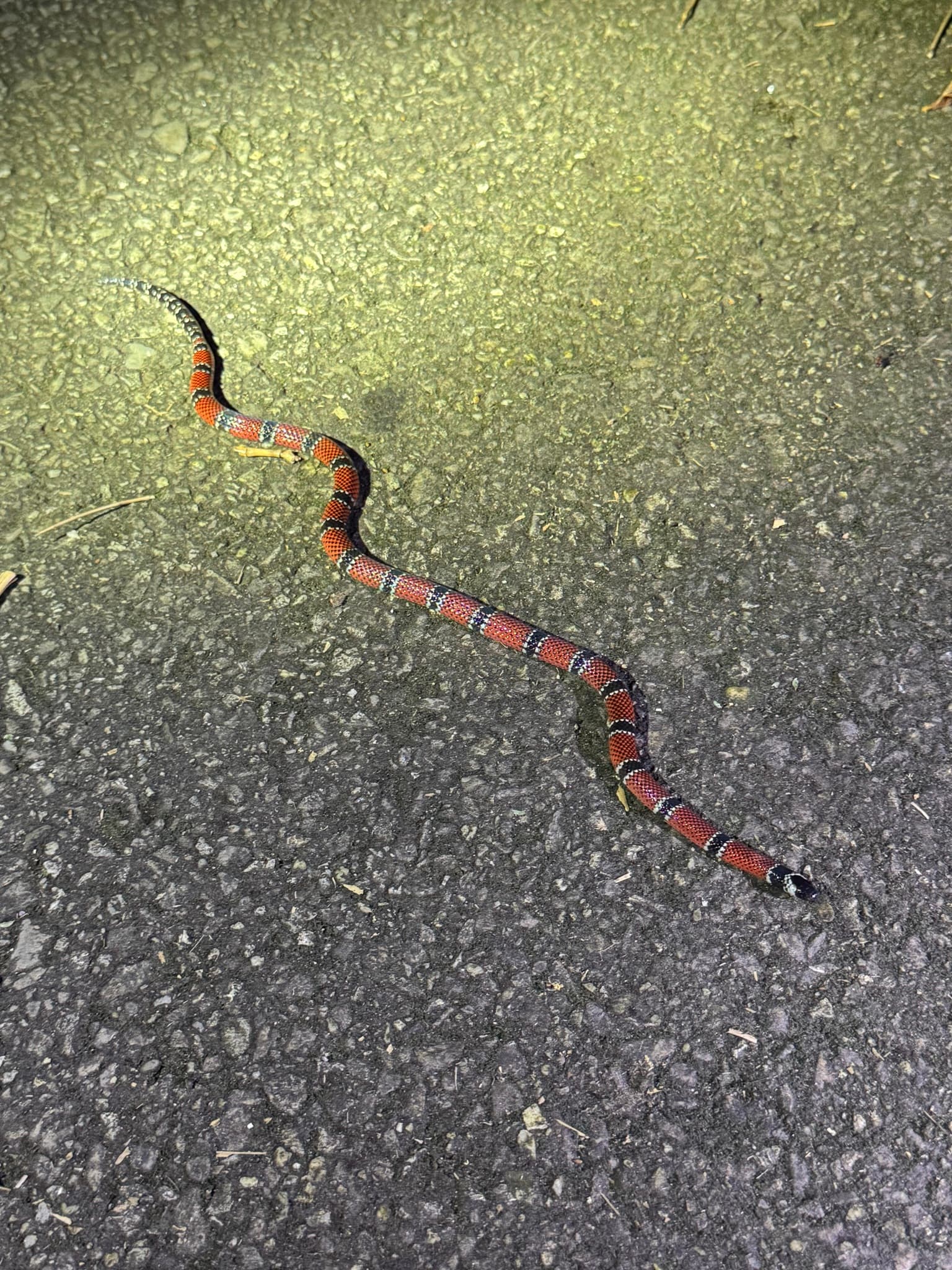
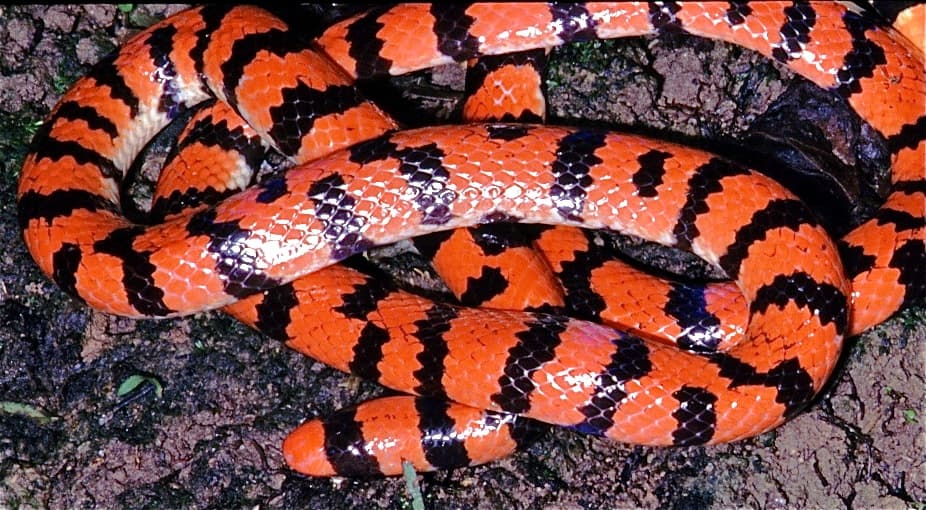
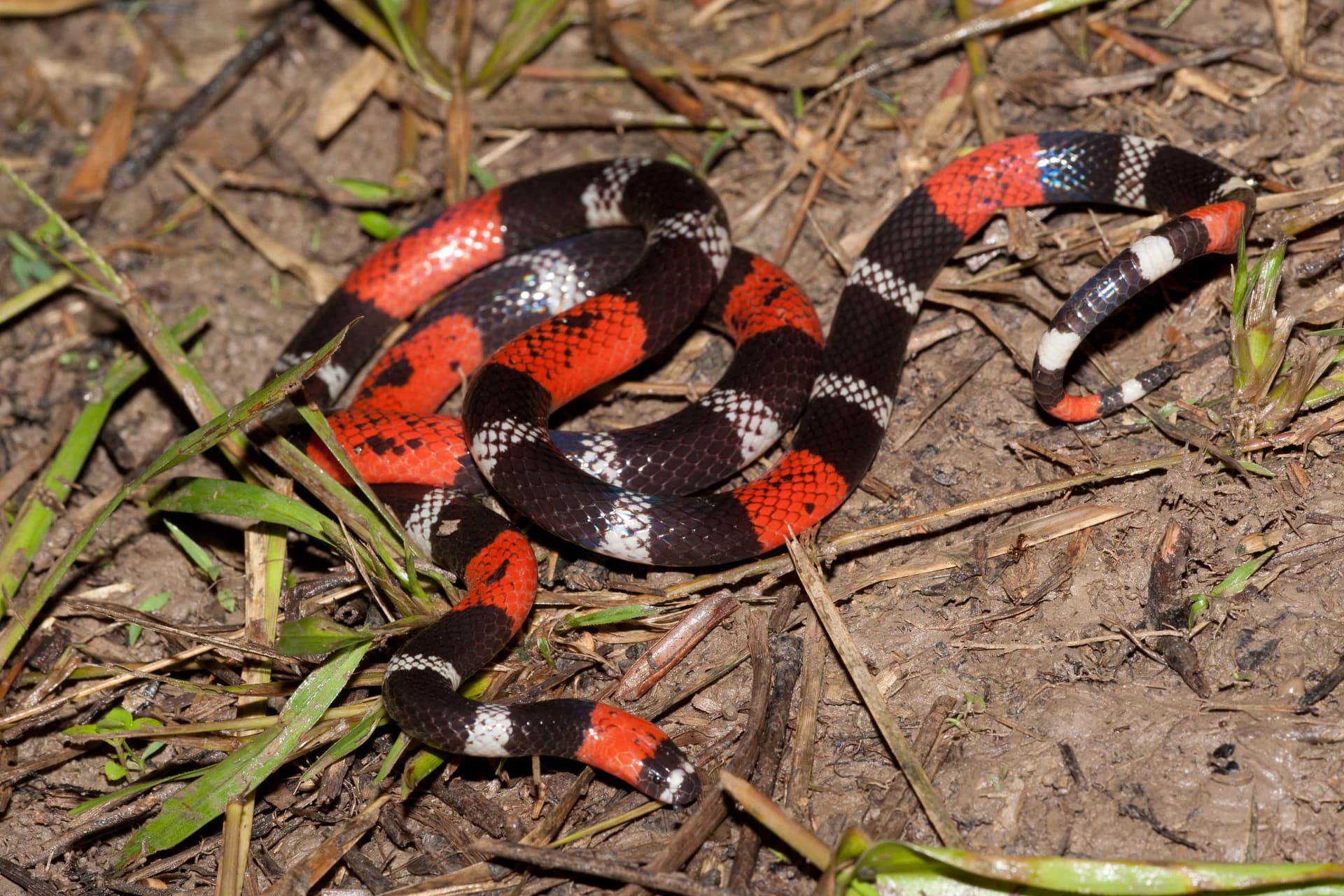
The Large Coral Snake is the bigger of Trinidad's two coral snake species, distinguished by its pattern of black rings arranged in triads: groups of three, with the central ring nearly twice as wide as the outer two, set against brilliant red and white or dirty-yellow rings.
The Large Coral Snake is the bigger of Trinidad's two coral snake species, distinguished by its pattern of black rings arranged in triads: groups of three, with the central ring nearly twice as wide as the outer two, set against brilliant red and white or dirty-yellow rings. Like its smaller relative, it carries potent neurotoxic venom and is found exclusively in Trinidad; there are no coral snakes on Tobago. It is terrestrial, nocturnal, and partially burrowing, and feeds primarily on other snakes.
Description
The Large Coral Snake reaches up to approximately 83 cm in length. Its banding is the definitive identification feature: black rings occur in triads (groups of three), with the central band of each triad notably wider than the flanking two. Red rings separate these triadic black groups, and narrow white or dirty-yellow rings outline the black. The bands circle the entire body and the ventrals. Dense black spotting appears on the white rings and to a lesser degree on the red. Like the Common Coral Snake, the head is smooth, rounded, and bears no loreal scale.
Ecology
This species is partly burrowing and is active mainly at night and in the early morning. It is a specialist snake-eater: in captivity it readily consumes other snake species and is known to eat members of its own species. Young Bothrops atrox have been found in its stomach in Trinidad. It is likely partially aquatic, based on its body form and habitat associations. It is oviparous, laying eggs rather than bearing live young.
Natural History
The neurotoxic venom of this species has been the subject of sustained research due to the scale of snakebite problems in South America. In Trinidad, coral snake bites are less common than mapepire balsain bites but carry serious risk due to the delayed-onset neurological symptoms that may mislead a victim into believing they have escaped serious harm. Antivenom should be administered on confirmed or suspected coral snake bite without waiting for symptoms to develop. Historical records from Trinidad include deaths attributed to this species.
Conservation
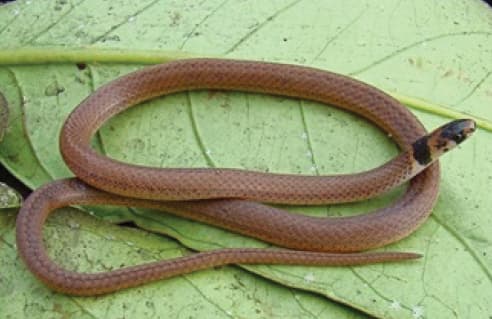
Both Trinidadian coral snakes are featured on the national postage stamps issued in 1983 depicting the island's snake fauna. Despite local names shared with the smaller species, the two can be reliably distinguished in the field by the triadic vs. single arrangement of black rings.
Threats
- Persecution and killing
- Habitat loss and forest clearance
- Decline of prey base (smaller snake species)