Reptile
Reptile
Common Coral Snake (Coreuil)
Micrurus circinalis
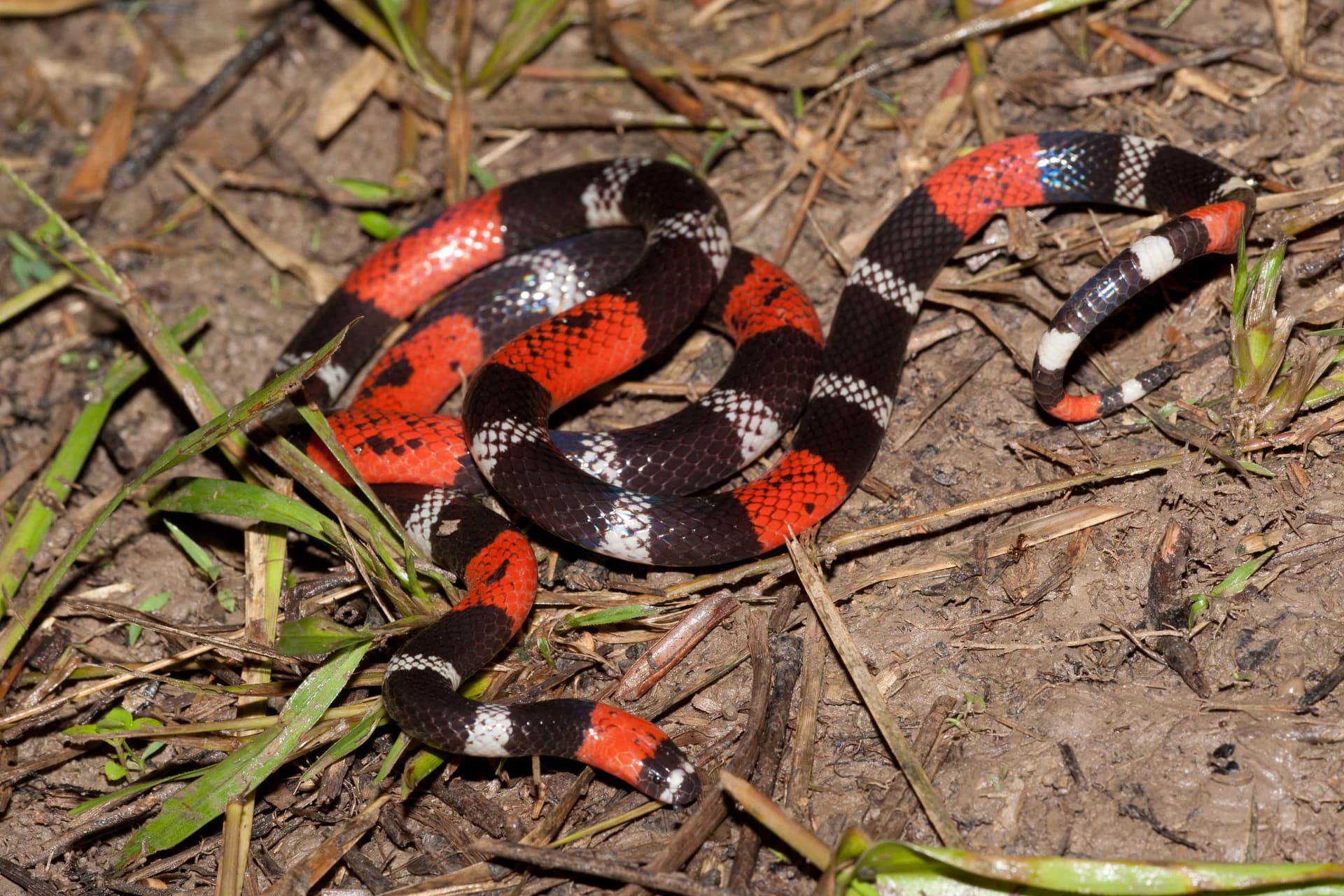
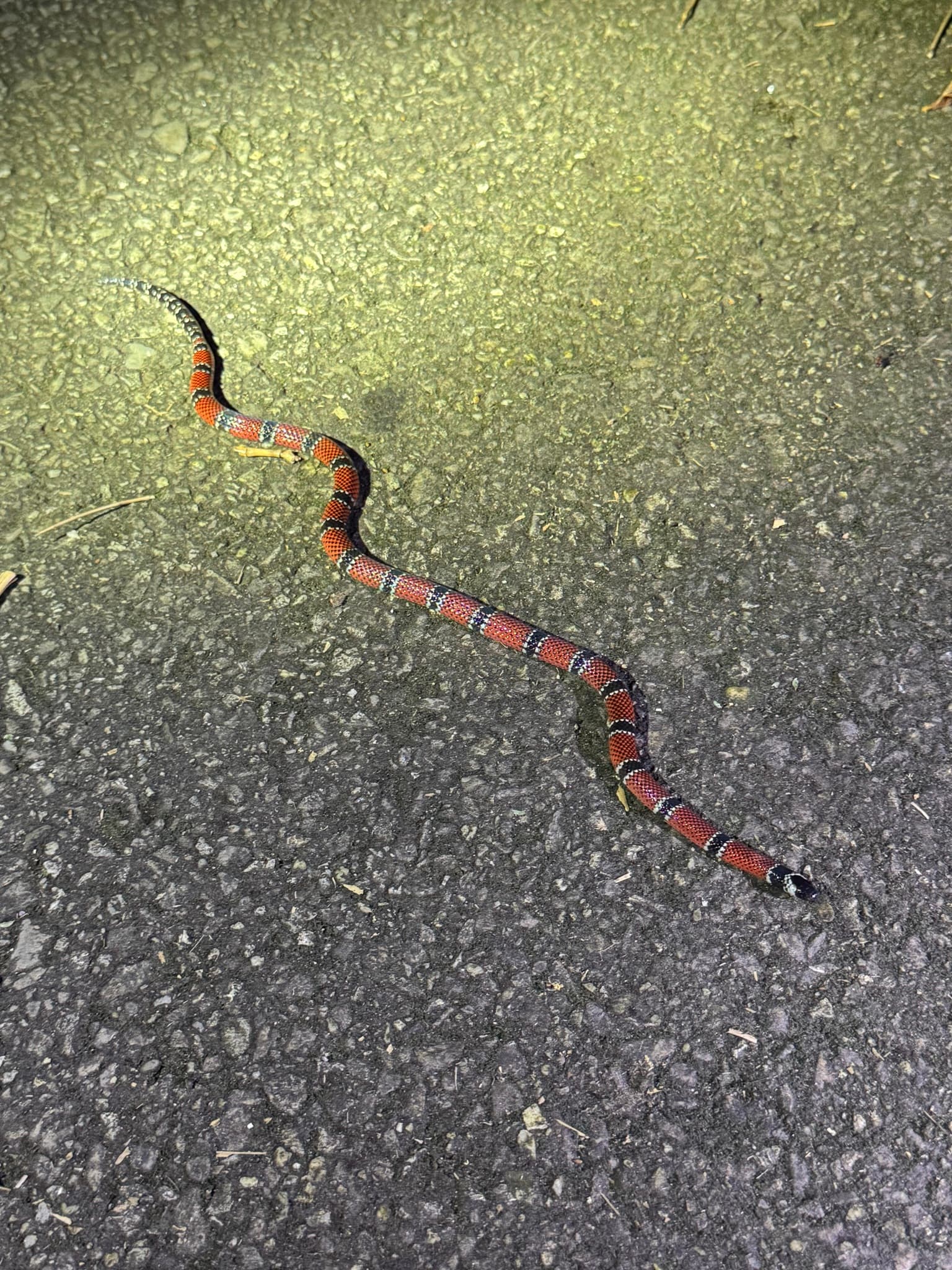
The Common Coral Snake is one of two coral snake species found in Trinidad, distinguished by its striking pattern of single black rings outlined in narrow white or yellow bands, separated by vivid red rings.
The Common Coral Snake is one of two coral snake species found in Trinidad, distinguished by its striking pattern of single black rings outlined in narrow white or yellow bands, separated by vivid red rings. A member of the elapid family, it carries a potent neurotoxic venom, but its small size, retiring habits, and relative reluctance to bite make accidental envenomation uncommon. It is found only in Trinidad; there are no coral snakes on Tobago.
Description
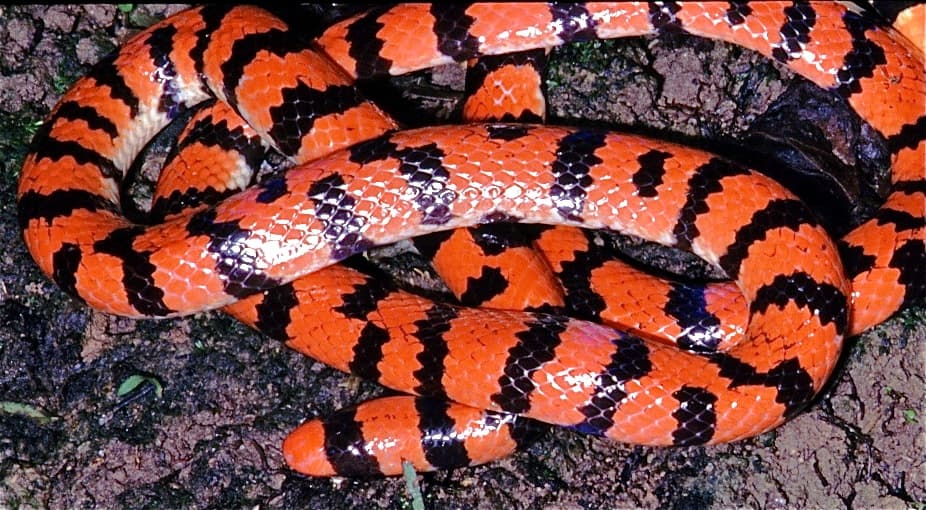
The Common Coral Snake is a slender, smooth-scaled snake typically reaching 60–80 cm. Its banding pattern is the key to identification: single black rings, each narrowly outlined with white or yellow, alternate with wider vivid red rings, and these rings run completely around the body and across the belly scales. This pattern distinguishes it from the larger Micrurus lemniscatus diutius, which carries black rings in groups of three (triads). The head bears the typical elapid scalation, smooth and rounded, with no loreal scale between preocular and nasal.
Ecology
Coral snakes are primarily nocturnal, fossorial, and secretive. They feed almost exclusively on other snakes, including their own young. In the forest leaf litter and under logs they pursue small colubrid species; the small thread snakes (Leptotyphlops) and blind snakes (Typhlops) are known prey items. The Common Coral Snake is oviparous and lays eggs rather than bearing live young.
Natural History
The neurotoxic venom of coral snakes acts on the nervous system rather than on tissue directly, and early symptoms after a bite may be subtle before progressing to respiratory paralysis. Historical accounts from Trinidad record deaths from coral snake bites, including an early nineteenth-century fatality considered the first recorded snakebite death in the islands. Antivenom is the correct treatment and should be sought immediately after any suspected coral snake bite. The small mouth of the coral snake does not prevent it biting: documented bites have occurred on the thin skin between the toes, on the hand during handling, and on other exposed skin.
Conservation
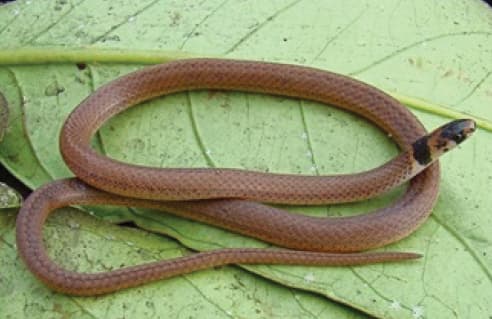
Several harmless species in Trinidad mimic the coral snake's bright banding, including the False Coral Snake (Erythrolamprus aesculapii) and Oxyrhopus petola. The rhyme used in other countries ("red on yellow, kill a fellow") does not reliably apply to Trinidadian species, where pattern variation is complex; the only safe rule is to leave all brightly banded snakes alone.
Threats
- Persecution and killing, often including misidentification of harmless mimics
- Habitat loss and forest clearance
- Decline of prey base (smaller snake species)