Bird
Bird
Green Honeycreeper
Chlorophanes spiza
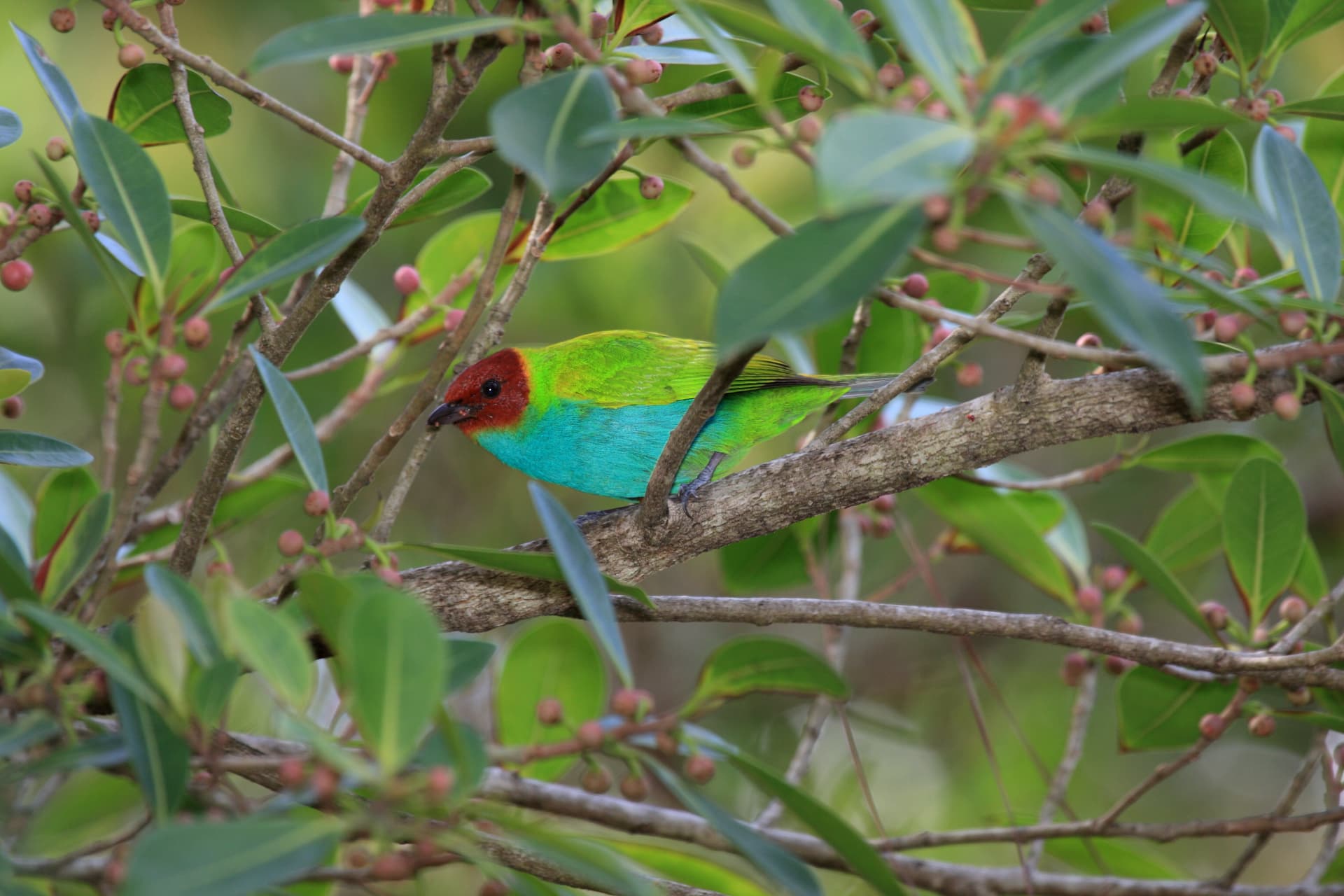
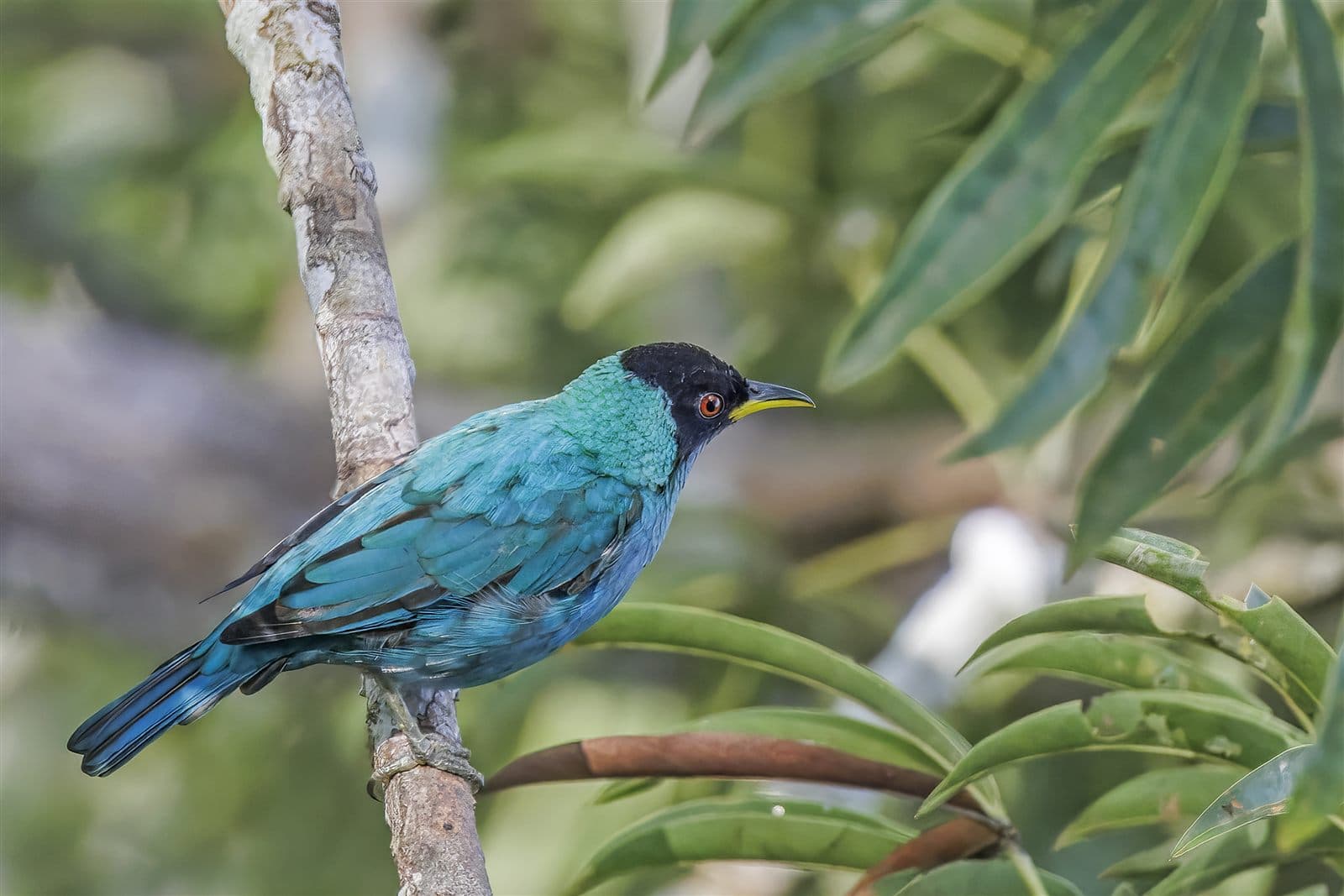
The Green Honeycreeper is a strikingly plumaged forest canopy bird found on Trinidad, with males a vivid emerald green offset by a black hood and bright yellow bill, and females an even, uniform green throughout.
The Green Honeycreeper is a strikingly plumaged forest canopy bird found on Trinidad, with males a vivid emerald green offset by a black hood and bright yellow bill, and females an even, uniform green throughout. It moves actively through the mid and upper canopy in search of fruit, nectar, and insects, often in the company of mixed-species foraging flocks.
Identification
A small, compact honeycreeper around 12 to 14 cm long. The male is bright emerald green overall with a contrasting black head and throat and striking bright yellow, slightly downcurved bill; the eye is pale red. The female is entirely green, slightly duller than the male's body colour, with the same yellow bill, and lacks the black hood, making the sexes easy to distinguish. Both sexes have a short tail and relatively short, rounded wings suited to manoeuvring through dense canopy foliage.
Ecology
An active forager of the forest canopy and sub-canopy, the Green Honeycreeper feeds on fruit, nectar, and small insects and spiders gleaned from leaves and flowers, using its curved bill to probe flowers for nectar and to pierce soft fruit. It regularly joins mixed-species foraging flocks with tanagers and other canopy birds, moving steadily through the forest in search of fruiting and flowering trees. It plays a role in pollination of some canopy flowers and in dispersing the seeds of small fruit it consumes.
Status in T&T
Found on Trinidad in forest and well-wooded habitat, most reliably in the Northern Range and other areas of continuous forest, and generally absent from heavily cleared or urban landscapes. It is not threatened but depends on intact forest canopy for foraging and shelter. It is protected under the Conservation of Wildlife Act and is not a game species.
Threats
- Forest clearance and fragmentation reducing canopy habitat
- Loss of fruiting and flowering canopy trees