Bird
Bird
Giant Cowbird
Molothrus oryzivorus
The Giant Cowbird is a large, glossy blackbird notable as a brood parasite of Trinidad's oropendolas and caciques, laying its eggs in their hanging colonial nests and leaving the host parents to raise its young.
The Giant Cowbird is a large, glossy blackbird notable as a brood parasite of Trinidad's oropendolas and caciques, laying its eggs in their hanging colonial nests and leaving the host parents to raise its young.
Identification
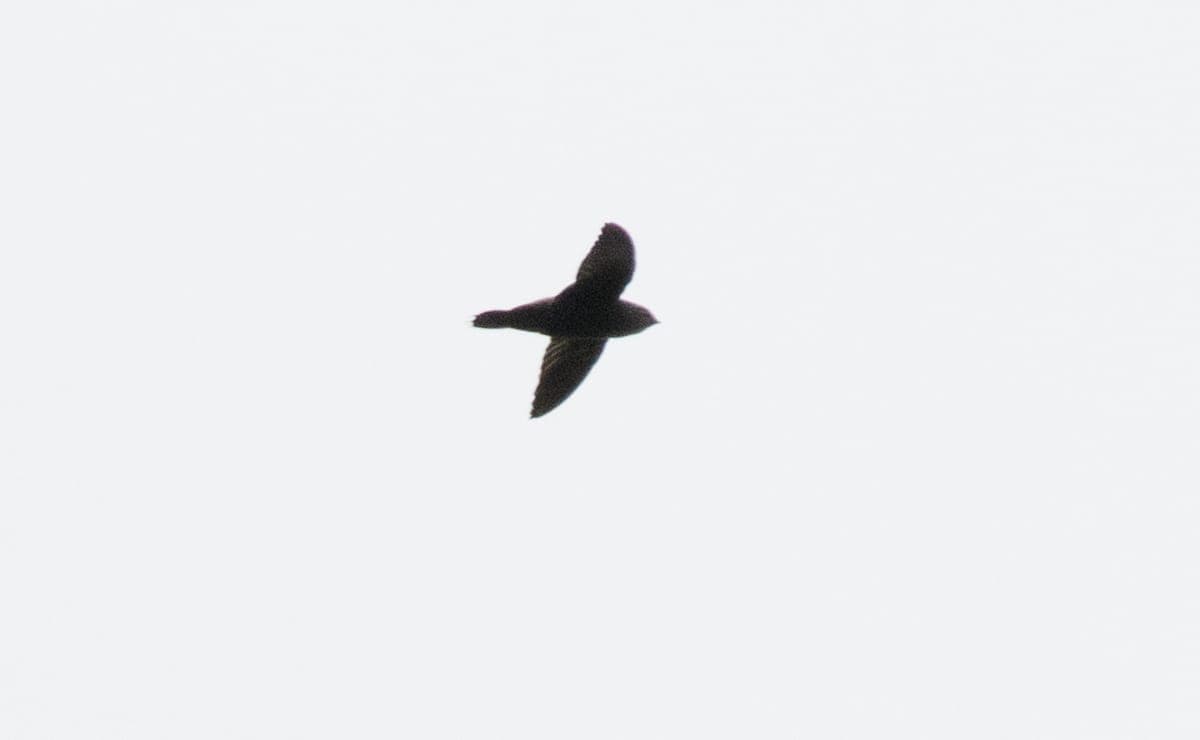
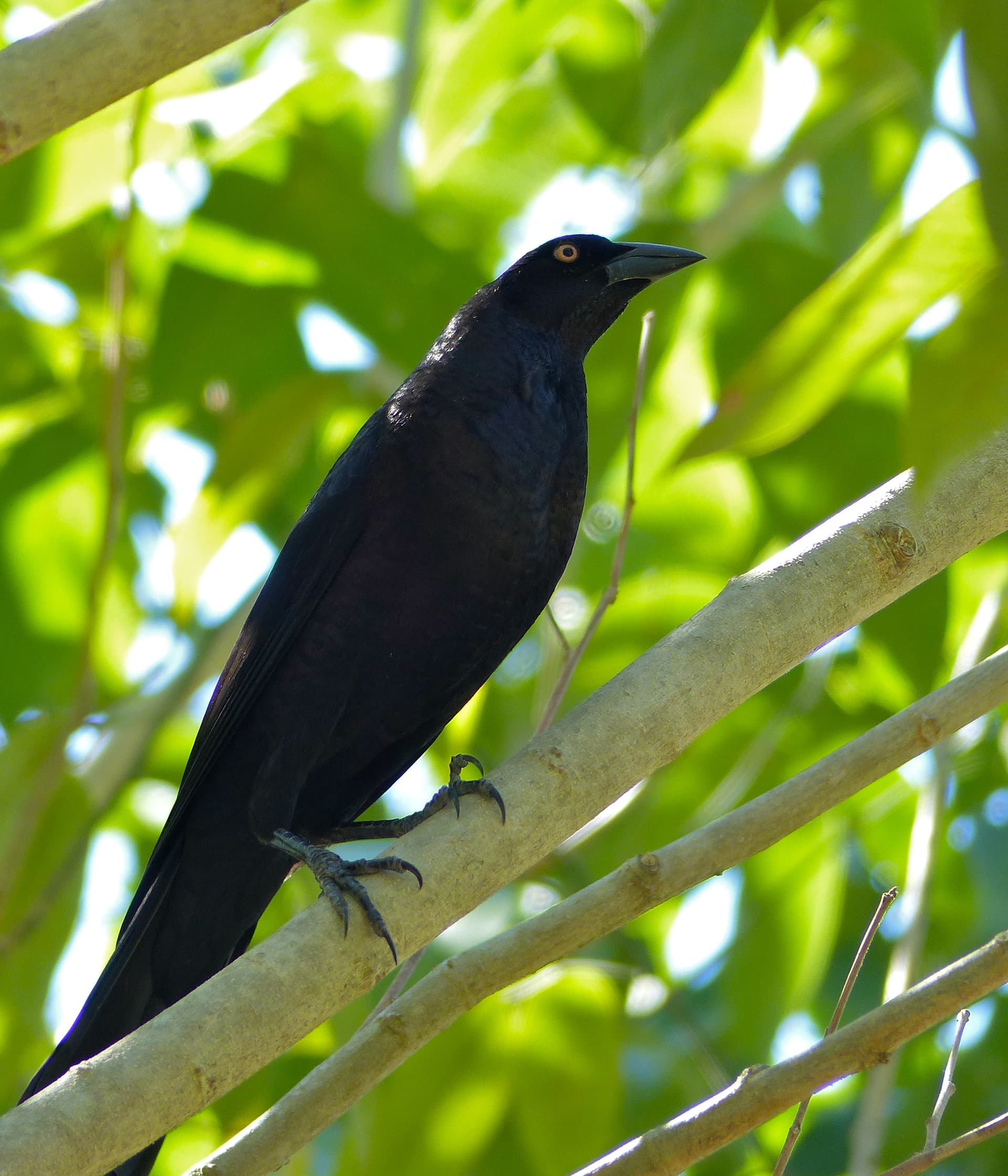
A large blackbird around 33 to 38 cm long, considerably bigger than other icterids on the island, with entirely glossy black plumage showing purplish and greenish iridescence, a ruff of longer feathers on the neck, and a slightly hooked bill. Males are notably larger than females. In flight the small head and long tail give it a distinctive silhouette.
Ecology
A specialist brood parasite of colonial-nesting icterids, particularly Crested Oropendola and Yellow-rumped Cacique, watching host colonies and slipping eggs into host nests, sometimes removing a host egg in the process. Host parents raise the cowbird chick, which can out-compete host young for food. Adults forage on the ground and in trees for insects, seeds, and fruit, often near cattle and livestock.
Status in T&T
Present across Trinidad wherever oropendola or cacique colonies occur, tracking its host species' distribution. Not considered threatened, and its parasitic strategy is a natural, long-evolved relationship with local icterid hosts rather than an introduced threat. It is protected as native wildlife under the Conservation of Wildlife Act.