Reptile
Reptile
Mata Mata Turtle
Chelus fimbriata
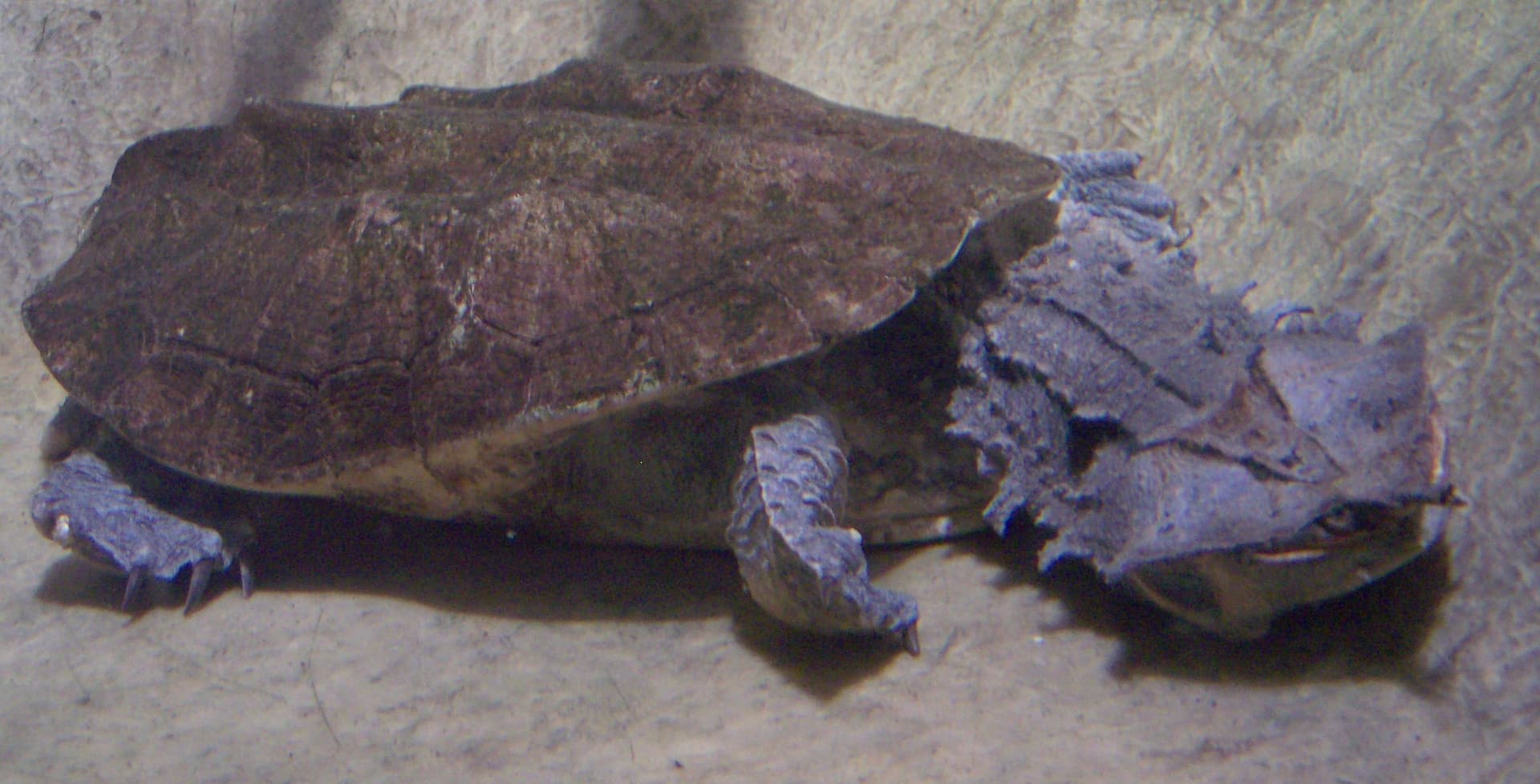
The Mata Mata Turtle (Chelus fimbriata) is one of the most bizarre freshwater turtles in the world, instantly recognised by its broad, flattened, triangular head, long snorkel-like snout, and a knobbly, ridged carapace fringed with skin flaps that mimic leaf litter and bark.
The Mata Mata Turtle (Chelus fimbriata) is one of the most bizarre freshwater turtles in the world, instantly recognised by its broad, flattened, triangular head, long snorkel-like snout, and a knobbly, ridged carapace fringed with skin flaps that mimic leaf litter and bark. In Trinidad and Tobago it is a rare reptile known mainly from the Nariva Swamp and the slow freshwater habitats of south-west Trinidad, where it lurks motionless on the bottom waiting to ambush prey. A wholly aquatic, carnivorous suction feeder, it is far better at lying in wait than at swimming, and its strange camouflaged form makes it one of the region's most distinctive wetland inhabitants.
Identification
The Mata Mata is unmistakable. Its large triangular head is flattened, with skin flaps and tubercles along the neck, small eyes set far forward, and a slender tubular snout used as a snorkel to breathe at the surface without exposing the body. The carapace is broad, brown, and roughly oval, marked by three lengthwise rows of raised, knobbed keels that give it a craggy, bark-like profile.
Adults can reach a carapace length of around 40 to 45 cm and a weight of up to roughly 15 kg, making it a large freshwater turtle. The overall colouration of brown and tan, combined with the ragged skin fringes, breaks up the animal's outline so effectively that a resting Mata Mata closely resembles a mat of submerged leaves and debris.
Ecology
This is a strictly aquatic, sedentary ambush predator of still and slow-moving fresh water, including swamps, oxbows, marshes, and the margins of slow streams. Rather than chasing prey, it stays motionless on the bottom in shallow water, relying on its camouflage and the sensory flaps on its head and neck to detect movement nearby.
It feeds by suction: when a fish or other small animal comes within range, the turtle suddenly opens its wide mouth and expands its throat, creating a rapid inrush of water that vacuums the prey in whole. The diet is carnivorous and includes small fishes, amphibians, freshwater crustaceans, and other small aquatic animals, with most foraging taking place under cover of darkness.
Status in T&T
The Mata Mata is rare in Trinidad and Tobago and is recorded mainly from the Nariva Swamp and the slow freshwater wetlands of south-west Trinidad; some animals may arrive as accidental strandings from the nearby Orinoco delta in Venezuela. Its restricted local occurrence makes intact freshwater wetland habitat essential to its survival here.
Globally the species has no current formal IUCN assessment; its only Red List evaluation (1996) rated it Least Concern and is now outdated. In 2022 both Chelus species were added to CITES Appendix II at CoP19, a listing that came into force on 25 November 2023, regulating international trade driven largely by demand for the exotic pet market.