Bird
Bird
Double-toothed Kite
Harpagus bidentatus
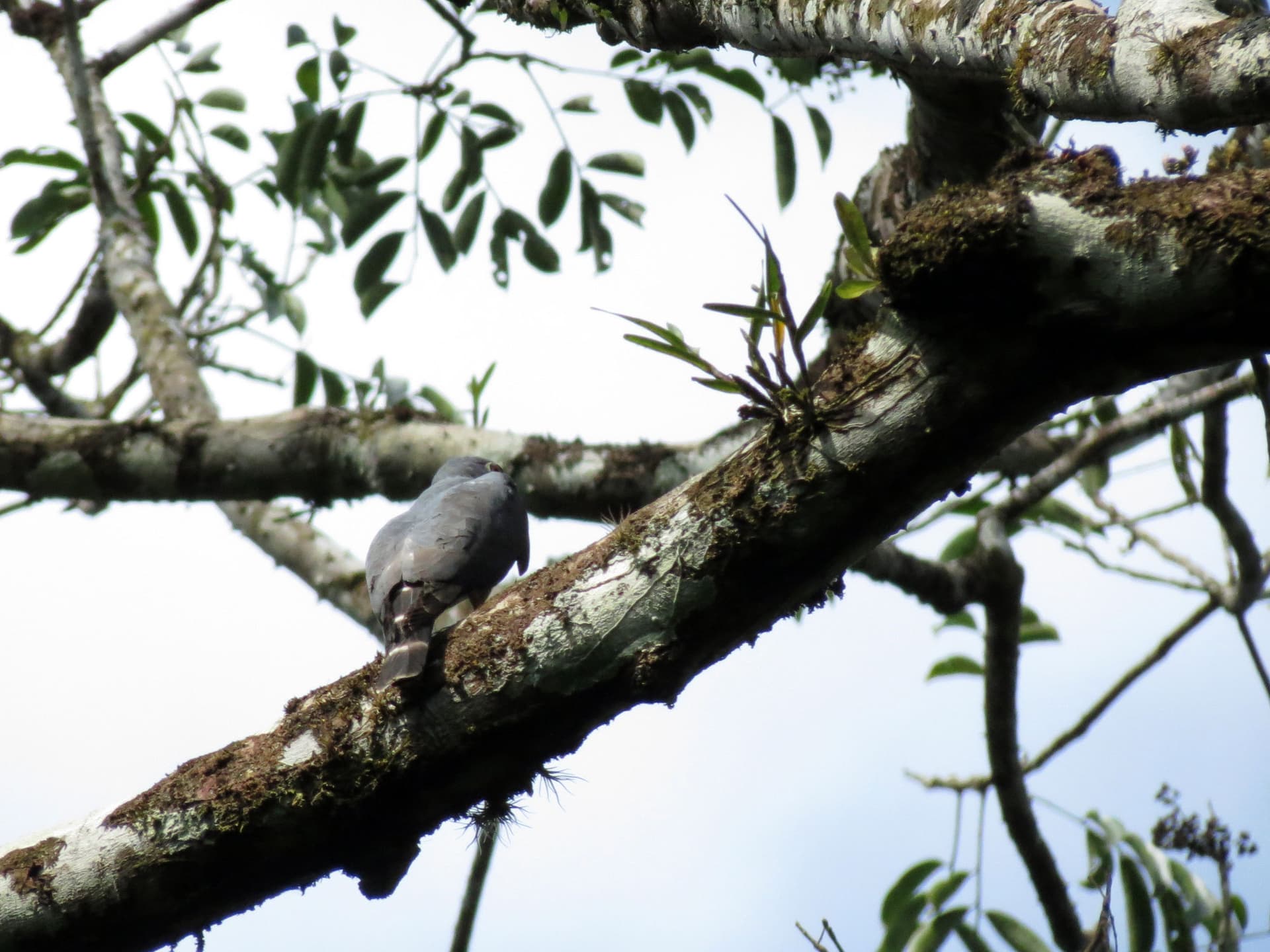
The Double-toothed Kite is a small, forest-dwelling raptor of Trinidad named for the two tooth-like notches on its upper bill.
The Double-toothed Kite is a small, forest-dwelling raptor of Trinidad named for the two tooth-like notches on its upper bill. It is best known for a distinctive foraging habit: following troops of monkeys through the canopy to snatch insects and small prey flushed by their movement.
Identification
A small hawk around 28 to 33 cm long, with slate-grey upperparts and head, a rufous throat and upper breast, and finely barred grey-and-white underparts. Its bill shows two small notches (tomial teeth) on the cutting edge of the upper mandible, a feature shared with a few other bird-eating raptors and the source of its common name.
Behaviour
Hunts within the forest canopy and subcanopy for large insects, small lizards, and occasionally small birds, and is notable for following troops of capuchin monkeys, positioning itself to catch prey flushed by their foraging. It typically perches quietly and makes short, agile sallies rather than soaring in the open, staying within or just above the canopy.
Status in T&T
Found in mature forest across Trinidad, generally uncommon and easily overlooked given its quiet, canopy-bound habits. Not considered threatened. It is protected as native wildlife under the Conservation of Wildlife Act.