Bird
Bird
Brown Noddy
Anous stolidus
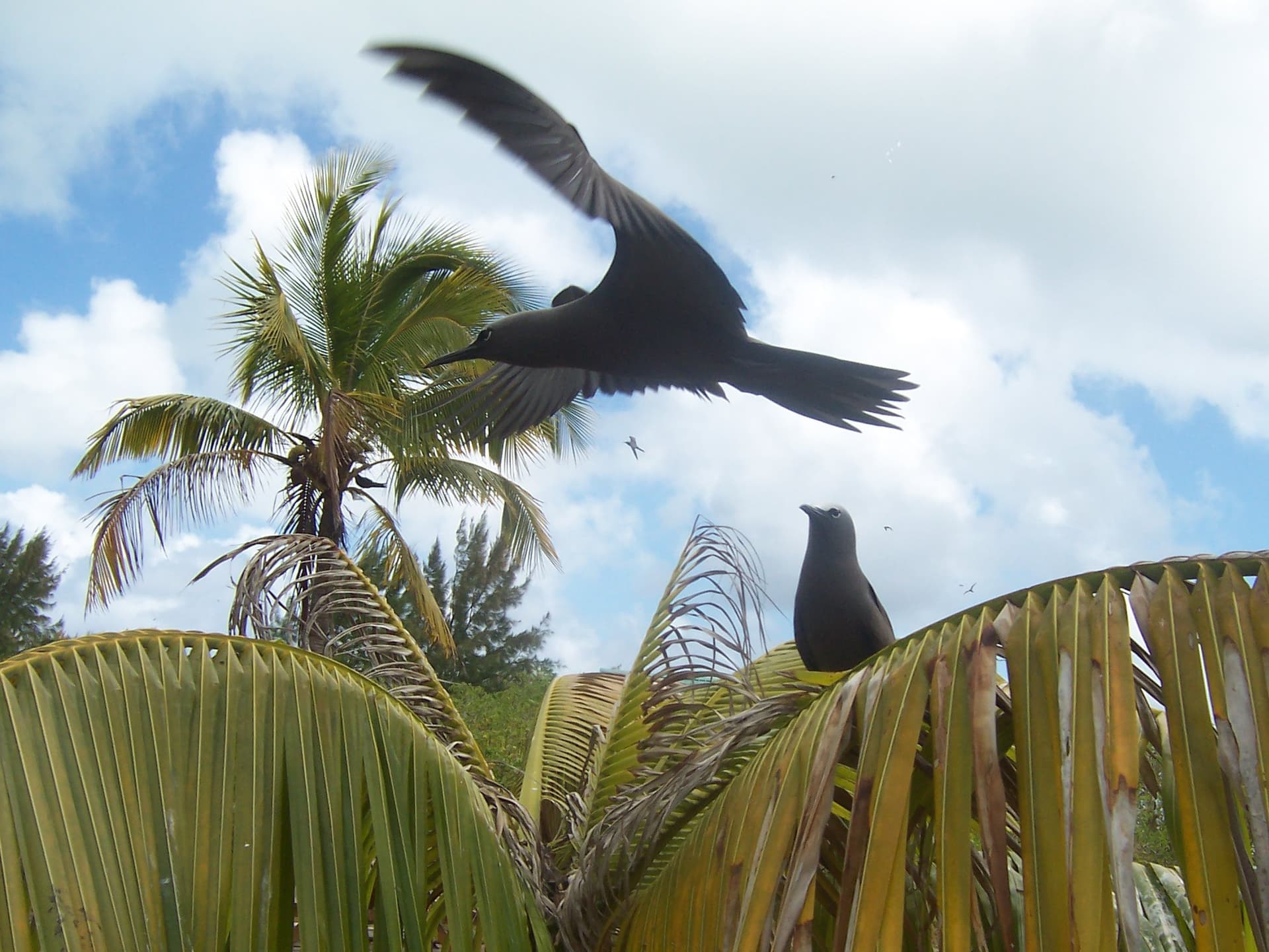
The Brown Noddy is a dark, uniformly sooty-brown tern of Tobago's offshore waters and islets, distinguished from the pale terns it associates with by its overall dusky plumage, pale grey cap, and a habit of resting buoyantly on floating debris far from shore.
The Brown Noddy is a dark, uniformly sooty-brown tern of Tobago's offshore waters and islets, distinguished from the pale terns it associates with by its overall dusky plumage, pale grey cap, and a habit of resting buoyantly on floating debris far from shore.
Identification
A medium-sized tern around 38 to 42 cm long, almost entirely dark sooty-brown with a paler, greyish-white cap contrasting subtly against the dark face, and a slightly wedge-shaped tail, unlike the deeply forked tail typical of most terns. The bill and legs are black. Its uniformly dark plumage readily separates it from the pale grey and white terns it is often seen alongside.
Ecology
The Brown Noddy feeds mainly by picking small fish and squid from the sea surface in flight, often in association with predatory fish or dolphins driving prey upward, rather than by plunge-diving like many other terns. It is highly pelagic outside the breeding season, ranging widely over open ocean, and rests readily on floating debris, buoys, or flotsam far from land. It breeds colonially on remote offshore islands and rocky islets, building a simple nest of vegetation on rock ledges or low vegetation.
Status in T&T
Recorded around Tobago and its offshore islets, where suitable rocky nesting habitat exists, and occasionally further offshore around Trinidad. It is not threatened globally. It is protected under the Conservation of Wildlife Act and is not a game species.
Threats
- Disturbance of offshore breeding colonies
- Marine pollution and plastic ingestion