Trees
Trees
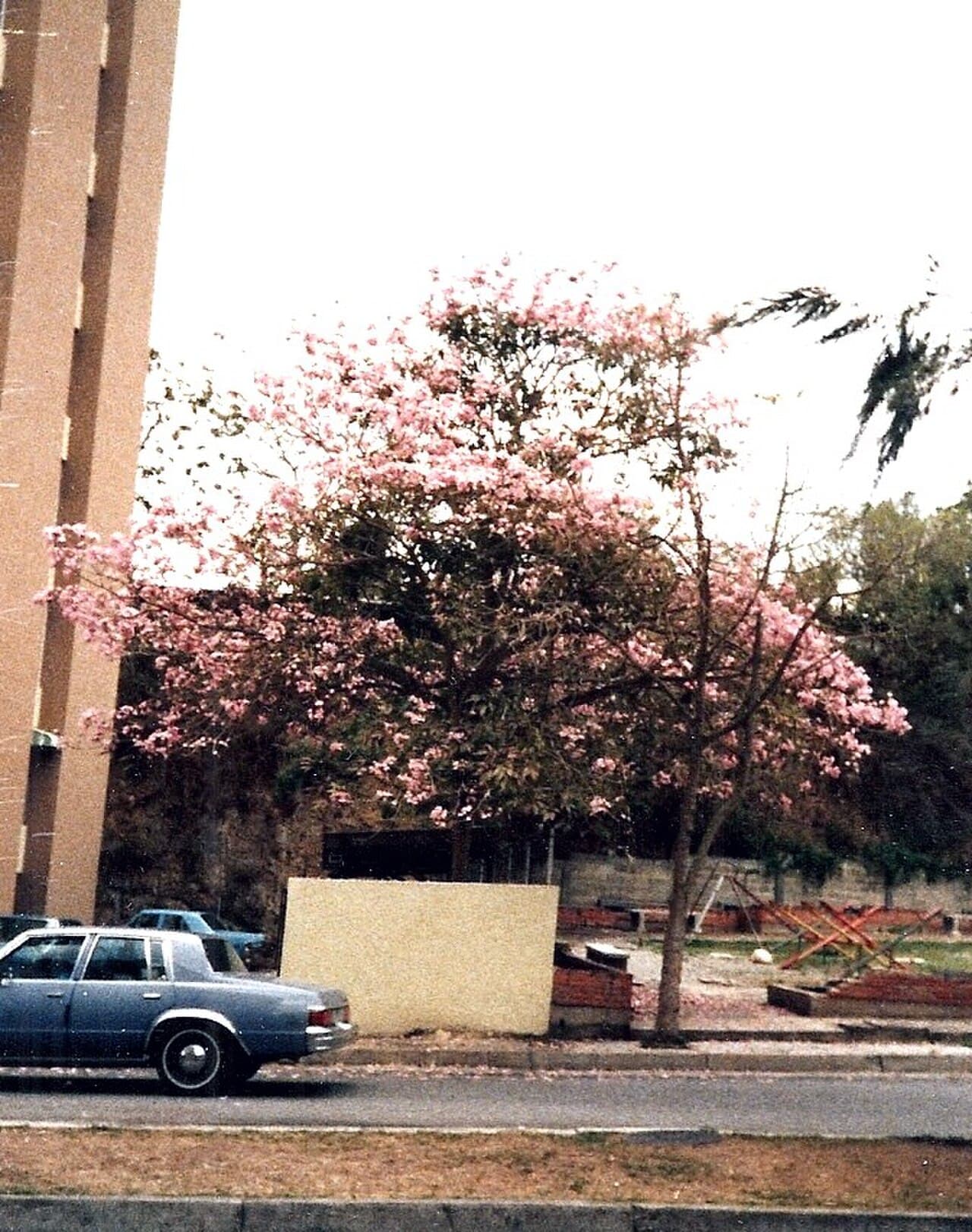
White Poui
Tabebuia rosea
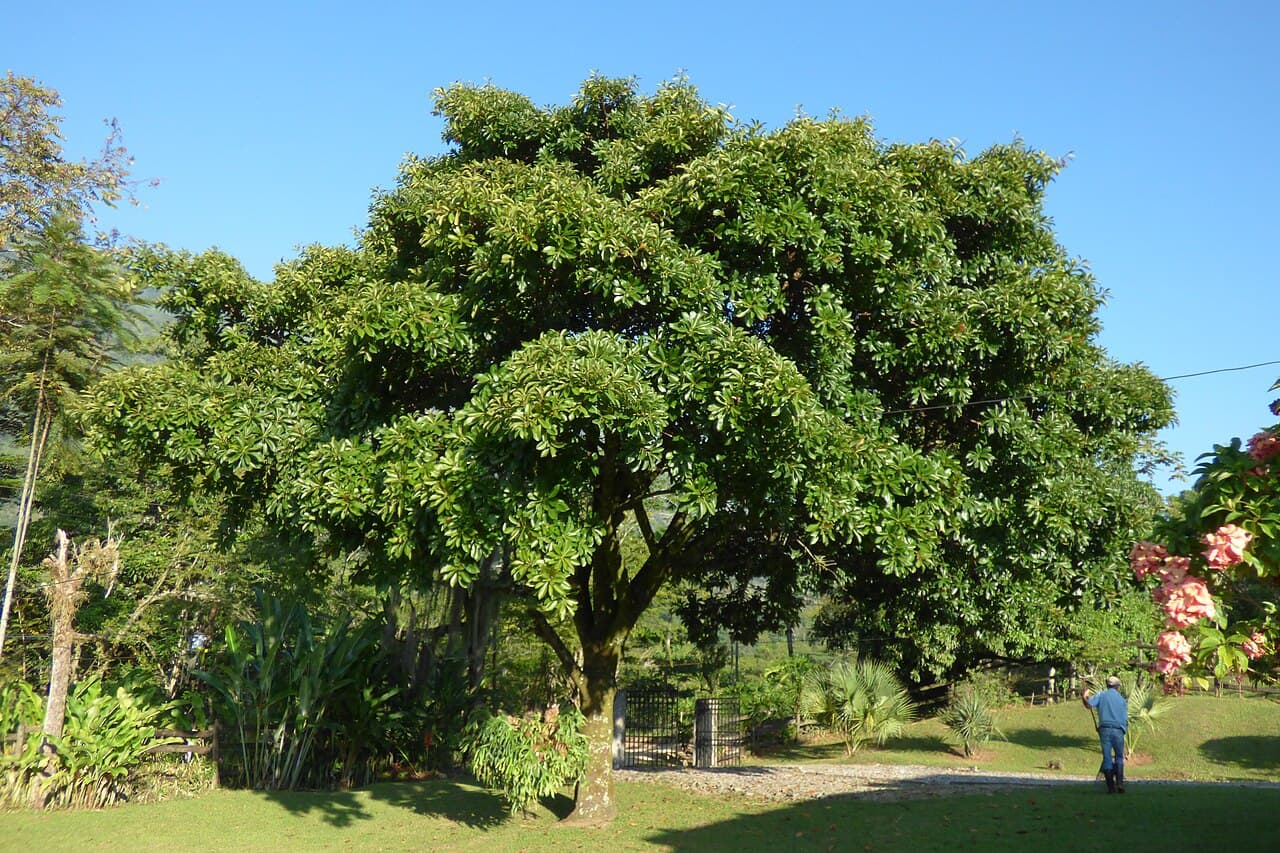
Photo: Wikimedia Commons contributor · Venezuela (CC BY-SA 3.0)
The White Poui is one of the most spectacular flowering trees of Trinidad and Tobago, transforming roadsides, savanna edges, and forest margins into clouds of pale pink and white blossom during the dry season.
The White Poui is one of the most spectacular flowering trees of Trinidad and Tobago, transforming roadsides, savanna edges, and forest margins into clouds of pale pink and white blossom during the dry season. A close relative of the national-symbol Yellow Poui, it is slightly larger and flowers earlier, its blooms appearing before the new leaves emerge so the display is unobstructed and impossible to miss.
Description
A semi-deciduous tree growing to 20 to 30 metres in forest conditions, typically smaller in open and planted settings. The trunk is straight, with pale grey, shallowly furrowed bark. Leaves are palmately compound with five leaflets, dropping before or during flowering. Flowers are trumpet-shaped, 5 to 7 cm long, in shades of pale pink to white with yellow throats, clustered in large terminal panicles. The display is most intense on leafless branches in the dry season (January to March). Fruit is a long, slender pod up to 35 cm, splitting to release winged seeds dispersed by wind.
Ecology
White Poui grows in a range of habitats: seasonally dry and moist lowland forest, forest edges, gallery forest, and disturbed areas. It is widely planted as a street and shade tree across Trinidad and Tobago's towns. The flowers attract large carpenter bees and other pollinators. The winged seeds are adapted for wind dispersal into open ground, making the species an early coloniser of forest clearings and roadsides. Its rapid growth and moderate timber quality have led to its use in agroforestry and shade-tree programmes in cocoa and coffee cultivation across the Caribbean and Central America.
Cultural Significance
Like the Yellow Poui, the White Poui's flowering is a seasonal marker in the local calendar: its blossom coincides with the late dry season and is associated with the approach of Carnival and the start of the academic term. It is one of the most commonly planted ornamental trees in Trinidad's urban areas and is a frequent subject of local nature photography. The timber, though less celebrated than Yellow Poui, is used for general carpentry and light construction.
Threats
- Urban tree removal
- Replacement by non-native ornamentals