Trees
Trees
Cannonball Tree
Couroupita guianensis
Photo: Alejandro Bayer Tamayo (CC BY-SA 2.0)
The Cannonball Tree is one of the most extraordinary-looking trees in Trinidad and Tobago, producing its large, intensely fragrant flowers and heavy, spherical, cannonball-like fruits directly from long, rope-like stems that hang from the trunk rather than from the branches.
The Cannonball Tree is one of the most extraordinary-looking trees in Trinidad and Tobago, producing its large, intensely fragrant flowers and heavy, spherical, cannonball-like fruits directly from long, rope-like stems that hang from the trunk rather than from the branches. A large, established specimen in full flower is one of the most dramatic sights in a tropical garden or park: the trunk and lower stems covered with hundreds of salmon-pink and red blooms and littered with fallen brown spheres up to 25 cm across, each containing a foul-smelling but nutritious pulp.
Description
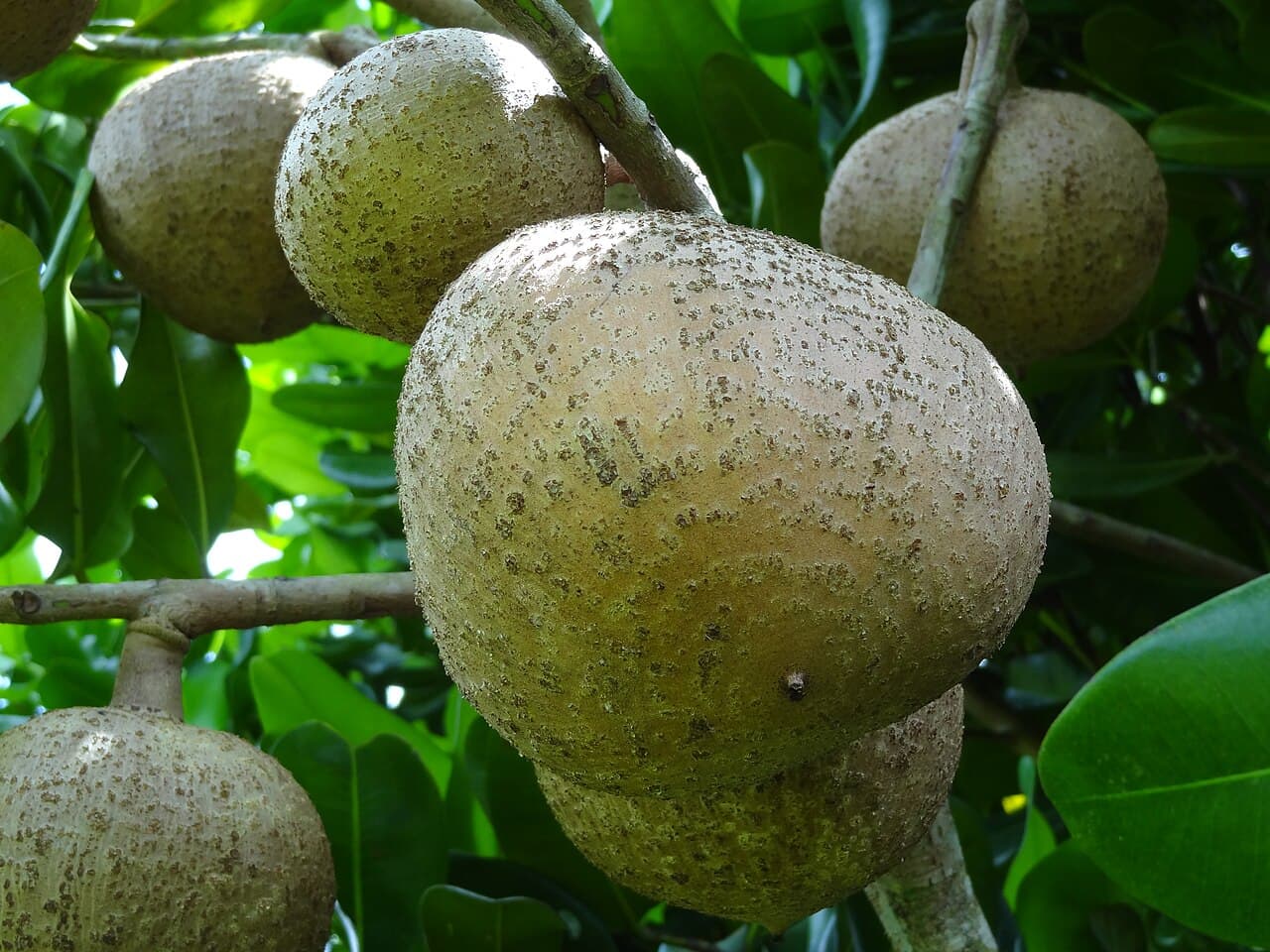
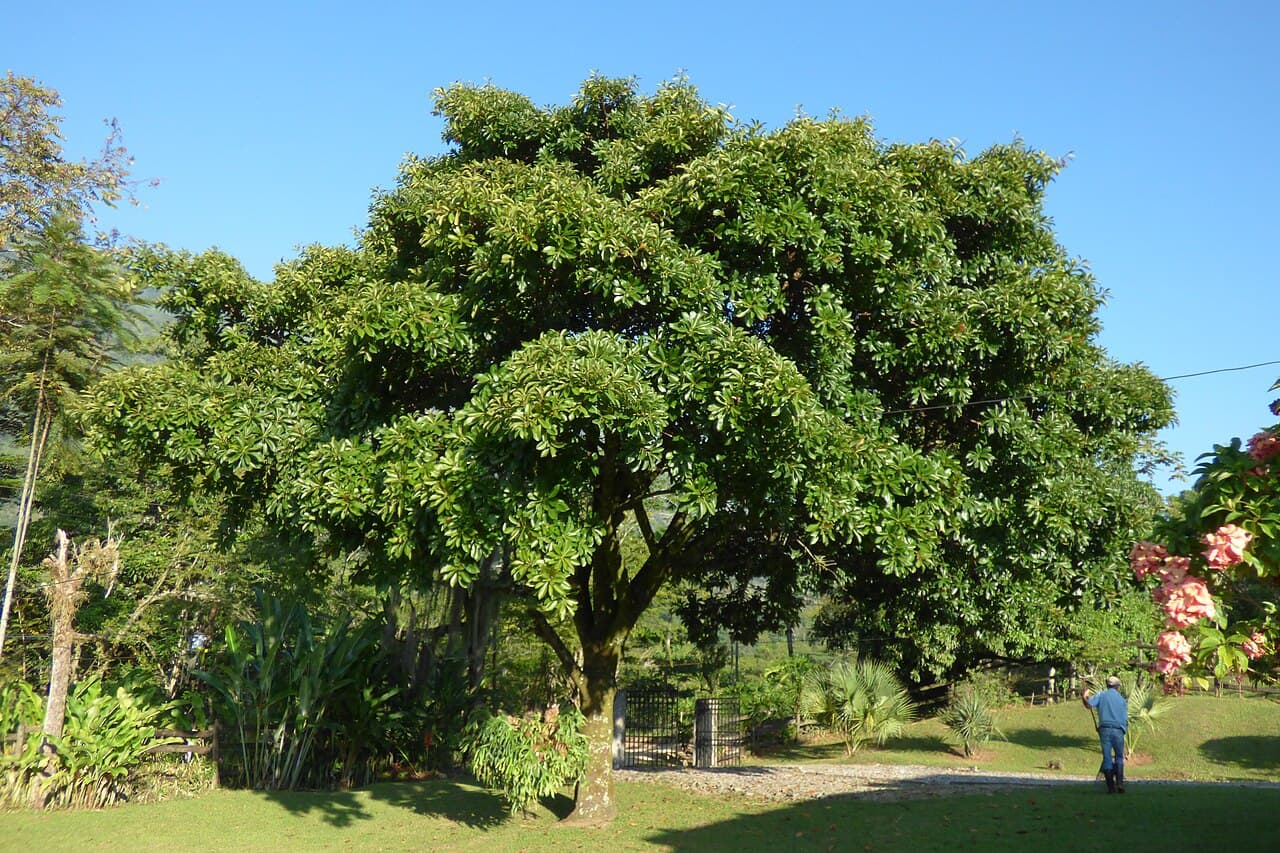
A medium to large deciduous tree typically 20 to 35 metres tall with a stout, straight trunk. Like Cacao, it exhibits cauliflory: both the flowers and the fruits grow directly from the trunk and main branches on long, tangled stems (rachis) that hang down in masses. Flowers are large and showy, with waxy petals in pink, orange, and red, surrounding a distinctive hood of fused stamens; they open each morning and fall by afternoon, carpeting the ground beneath. The fragrance is powerful and sweet. The fruit is a large, perfectly spherical woody capsule 15 to 25 cm across, containing many seeds surrounded by a greenish, jelly-like pulp with a distinctive unpleasant odour. Fruits fall heavily when ripe and split open on impact.
Ecology
Native to tropical South America, the Cannonball Tree is widely planted in Trinidad and Tobago as an ornamental and has naturalised in some areas. The flowers are pollinated by large bees, including carpenter bees and bumble bees, which are attracted by the copious nectar and the distinctive hood structure. The large fruits are eaten by peccaries, tapirs, and other large mammals in its native range; in T&T, fallen fruits are investigated by agoutis and other wildlife. The tree grows well in humid, well-drained conditions and establishes quickly.
Cultural Significance
The Cannonball Tree is sacred in Hindu and Buddhist traditions: it is called the Nagalingam tree in Sanskrit and the flowers are used in temple rituals. This has contributed to its widespread planting near temples and public gardens throughout T&T, where it is a familiar and beloved tree. The wood is soft and not commercially valuable; the tree is grown entirely for its ornamental, cultural, and religious value.
Threats
- Removal due to falling-fruit hazard
- Felling of mature specimens