Orchids
Orchids
Trinidad Cochleanthes
Cochleanthes trinitatis
Cochleanthes trinitatis is one of T&T's rarest plants: an Endangered orchid endemic to the Northern Range of Trinidad, known from a very restricted population in cloud forest and found nowhere else on Earth.
Cochleanthes trinitatis is one of T&T's rarest plants: an Endangered orchid endemic to the Northern Range of Trinidad, known from a very restricted population in cloud forest and found nowhere else on Earth. One of only four recognised species in the genus Cochleanthes, it represents the most acute conservation challenge in the T&T flora and a critical gap in domestic plant protection law.
Description
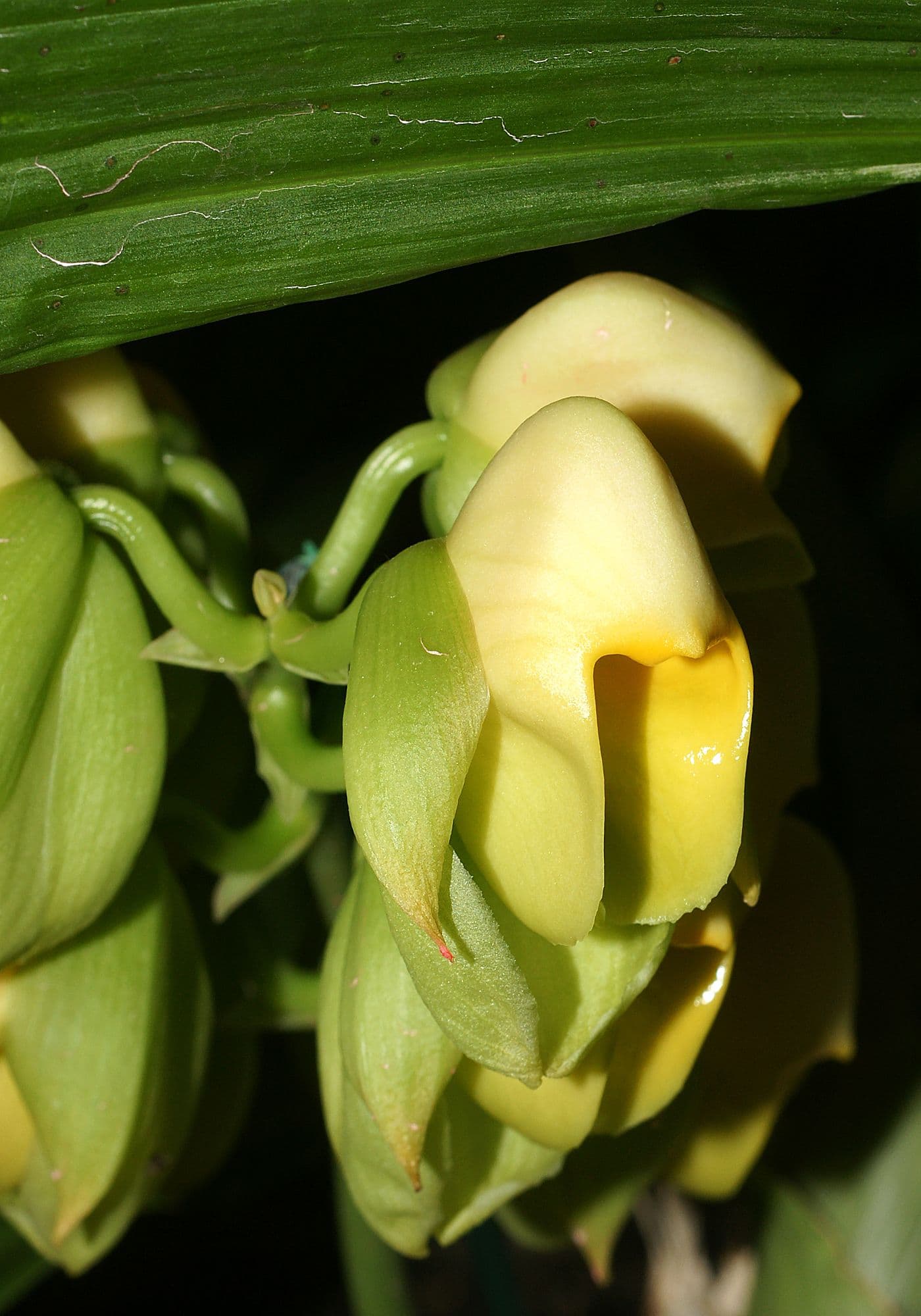
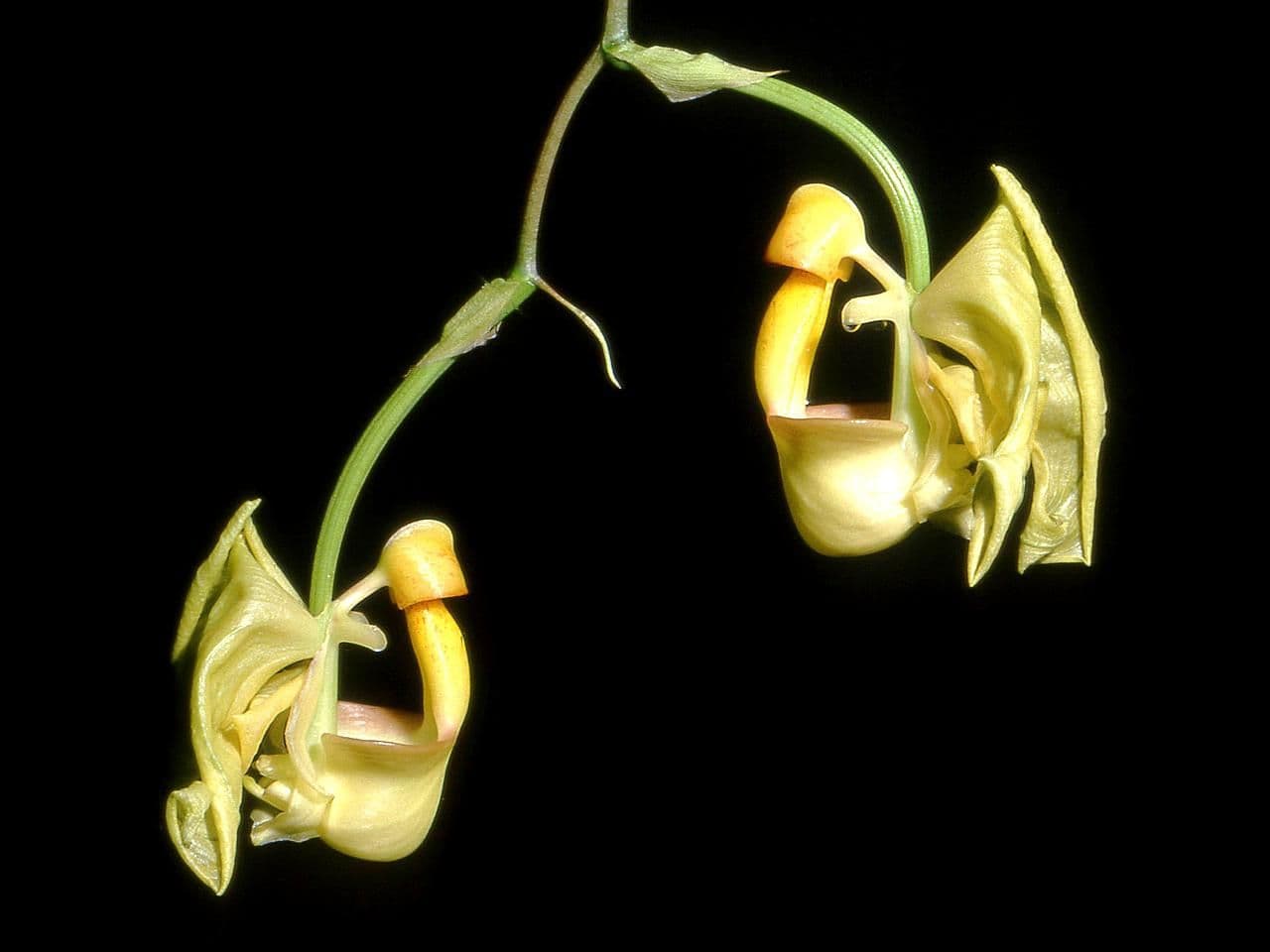
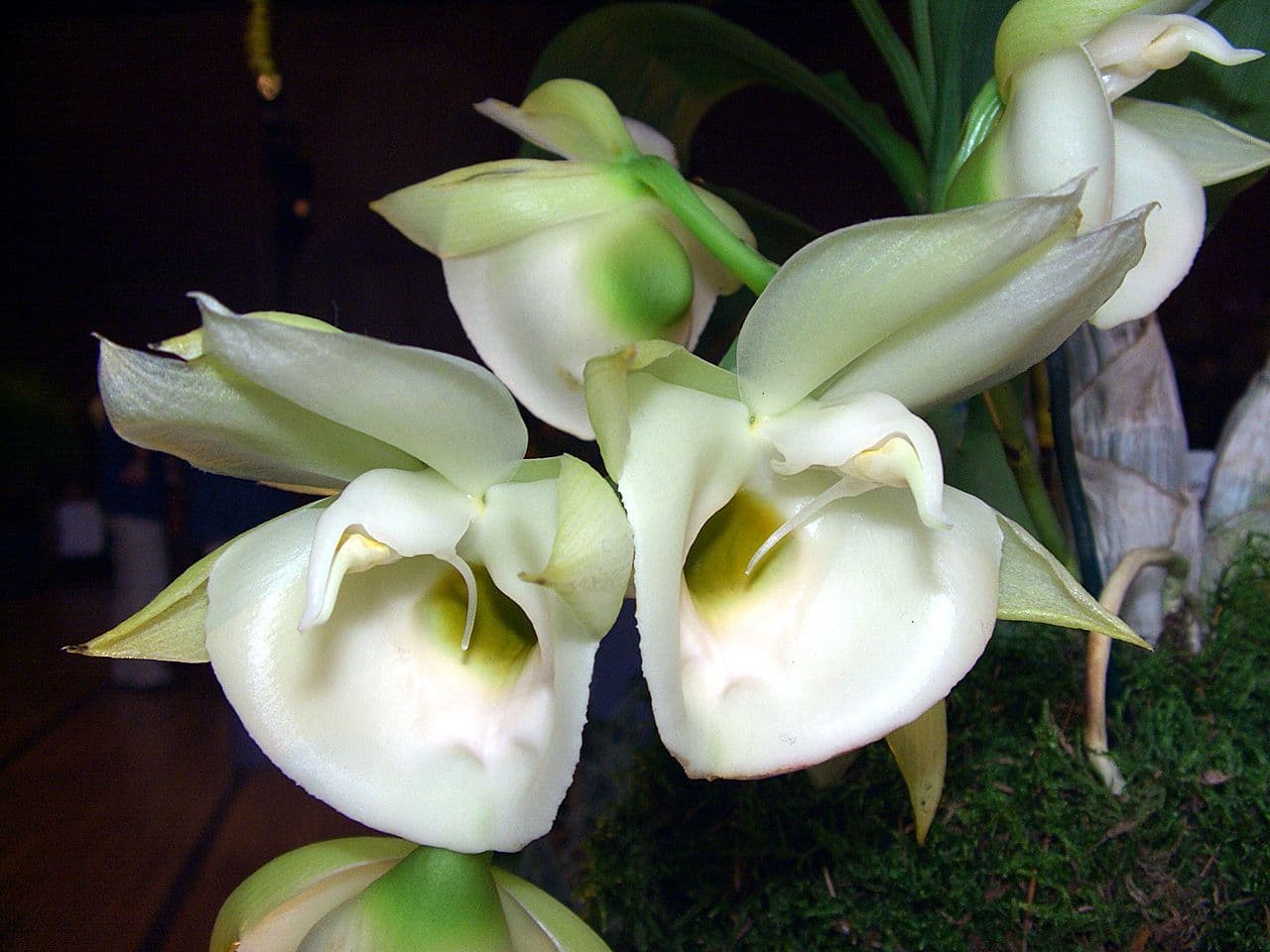
An epiphytic orchid without pseudobulbs, producing fans of overlapping leaves from which individual inflorescences emerge. The genus Cochleanthes is characterised by large flowers dominated by a prominent, elaborately marked labellum (lip) bearing longitudinal nectar guides. Related species display white petals and sepals with a broad white lip carrying deep violet-purple striations at the throat. Specific published flower descriptions for C. trinitatis are limited in open-access sources; the definitive account remains in Schultes and Garay's 1960 monograph "Native Orchids of Trinidad and Tobago."
Habitat and Distribution
Cochleanthes trinitatis is found exclusively in the Northern Range of Trinidad, in humid montane forest and cloud forest up to approximately 940 m. It is not known from Tobago. The species was first described from T&T material and its entire global population is confined to this single island's Northern Range. No quantitative population estimate is available in open-access literature, but the restricted locality combined with Endangered status implies a very small and potentially fragmented wild population.
Conservation and Legal Protection
Cochleanthes trinitatis is assessed as Endangered on the IUCN Red List and is covered by the CITES Appendix II family-level listing for all Orchidaceae. This means international trade in wild-collected specimens requires export permits. However, T&T's domestic legislation provides no species-specific protection for this or any plant: the Environmentally Sensitive Species Rules 2001 schedule only fauna, and the Conservation of Wildlife Act does not cover plants. The Forests Act (Chap. 66:01) provides general protection for plants on State Lands, but no individual listing for this orchid has been confirmed in publicly accessible sources. The absence of dedicated domestic plant protection for one of T&T's rarest endemic species is a significant conservation policy gap.
Conservation Significance
As a Trinidad-only endemic, if Cochleanthes trinitatis is lost from the Northern Range, it is extinct globally. It exemplifies the disproportionate conservation importance of small islands: T&T's Northern Range cloud forest, less than 300 km² in total, holds irreplaceable genetic diversity not found anywhere else on Earth. The species also illustrates a structural weakness in T&T conservation law: the country's rarest plants receive less formal domestic protection than common game animals.
Threats
- Habitat loss
- Wild collection
- Tiny population
- No domestic legal protection