Orchids
Orchids
Bucket Orchid
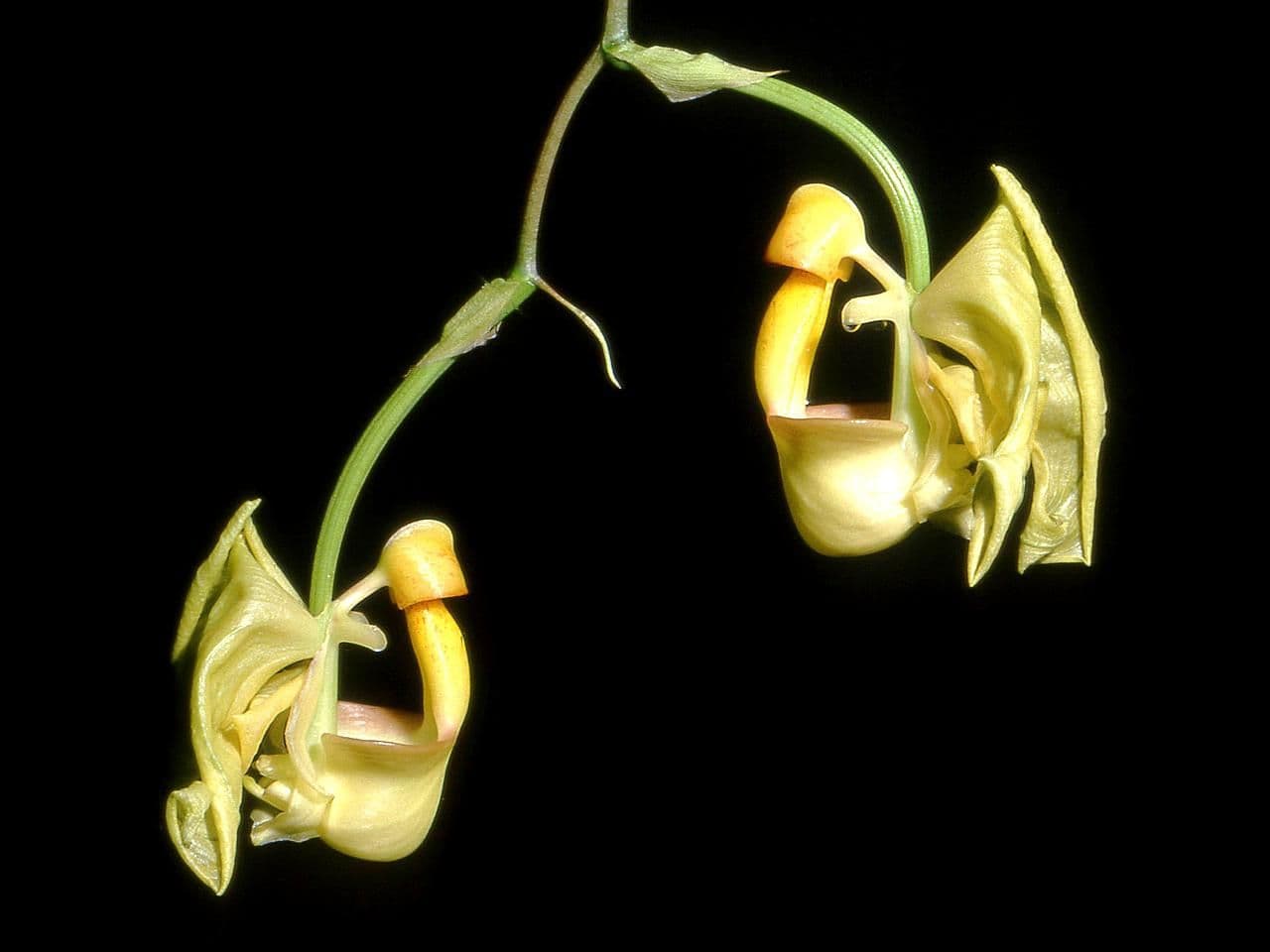
Coryanthes speciosa
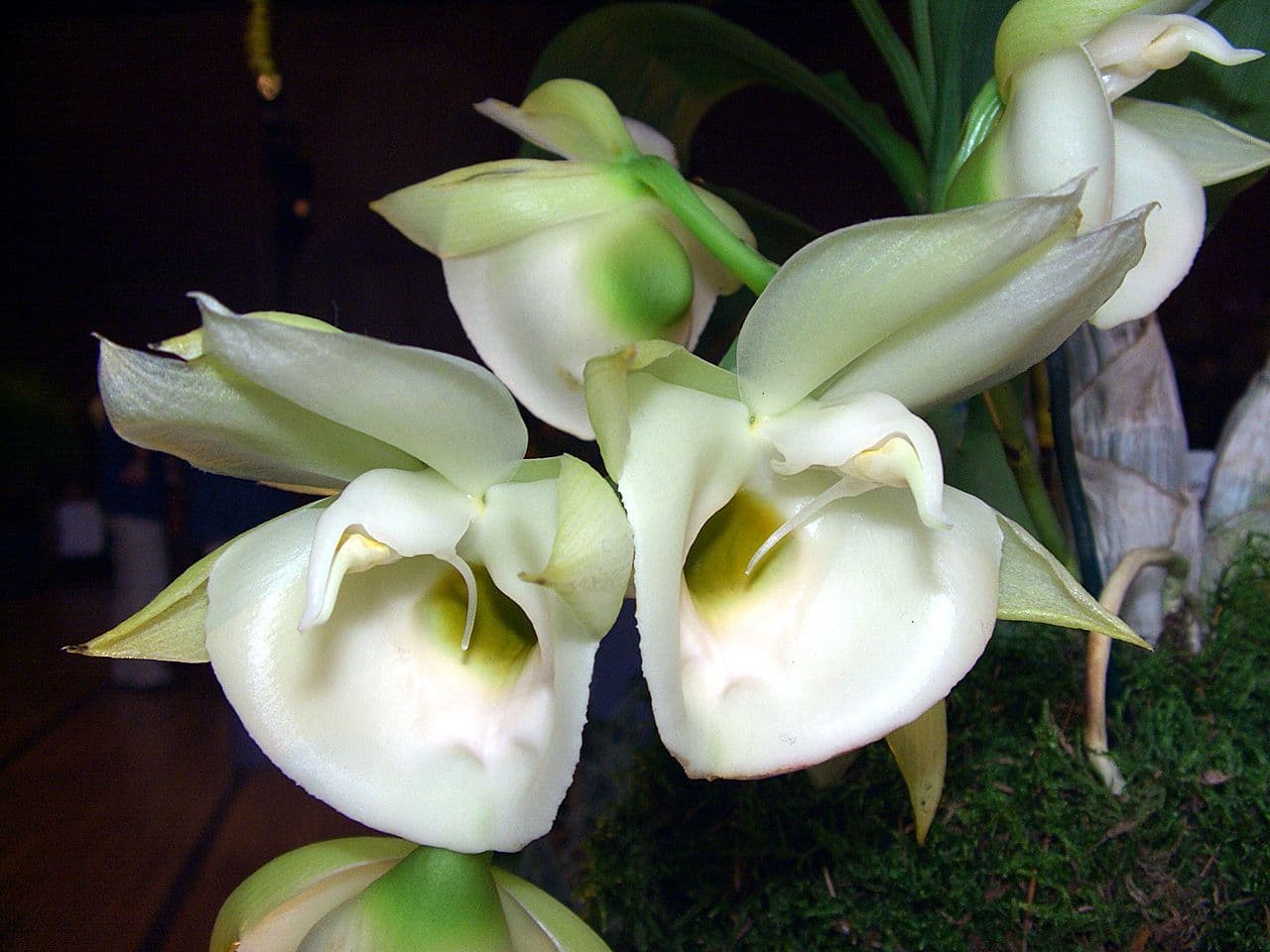
Photo: Orchi · Botanical garden (CC BY-SA 3.0)
The Bucket Orchid has one of the most extraordinary pollination mechanisms in the plant kingdom: it lures male orchid bees with aromatic oils, causes them to slip and fall into a fluid-filled bucket built into its flower, then forces them to crawl out through a narrow passage that attaches pollen masses to their body.
The Bucket Orchid has one of the most extraordinary pollination mechanisms in the plant kingdom: it lures male orchid bees with aromatic oils, causes them to slip and fall into a fluid-filled bucket built into its flower, then forces them to crawl out through a narrow passage that attaches pollen masses to their body. Found in humid lowland forest in Trinidad and Tobago, it is a flagship example of the extreme evolutionary complexity possible between orchids and their pollinators.
Description
A large hot-growing epiphyte with tall, wrinkled pseudobulbs bearing two narrow elliptic leaves. The pendant inflorescence reaches approximately 45 cm and carries one to several flowers up to 12.5 cm across. The flower is architecturally unlike any other: a hood formed by the dorsal sepal and lateral petals arches over the column, while the lip is divided into an upper fragrance-secreting region and a lower bucket (hypochile) continuously filled with aromatic liquid dripping from two glands above. The interior of the bucket is lined with downward-pointing hairs that prevent a bee from crawling back out; the only exit is a narrow spout pressed against the column. The flowers are described as fragrant with a mint-like scent.
Pollination Mechanism
Male euglossine bees (orchid bees) are drawn to the flower's aromatic compounds, which they collect for use in courtship displays. While attempting to gather these oils from the slippery inner lip, a bee loses its footing and falls into the fluid-filled bucket. Unable to climb back out over the smooth, hair-lined walls, it is forced toward the only exit: a narrow channel at the bucket's rim. As the bee squeezes through this spout, the column deposits pollen masses (pollinia) onto its thorax with an adhesive that takes up to 45 minutes to set, keeping the bee pressed against the column during that time. When the bee escapes and later falls into a second Coryanthes flower, the hardened pollinia are scraped onto the stigma, completing cross-pollination. Each Coryanthes species produces a distinct aromatic blend, ensuring near-perfect specificity to one or a few euglossine bee species.
Habitat and Range
Coryanthes speciosa grows epiphytically in humid lowland tropical forest at around 100 m elevation. It is frequently associated with ant colonies, which may provide protection or nutrient enrichment at nesting sites. The species is confirmed in Trinidad and Tobago and ranges through much of the Neotropics: French Guiana, Suriname, Guyana, Venezuela, Colombia, Peru, Brazil, and Central America as far north as Mexico.
Legal Protection
As a member of Orchidaceae, Coryanthes speciosa is covered by the CITES Appendix II family-level listing. International trade in wild-collected specimens requires export permits. No confirmed individual listing under Trinidad and Tobago's domestic legislation (Forests Act Schedule or Environmentally Sensitive Species Rules 2001) was found.
Threats
- Habitat loss
- Wild collection
- Pollinator decline