Ferns
Ferns
Sword Fern
Nephrolepis exaltata
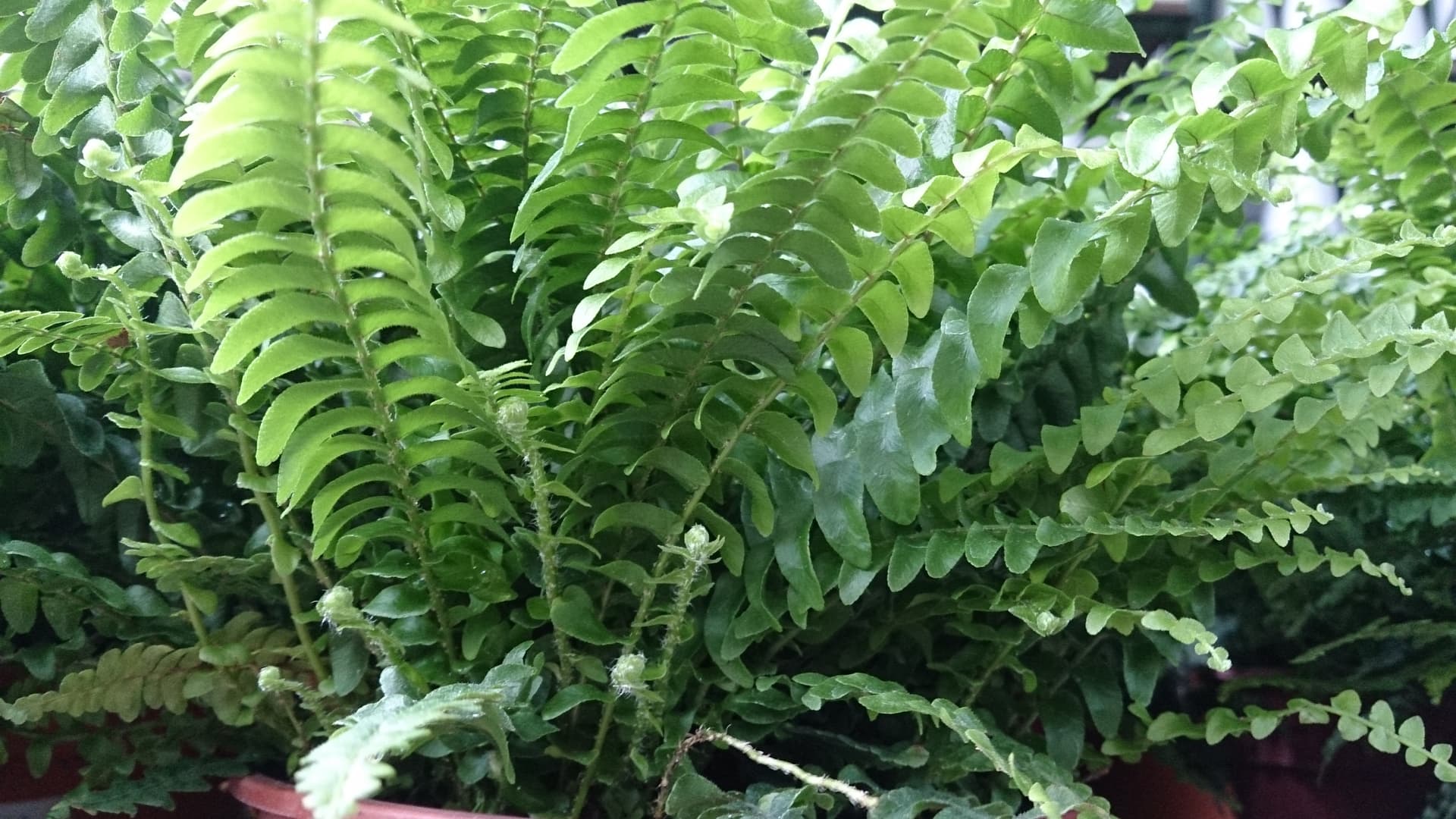
Photo: Wikimedia Commons contributor (CC BY-SA 3.0)
The Sword Fern is the most familiar fern in Trinidad and Tobago, its long, arching fronds of bright green pinnae found in gardens, on roadsides, in secondary vegetation, and at the margins of wetlands and forest across both islands.
The Sword Fern is the most familiar fern in Trinidad and Tobago, its long, arching fronds of bright green pinnae found in gardens, on roadsides, in secondary vegetation, and at the margins of wetlands and forest across both islands. The same species - or close variants of it - is among the most widely grown ferns worldwide, known as the Boston Fern in cultivation. In T&T it grows as a true wild plant in moist and disturbed habitats, spreading rapidly by runners and spores and quickly colonising bare soil and forest gaps.
Description
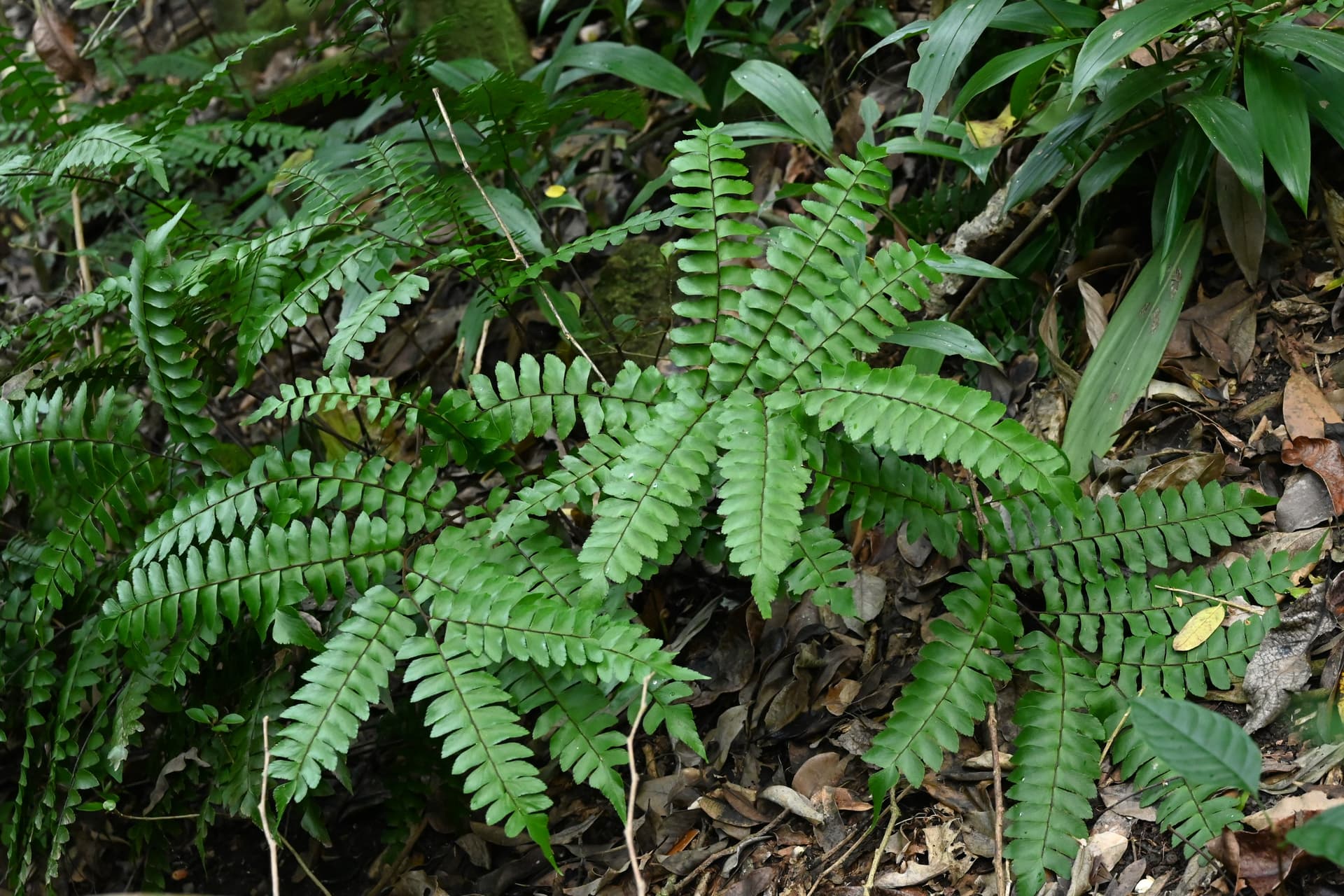
A robust, terrestrial fern producing erect to arching fronds 60 cm to 1.5 metres long from a short, erect rhizome. Each frond is once-pinnate, with numerous pairs of narrow, lance-shaped pinnae (leaflets) alternating along the central stalk. Pinnae are 3 to 7 cm long, with slightly toothed margins and a rounded base. The fronds form a dense, fountain-like rosette. Spores are produced in small, kidney-shaped sori in two rows along the margins of the undersides of the pinnae. The plant spreads laterally by long, wiry, horizontal runners (stolons) that root where they touch the ground, forming dense clumps and mats.
Ecology
Nephrolepis exaltata is an opportunistic coloniser, growing in moist, well-drained to seasonally waterlogged conditions in sun to semi-shade. It is common in secondary vegetation, forest edges, roadsides, garden beds, wetland margins, and in the shade of coconut palms and banana plants. The plant tolerates a wide range of conditions and spreads rapidly, sometimes becoming dominant in disturbed ground. In natural habitats it grows in the understorey of moist forest and on stream banks. It is a host plant for several butterfly caterpillars.
Horticulture
The Boston Fern cultivar of Nephrolepis exaltata is one of the most widely grown indoor ferns in the world, selected for its particularly luxuriant, drooping fronds. In T&T the wild form is used in home gardens as a ground cover and is appreciated for its ease of growth. The plant is also used in flower arrangements. Despite its very wide cultivation, the wild T&T plants maintain their ecological role as a component of moist secondary habitats. It is one of the few truly wild ferns that most people in T&T encounter regularly.
Threats
- No conservation concern; very widespread