Shrubs & Herbs
Shrubs & Herbs
Soursop
Annona muricata
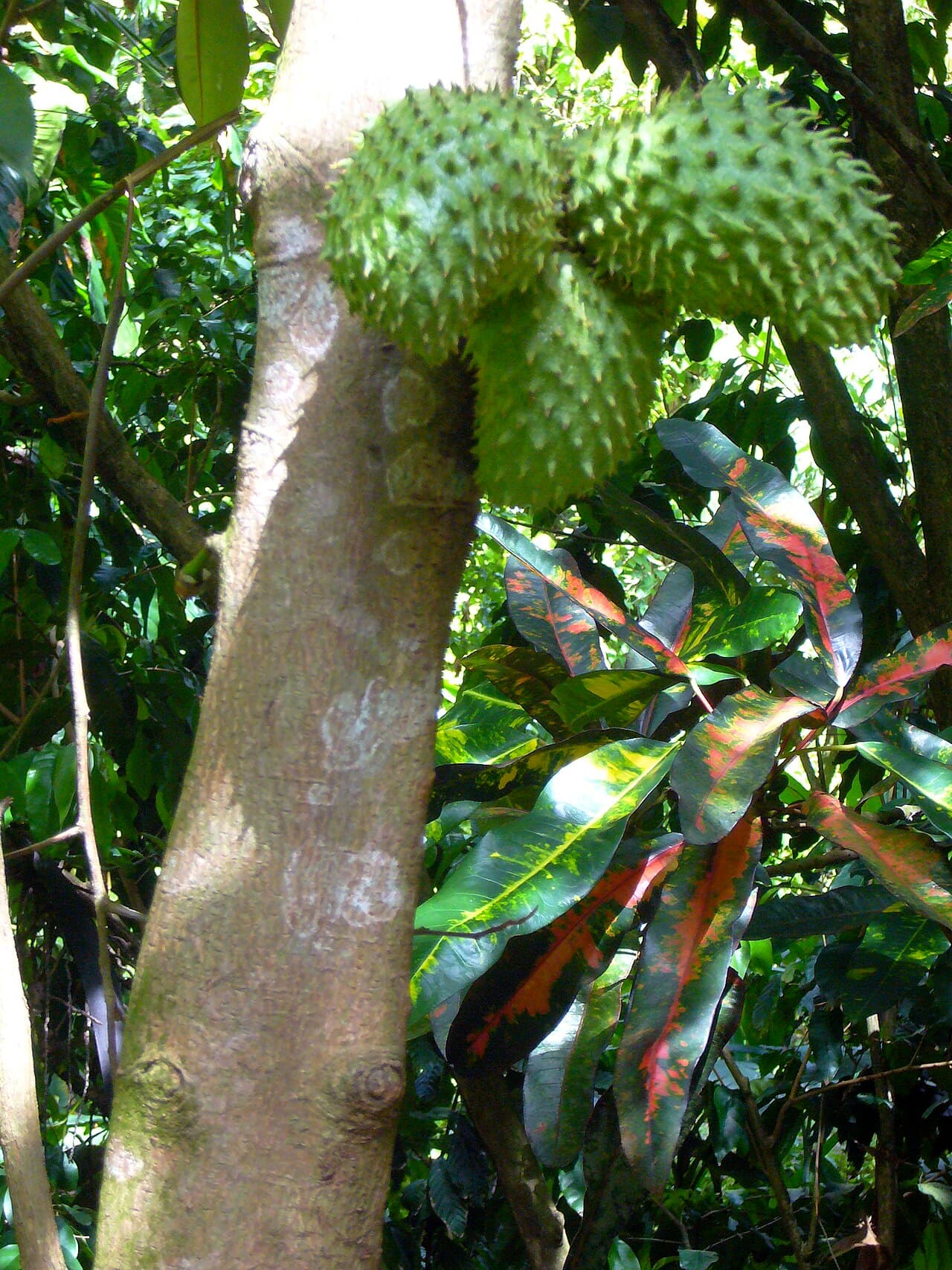
Photo: Wikimedia Commons contributor (CC BY 2.0)
Soursop is a beloved small fruit tree of Trinidad and Tobago, producing one of the Caribbean's most distinctive and widely consumed fruits: a large, irregularly oval, dark green pod covered in soft spines and filled with white, creamy, intensely aromatic pulp.
Soursop is a beloved small fruit tree of Trinidad and Tobago, producing one of the Caribbean's most distinctive and widely consumed fruits: a large, irregularly oval, dark green pod covered in soft spines and filled with white, creamy, intensely aromatic pulp. The flavour - a complex combination of citrus, banana, pineapple, and cream - makes soursop juice, ice cream, and preserves among the most popular T&T fruit products. Beyond its culinary value, soursop leaves are one of the most widely used bush medicines in T&T, prepared as a tea for a broad range of complaints.
Description
A small evergreen tree typically 4 to 8 metres tall with a slender trunk and irregular, spreading crown. Leaves are elliptic to oblong, dark glossy green above and paler below, with a distinctive, slightly unpleasant smell when crushed. Flowers are large, fleshy, three-petalled, pale yellow-green, produced singly on the trunk and branches (cauliflorous); they are pollinated by beetles and open at night. The fruit is the largest of the genus Annona: typically 15 to 35 cm long, weighing up to 3 to 4 kg or more, covered in soft, curved spines and containing white, juicy, fibrous, segmented pulp around many large, black seeds.
Culinary Use
Soursop pulp is consumed fresh and used to make juices, ice cream, sorbet, mousse, punch, and preserves throughout T&T. Soursop juice, sweetened and served chilled, is one of the most widely sold fruit drinks at roadside stalls and in restaurants across the country. The flavour is intense and aromatic; the acidity and sweetness vary between trees and ripeness stages. The fruit is also eaten fresh, the pulp scooped from the skin. Soursop is grown in home gardens and in small orchards on both islands.
Medicinal Use
Soursop leaves are one of the most commonly used bush medicines in T&T, prepared as a tea for sleeplessness, anxiety, hypertension, diabetes, and various inflammatory conditions. In recent years, claims circulating on social media that soursop compounds (annonacins) can cure cancer have attracted enormous attention; while laboratory research has identified cytotoxic compounds in soursop, clinical evidence for cancer treatment is absent and the annonacins in soursop are also neurotoxic in high doses and linked to an atypical Parkinson's-like syndrome with excessive consumption. Medical authorities in T&T and internationally urge caution with high-dose leaf extracts.
Threats
- Generally common; no conservation concern for cultivated populations
- Wild populations in secondary forest face clearing pressure