Trees
Trees
Crapaud Bois
Carapa guianensis
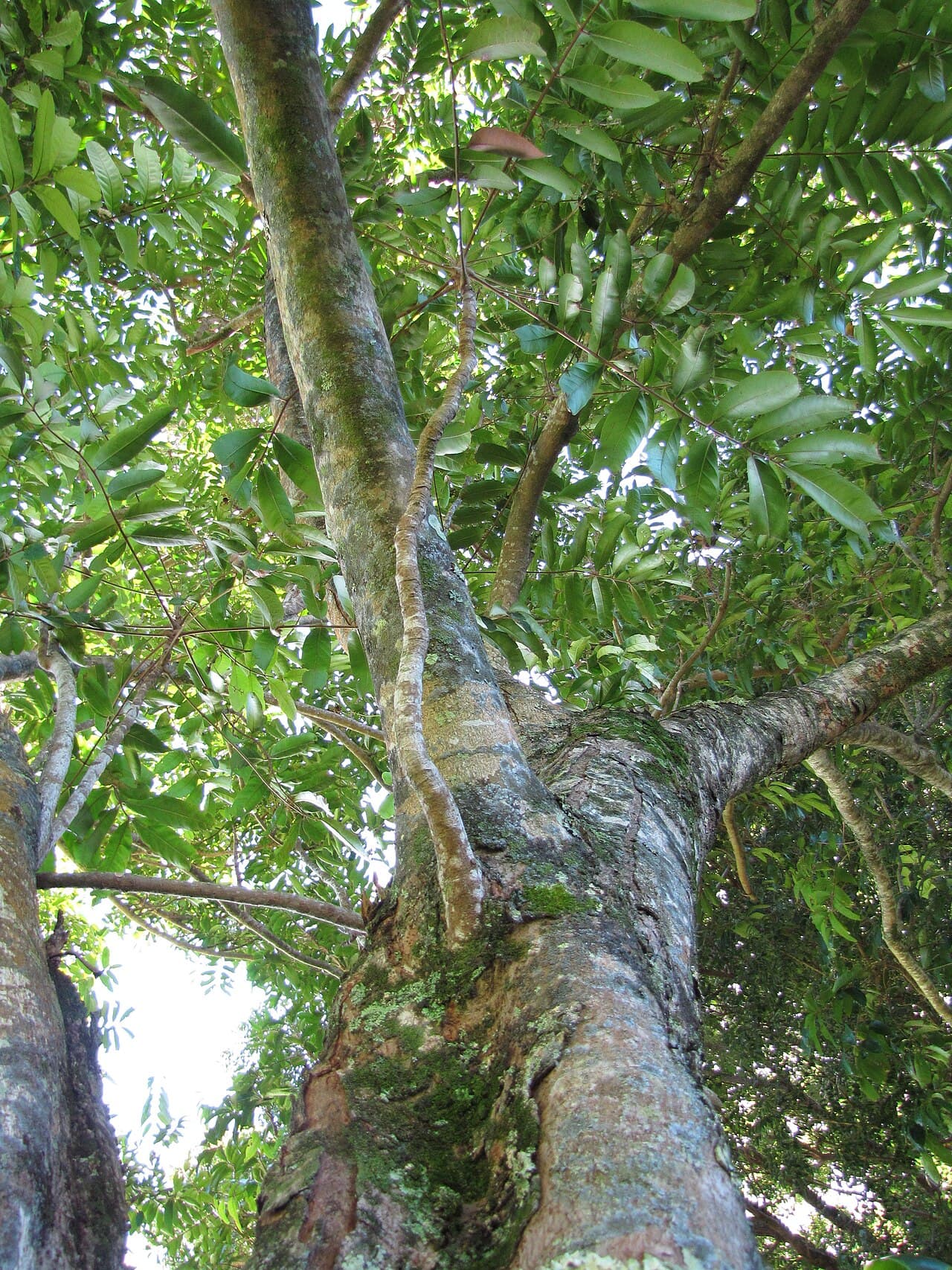
Photo: Forest and Kim Starr · Kahanu Gardens, Maui, Hawaii (CC BY 3.0 US)
Crapaud Bois, known internationally as Andiroba or Crabwood, is a large canopy tree of Trinidad's lowland and swamp-edge forests whose large, oily seeds have been used medicinally and commercially for centuries.
Crapaud Bois, known internationally as Andiroba or Crabwood, is a large canopy tree of Trinidad's lowland and swamp-edge forests whose large, oily seeds have been used medicinally and commercially for centuries. The seed oil, cold-pressed from the large round seeds, is one of the most traditional plant oils of the Caribbean and Amazonia, valued as an insect repellent, skin treatment, and lamp fuel. The timber is one of the finest mahogany-family hardwoods in the region.
Description
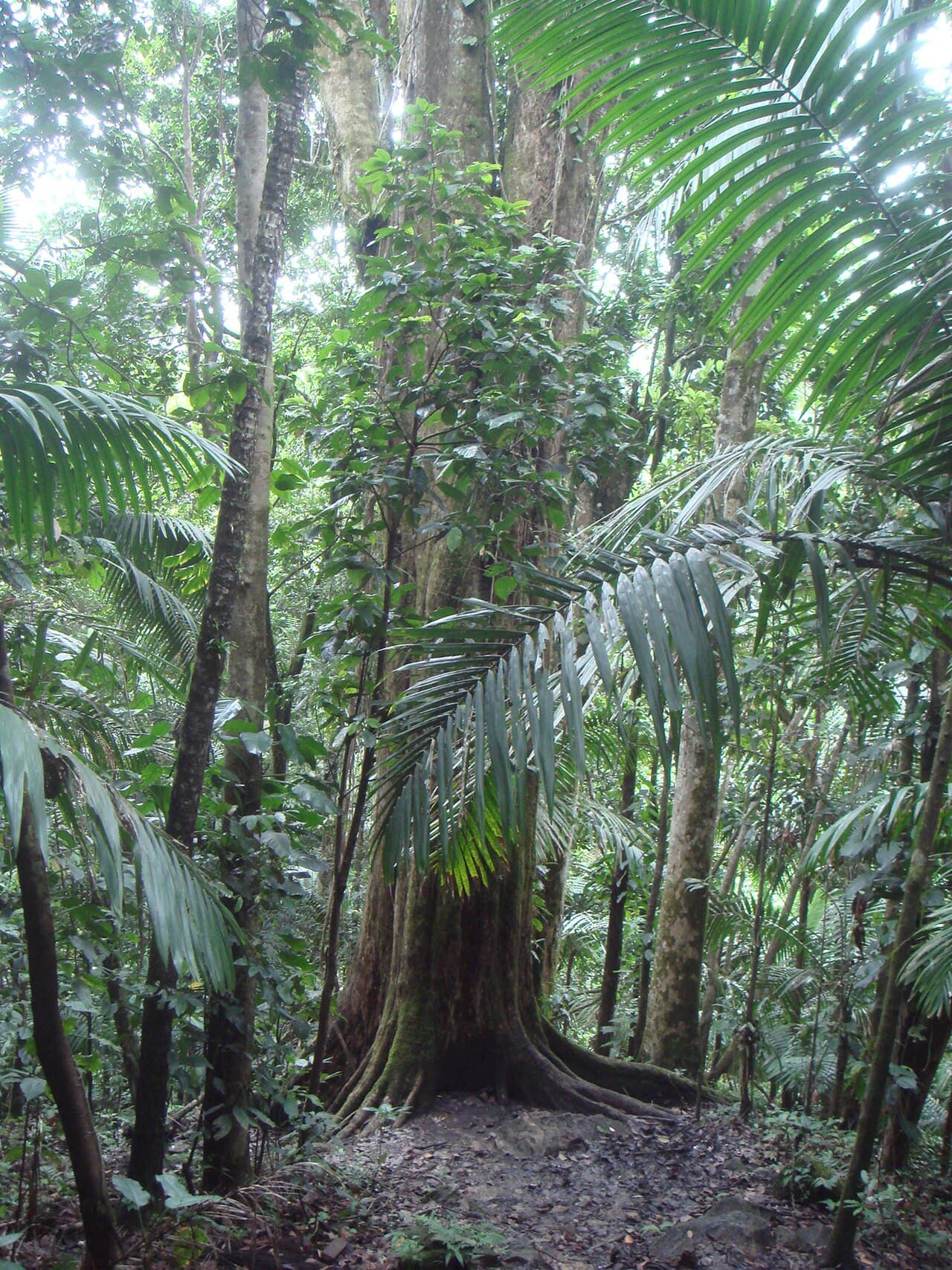
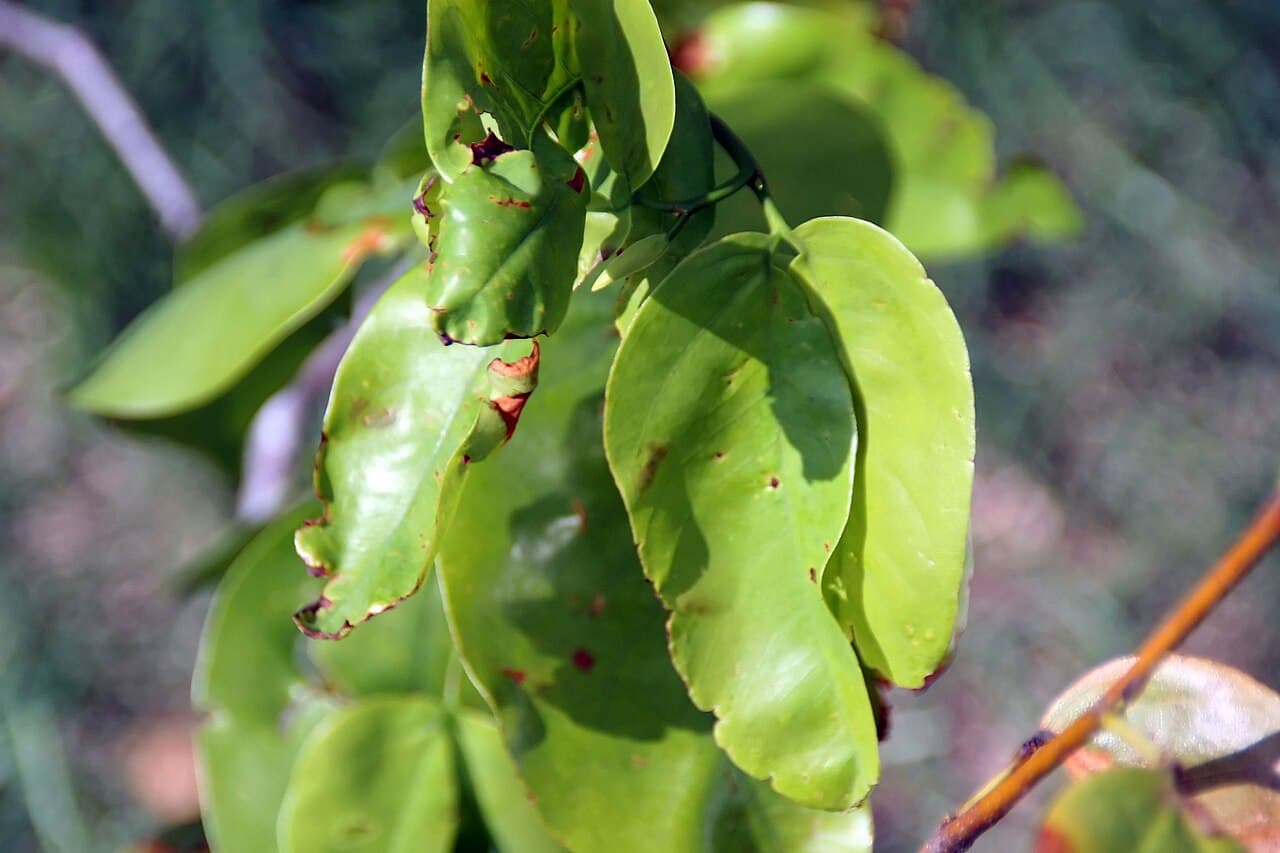
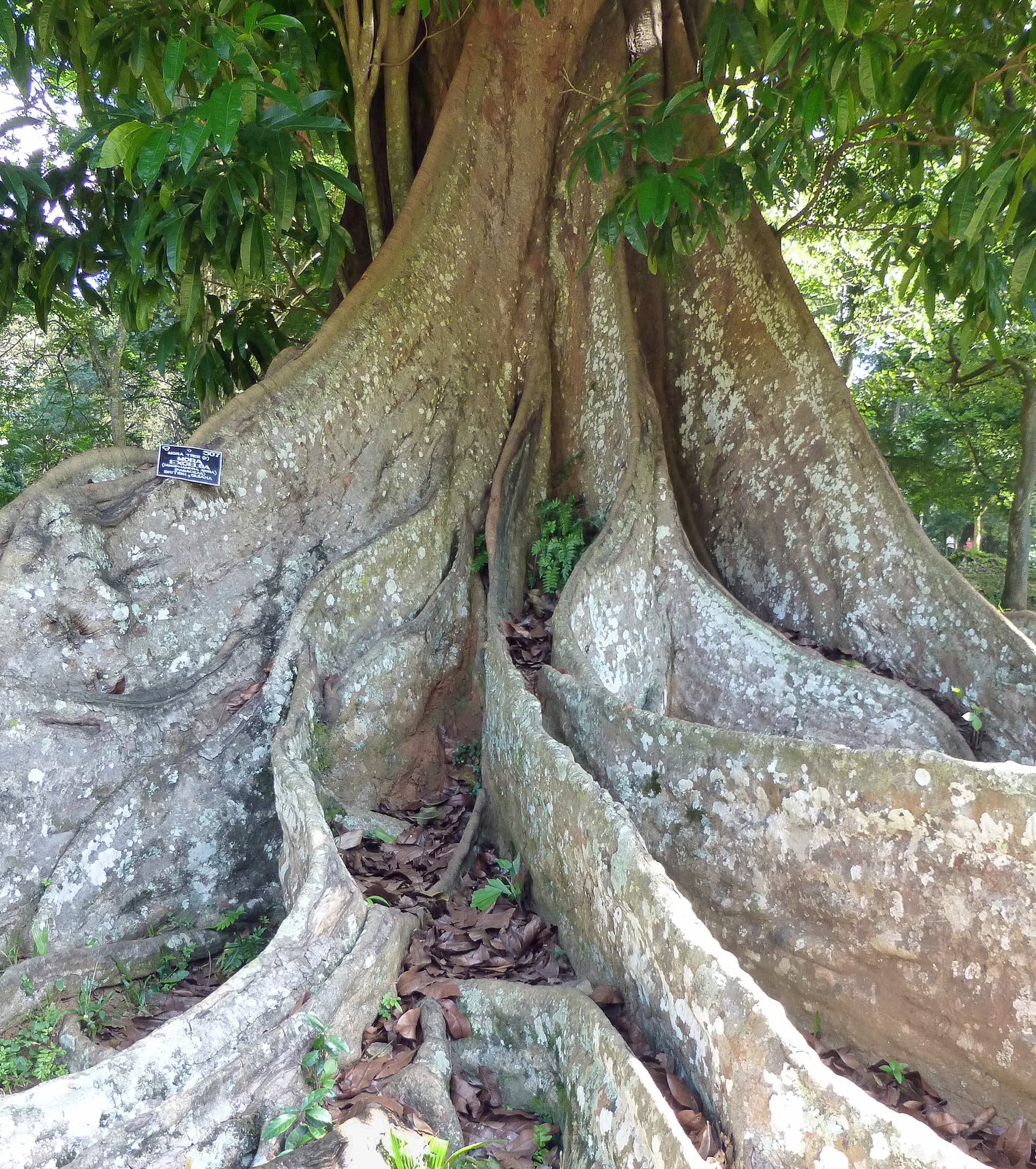
A large evergreen tree reaching 30 to 40 metres, often with prominent plank buttresses at the base. Bark is reddish-brown, scaly, and bitter-tasting, with noticeable resinous aromatic qualities. Leaves are large and pinnately compound with 8 to 16 pairs of leaflets. Flowers are small, white to pale yellow, produced in large panicles; they are fragrant and attract bees. The fruit is a large, round to four-lobed woody capsule, 8 to 15 cm across, that splits into four valves when ripe to release 4 to 12 large, angular seeds packed tightly together. Seeds are large, brown, and extremely oily.
Ecology
Crapaud Bois is characteristic of moist, low-lying forest, swamp margins, and flooded forest. In Trinidad it occurs mainly in the lowland forests of the Northern Range foothills and areas bordering freshwater swamps. The large seeds have no obvious wind or animal dispersal mechanism; they simply drop to the forest floor and germinate close to the parent tree, relying on flooding to carry them short distances. Seedlings are shade-tolerant and can persist under closed canopy for years before a gap allows upward growth. The seeds and fallen fruit are eaten by agoutis and other rodents, which also disperse them by caching.
Uses and Conservation
Andiroba oil pressed from the seeds has been used across the Caribbean and Amazonia for generations as a mosquito and insect repellent, rubbed directly on the skin. It also has anti-inflammatory properties and is used in traditional wound treatment and as a base for herbal preparations. The timber, a reddish-brown hardwood with interlocked grain, is commercially comparable to genuine mahogany and is used for furniture, boat-building, and joinery. In Trinidad, harvesting on State Lands requires Forestry Division permits. International trade is not CITES-restricted, but sustainable sourcing programmes exist in Brazil.
Threats
- Selective logging
- Lowland forest loss
- Over-collection for oil