Orchids
Orchids
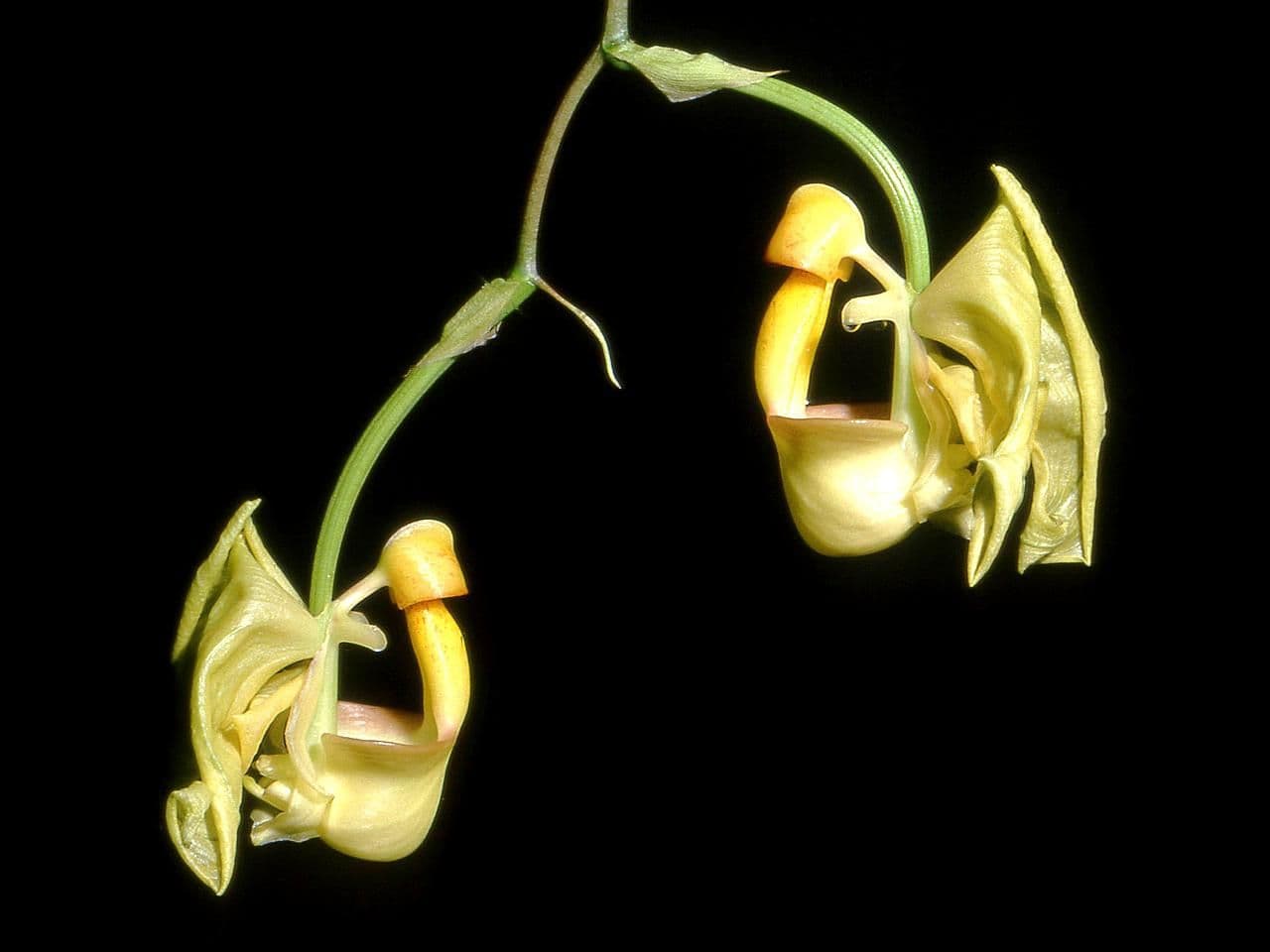
Pileated Catasetum
Catasetum pileatum
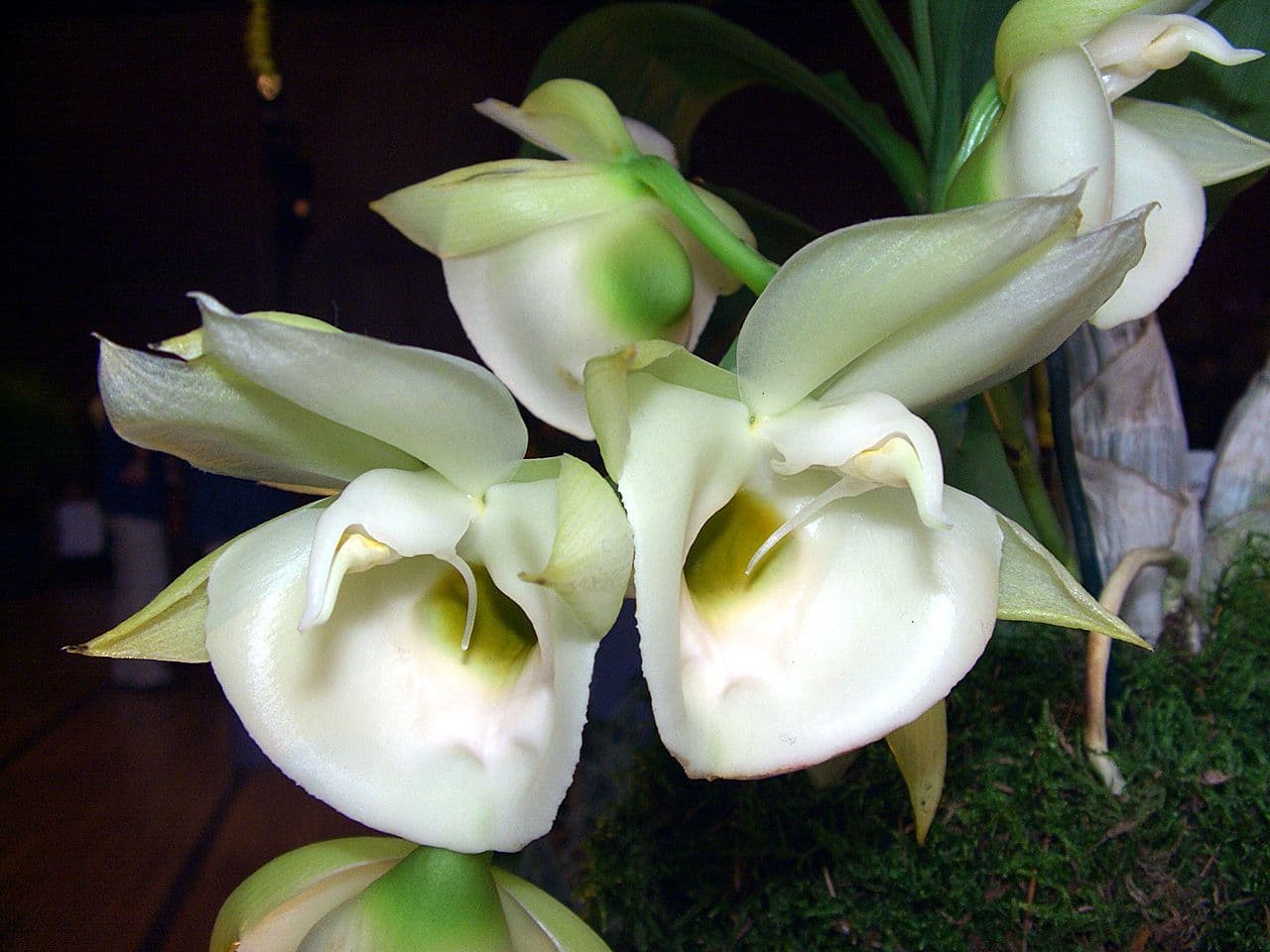
Photo: Orchi · Orchid Exhibition, 2006 (CC BY-SA 3.0)
The Pileated Catasetum is one of the showiest orchids in the Trinidad flora: a large, fragrant epiphyte whose ivory to pearl-white flowers open wide on pendant spikes in the canopy of humid lowland forest.
The Pileated Catasetum is one of the showiest orchids in the Trinidad flora: a large, fragrant epiphyte whose ivory to pearl-white flowers open wide on pendant spikes in the canopy of humid lowland forest. Once the national flower of Venezuela, it is also notable for a remarkable pollination mechanism in which the flower fires pollen masses at visiting orchid bees with explosive force.
Description
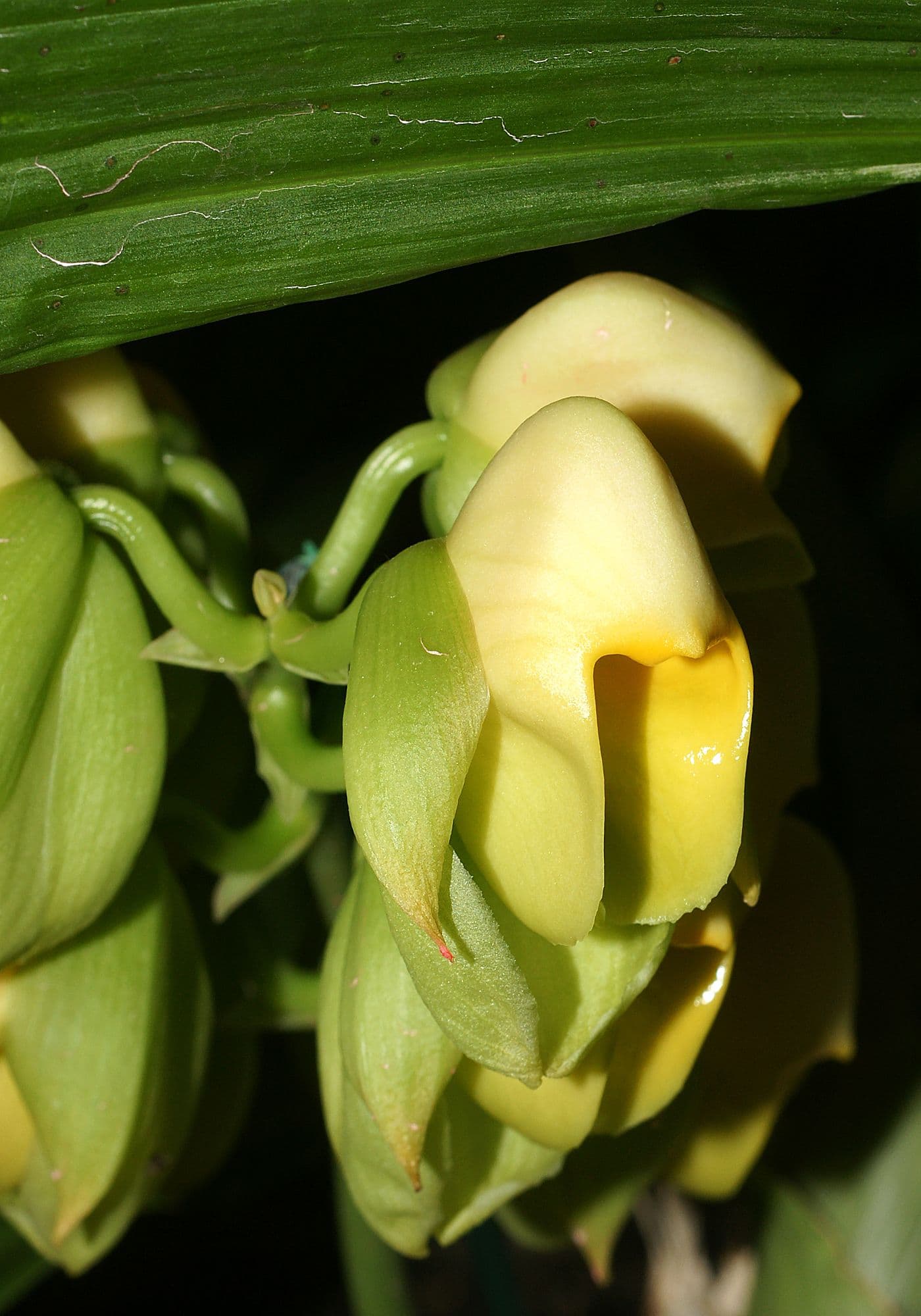
A large hot-growing epiphyte with clustered fusiform pseudobulbs bearing pleated, lanceolate leaves. Each flowering spike emerges from the base and carries four to ten flowers that open flat and measure more than 10 cm across. The typical form is ivory to pearl-white with a greenish-yellow suffusion; colour varieties range from pure white to orange. Like all Catasetum, male and female flowers are strikingly different in appearance and occur on separate plants, a degree of sexual dimorphism so pronounced that early botanists described them as different species.
Habitat and Ecology
Catasetum pileatum grows epiphytically in humid tropical forest from lowland areas to lower foothill elevations (around 100 to 200 m). Its range extends from Trinidad eastward through Venezuela, Colombia, and Ecuador, with Trinidad representing the western terminus. Male euglossine bees (orchid bees) are the pollinators: they visit the flowers to collect volatile aromatic compounds, which they store in specialised pouches in their swollen hind legs and later use in courtship displays. Contact with trigger hairs near the anther causes the flower to fire its pollen masses onto the bee's thorax with explosive force, a unique ballistic delivery system. The orchid offers no nectar; the bee receives only fragrance compounds.
Cultural and Historical Significance
Catasetum pileatum served as the national flower of Venezuela until 1921, when it was replaced by Cattleya mossiae, reflecting its prominence in the botanical culture of northern South America. Its large, strongly fragrant flowers made it a prized specimen among 19th-century orchid collectors, and multiple colour forms were historically described as separate species before modern taxonomy consolidated them.
Legal Protection
As a member of the family Orchidaceae, Catasetum pileatum is covered by the CITES Appendix II family-level listing, which applies to all wild orchids globally. International trade in wild-collected specimens requires export permits from the country of origin. No confirmed individual listing under Trinidad and Tobago's Forests Act Schedule or the Environmentally Sensitive Species Rules 2001 was found; collection from State forests would be regulated under the Forests Act.
Threats
- Wild collection
- Habitat loss
- Illegal orchid trade