Bird
Bird
Wilson's Plover
Charadrius wilsonia
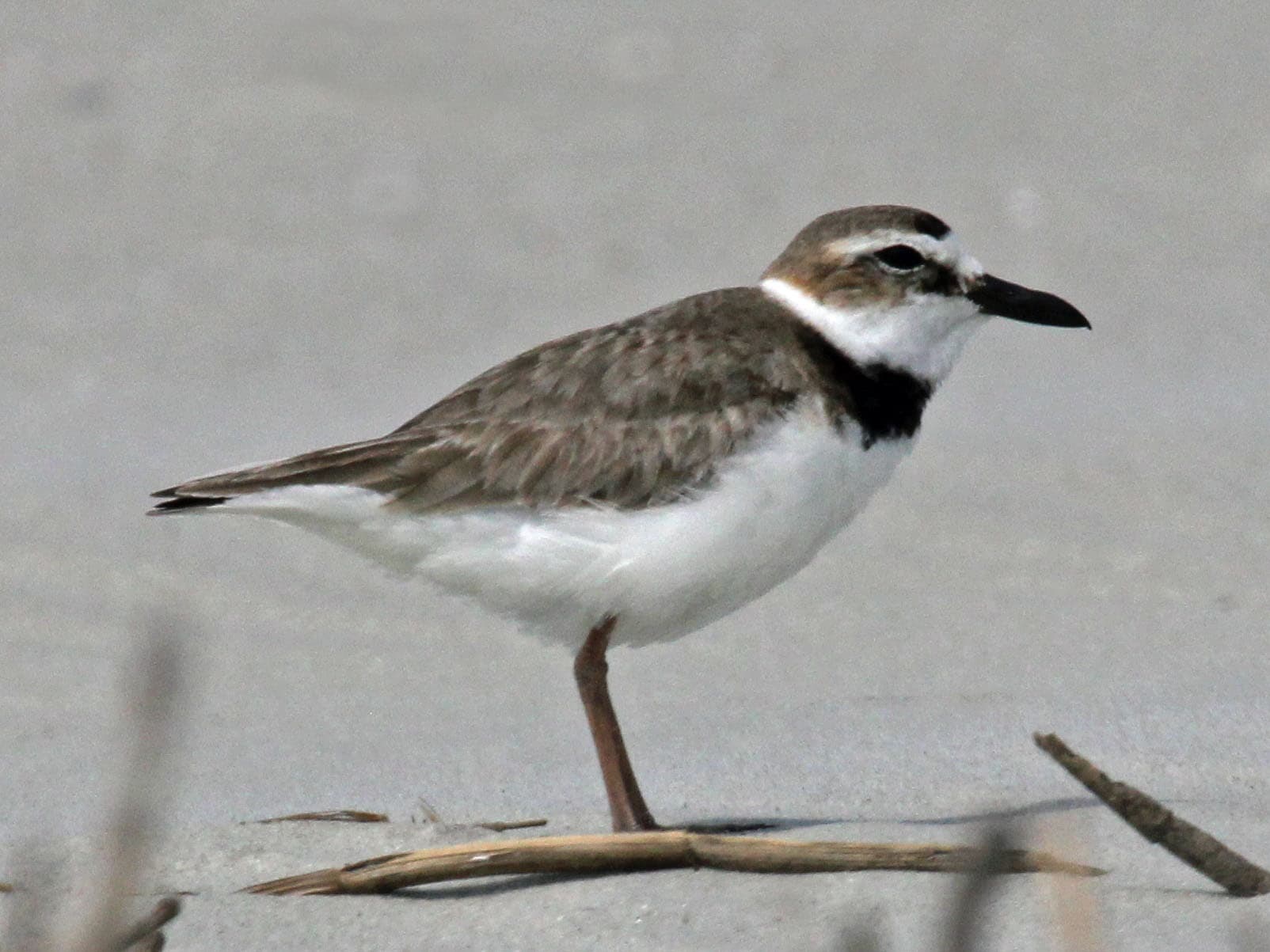
Wilson's Plover is a resident shorebird of Trinidad's sandy and muddy coastlines, distinguished from the many migratory plovers passing through by its notably large, heavy black bill adapted for taking crabs.
Wilson's Plover is a resident shorebird of Trinidad's sandy and muddy coastlines, distinguished from the many migratory plovers passing through by its notably large, heavy black bill adapted for taking crabs.
Identification
A medium-sized plover around 17 to 20 cm long, with sandy brown upperparts, white underparts, a single dark breast band, and pale pinkish legs. Its most distinctive feature is a disproportionately large, thick black bill, considerably heavier than that of the similarly patterned Semipalmated Plover, adapted for handling crabs and larger invertebrates.
Behaviour
Forages on sandy beaches, mudflats, and salt flats for fiddler crabs and other crustaceans, which its heavy bill is well suited to crush and manipulate. Unlike many plovers seen in Trinidad, it is a year-round resident that breeds locally, nesting in a shallow scrape on open sand or shell-covered ground above the tide line.
Status in T&T
A resident breeding species along suitable sandy and muddy coastlines in Trinidad, generally uncommon and localised. Not considered threatened at a global level, though sensitive to disturbance of open beach nesting sites. It is protected as native wildlife under the Conservation of Wildlife Act.
Threats
- Disturbance of open beach nesting sites by human activity