Amphibian
Amphibian
Trinidad Stream Frog
Mannophryne trinitatis
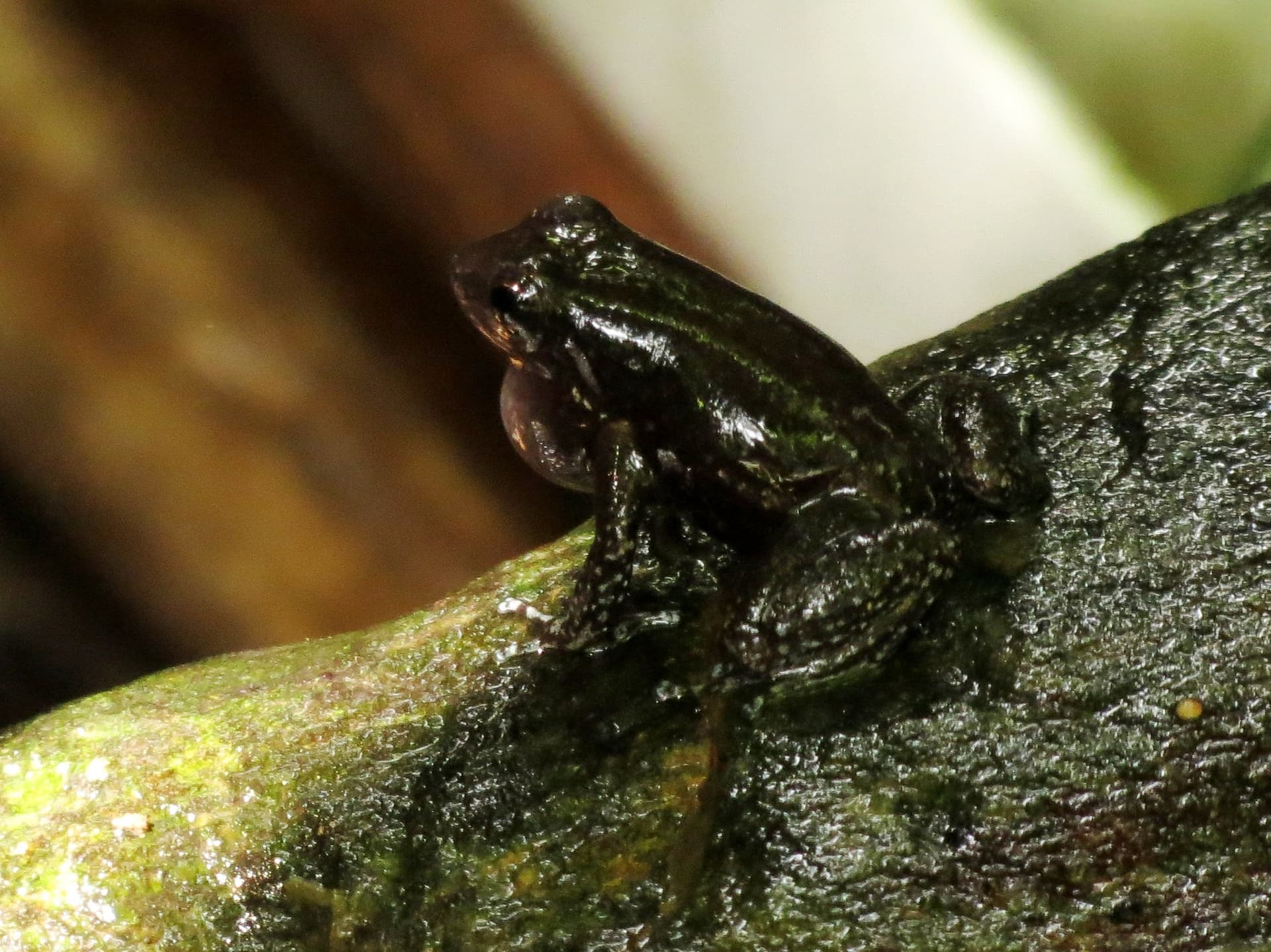
The Trinidad Stream Frog is a small, dark, diurnal frog found along fast-flowing forest streams in the Northern Range, one of a group of poison-frog relatives that, unlike their toxic Amazonian cousins, are not known to be toxic themselves.
The Trinidad Stream Frog is a small, dark, diurnal frog found along fast-flowing forest streams in the Northern Range, one of a group of poison-frog relatives that, unlike their toxic Amazonian cousins, are not known to be toxic themselves.
Identification
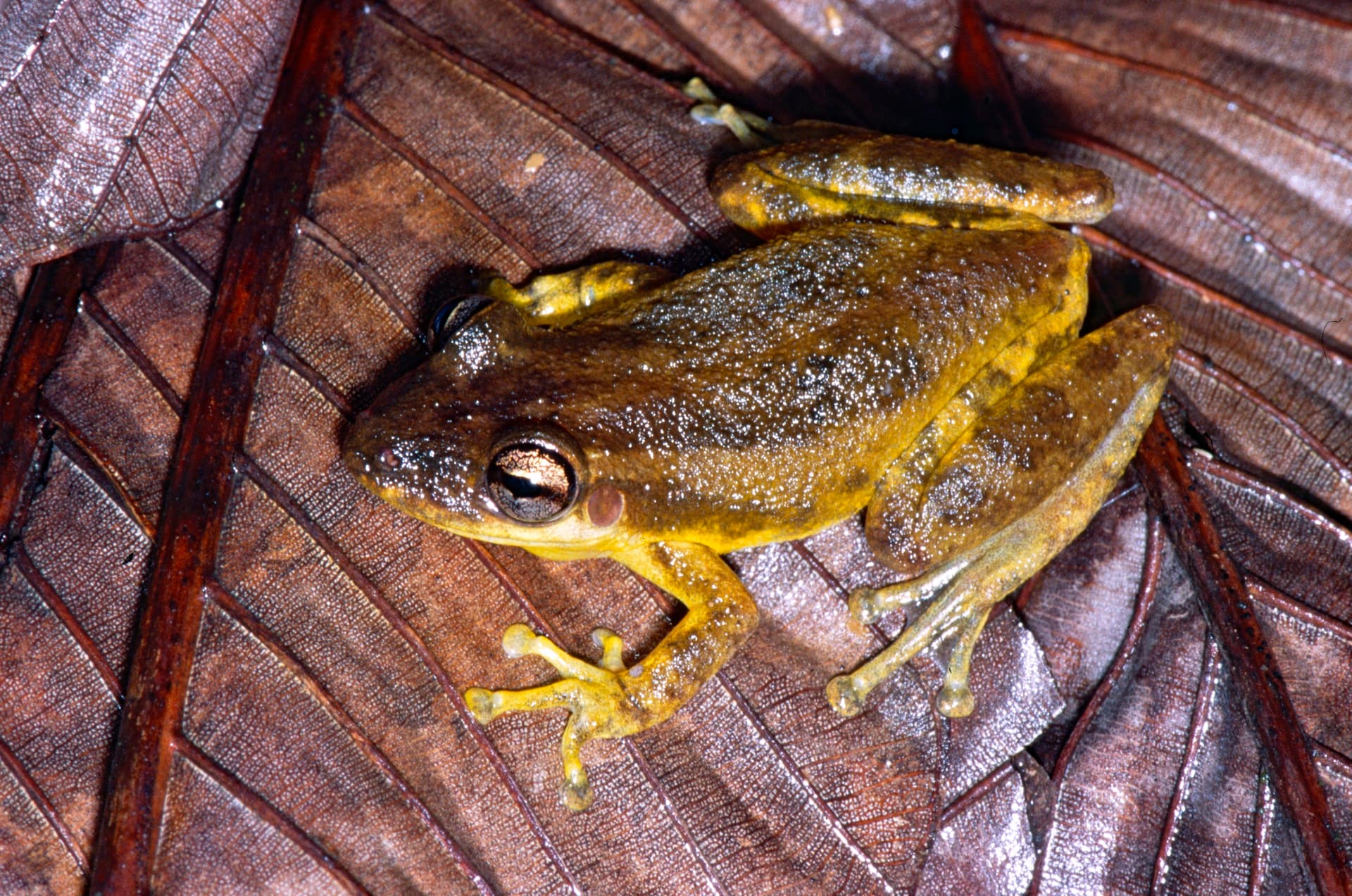
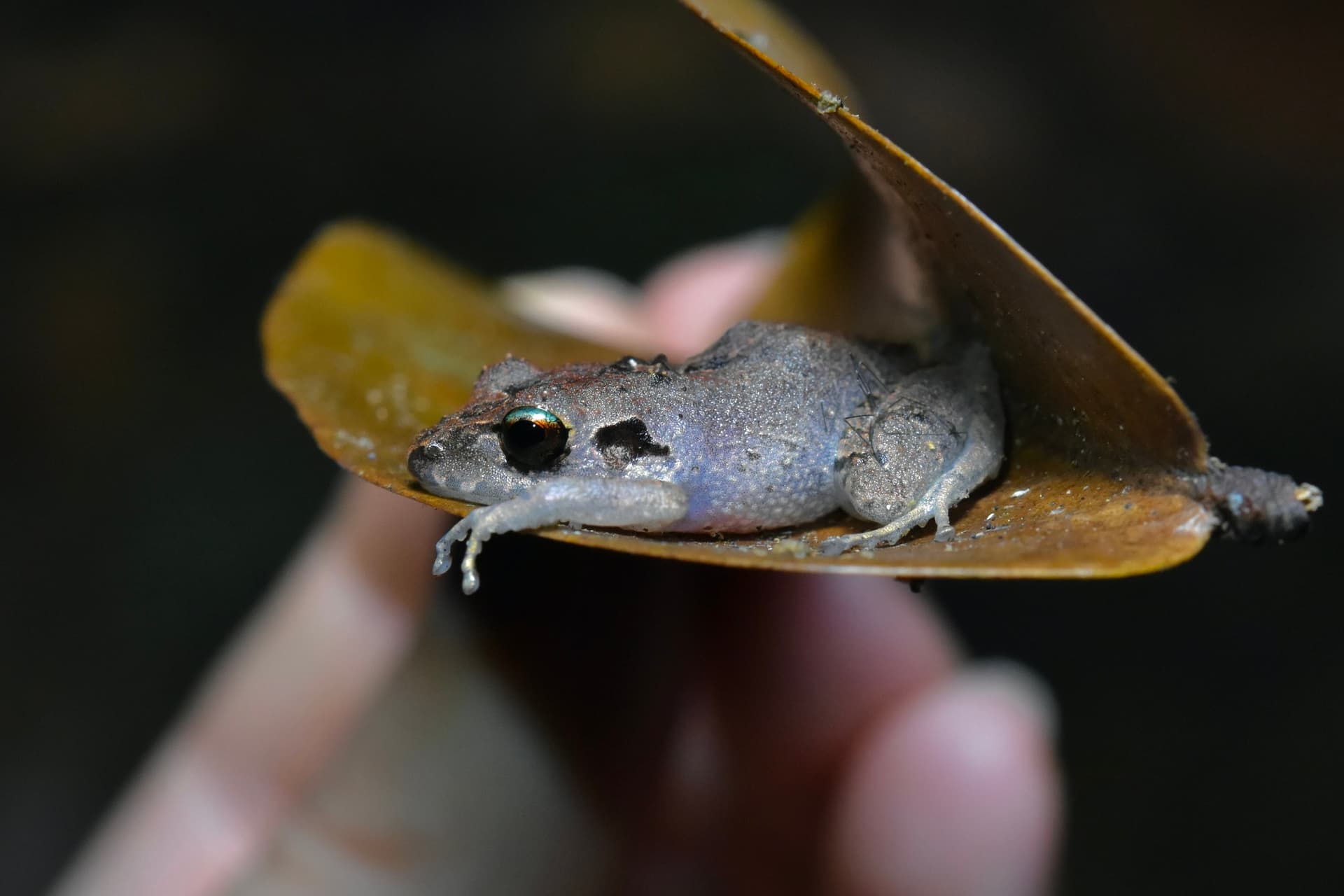
A small frog around 2 to 3 cm long, with dark brown to blackish upperparts, a pale stripe running along the side of the body, and a yellowish or orange wash on the concealed surfaces of the legs, visible mainly when the frog jumps or is handled. Its slender build and long legs suit life among wet rocks and stream margins.
Behaviour
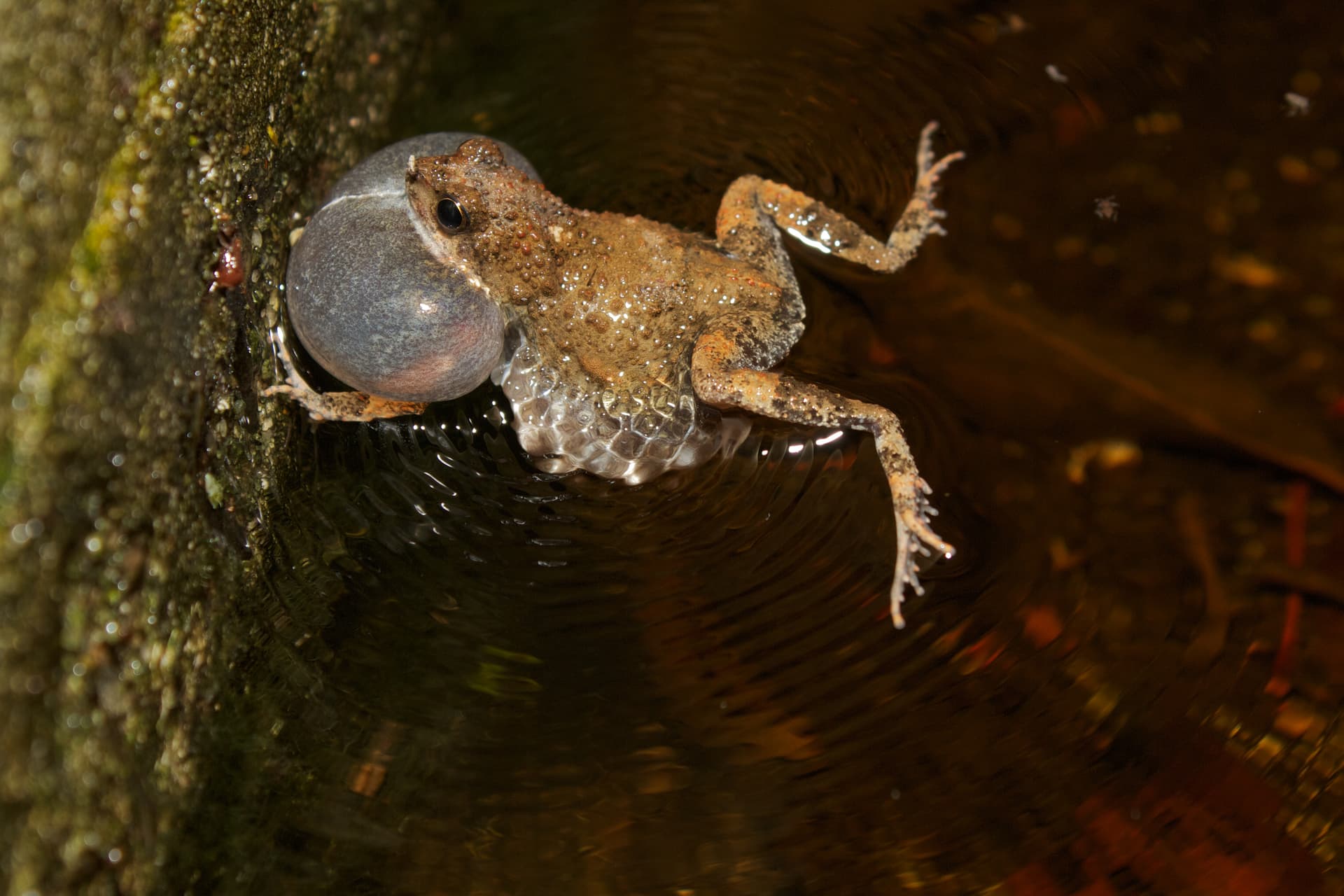
Active by day along the rocky margins of clear forest streams, foraging for small invertebrates among wet rocks and leaf litter. Males call from streamside perches with a series of soft clicking notes, and unlike many frogs that lay eggs in still water, females of this group typically deposit eggs on land near the stream, with the male transporting hatched tadpoles to the water on his back.
Status in T&T
Found along clear, fast-flowing forest streams in Trinidad's Northern Range, generally in good condition where forest cover and water quality remain intact. Not considered threatened, though sensitive to stream pollution and forest clearance. It is protected as native wildlife under the Conservation of Wildlife Act.
Threats
- Stream pollution and sedimentation
- Forest clearance along stream corridors