Reptile
Reptile
Spectacled Caiman
Caiman crocodilus
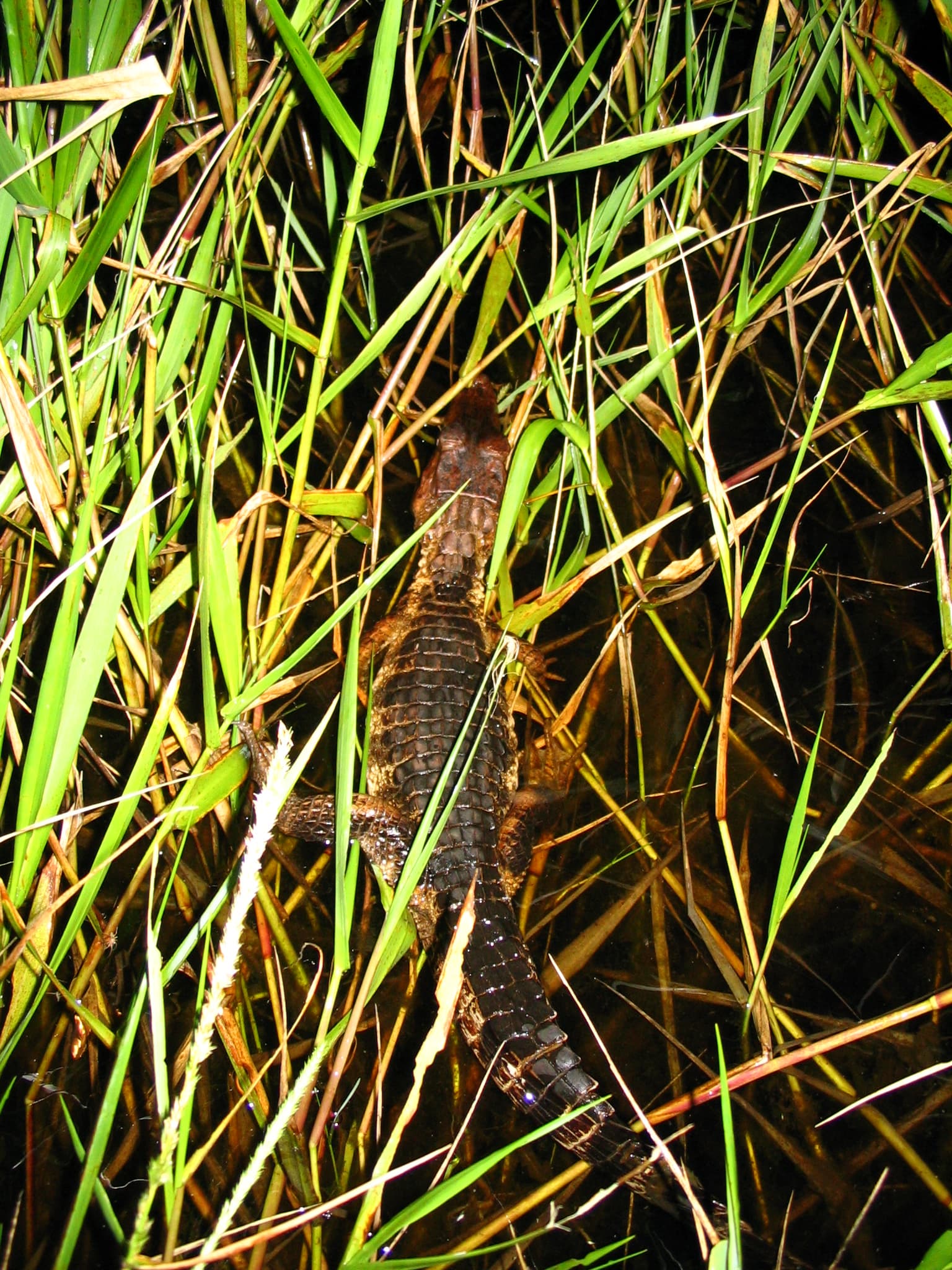
The Spectacled Caiman (Caiman crocodilus) is the larger of Trinidad's two crocodilians and a familiar resident of the island's freshwater swamps, rivers, and roadside ditches.
The Spectacled Caiman (Caiman crocodilus) is the larger of Trinidad's two crocodilians and a familiar resident of the island's freshwater swamps, rivers, and roadside ditches. Its common name comes from the bony ridge between the eyes that resembles the bridge of a pair of spectacles.
Identification
The Spectacled Caiman is a medium-sized member of the alligator family, typically reaching 1.4 to 2.5 m in length, with large males occasionally exceeding 3 m. It is distinguished from Trinidad's smaller Dwarf Caiman by the bony curved ridge running across the snout in front of the eyes, which gives the species its name. The body is olive to greyish, with darker crossbands that fade as the animal matures.
Ecology
This species favours lowland freshwater habitats such as swamps, marshes, lakes, slow rivers, and man-made reservoirs, though it tolerates brackish and saline water and will colonise new wetlands readily. It is an opportunistic predator: juveniles take insects and crustaceans, while adults feed on fish, crabs, snails, amphibians, reptiles, small mammals, and waterbirds.
Females build mound nests of vegetation and guard the eggs, and the species can survive seasonal drought by aestivating in burrows.
Status in T&T
In Trinidad the Spectacled Caiman is common in the Nariva Swamp, the Caroni Swamp, and other freshwater wetlands across the lowlands. Globally the IUCN lists it as Least Concern thanks to its very wide range and large population, and it is listed on CITES Appendix II, which regulates international trade. Locally it is treated as a partially protected species under Trinidad and Tobago wildlife legislation.