Fish
Fish
Spanish Mackerel
Scomberomorus brasiliensis
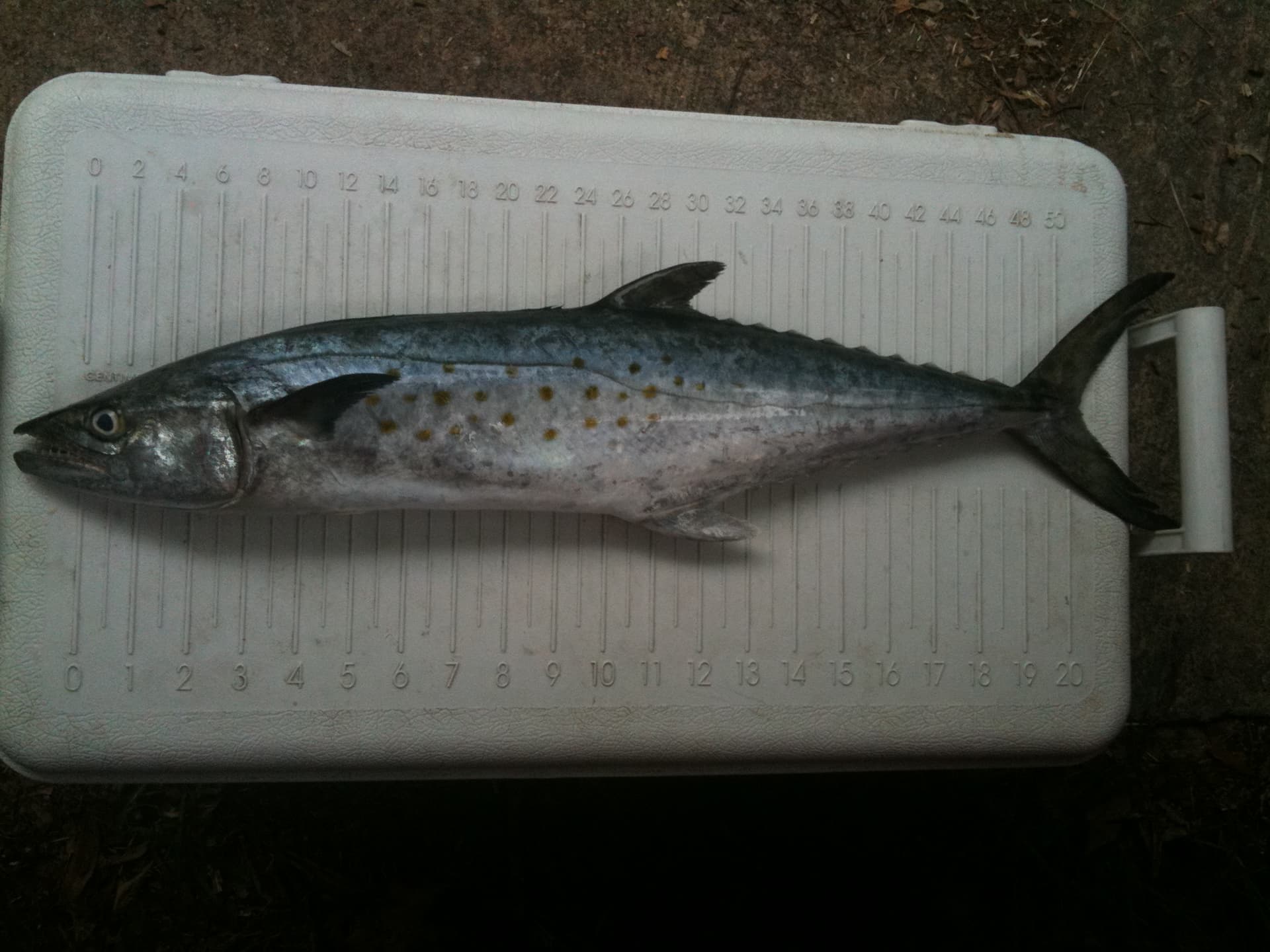
The Spanish Mackerel is a fast-swimming coastal predator common in Trinidad and Tobago's nearshore waters, an important food fish recognised by the rows of bronze to golden spots along its silvery flanks.
The Spanish Mackerel is a fast-swimming coastal predator common in Trinidad and Tobago's nearshore waters, an important food fish recognised by the rows of bronze to golden spots along its silvery flanks.
Identification
A streamlined, torpedo-shaped fish typically 40 to 70 cm long, with a metallic blue-green back, silvery sides marked with rows of yellowish-bronze spots, and a deeply forked tail built for fast, sustained swimming. Small, sharp teeth reflect its predatory habits.
Ecology
Forms fast-moving schools in coastal and nearshore waters, preying on smaller schooling fish such as sardines and anchovies, which it pursues with rapid bursts of speed. It undertakes seasonal movements along the coast linked to water temperature and prey availability, and is a popular target for both commercial and recreational fishers.
Status in T&T
Common in coastal waters around Trinidad and Tobago, forming an important part of the local commercial and artisanal fishery. Not considered globally threatened, though subject to standard fisheries management concerns around sustainable catch levels.
Threats
- Overfishing if catch levels are not sustainably managed