Bird
Bird
Scarlet Ibis
Eudocimus ruber
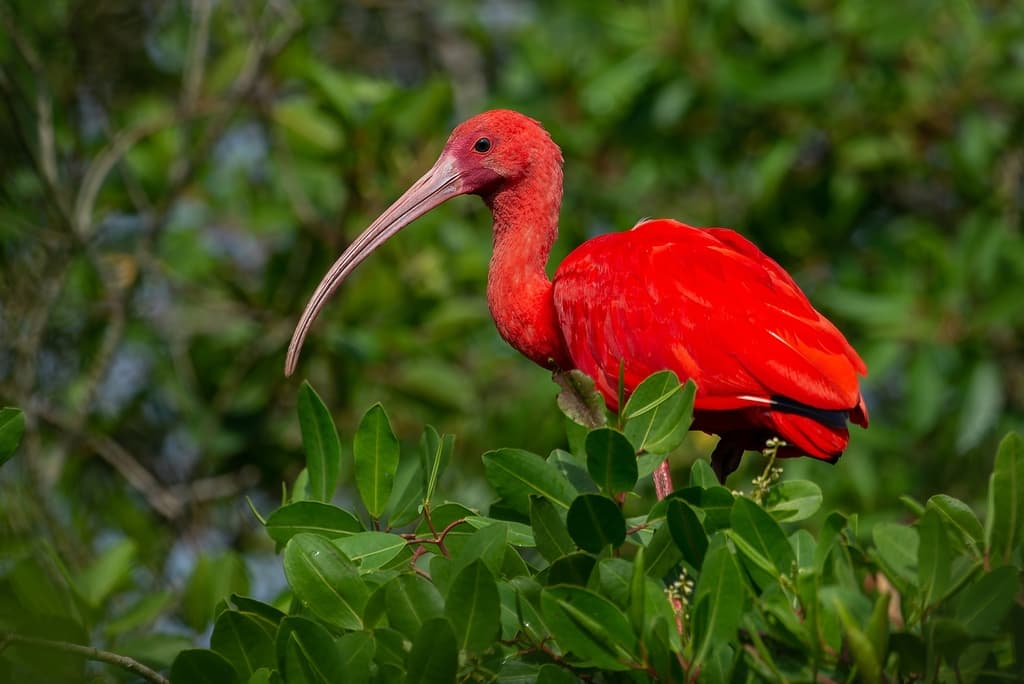
Photo: Mike's Birds · Tobago, Trinidad and Tobago (CC BY-SA 2.0)
The Scarlet Ibis is the National Bird of Trinidad and Tobago and one of the most recognisable wetland birds on Earth.
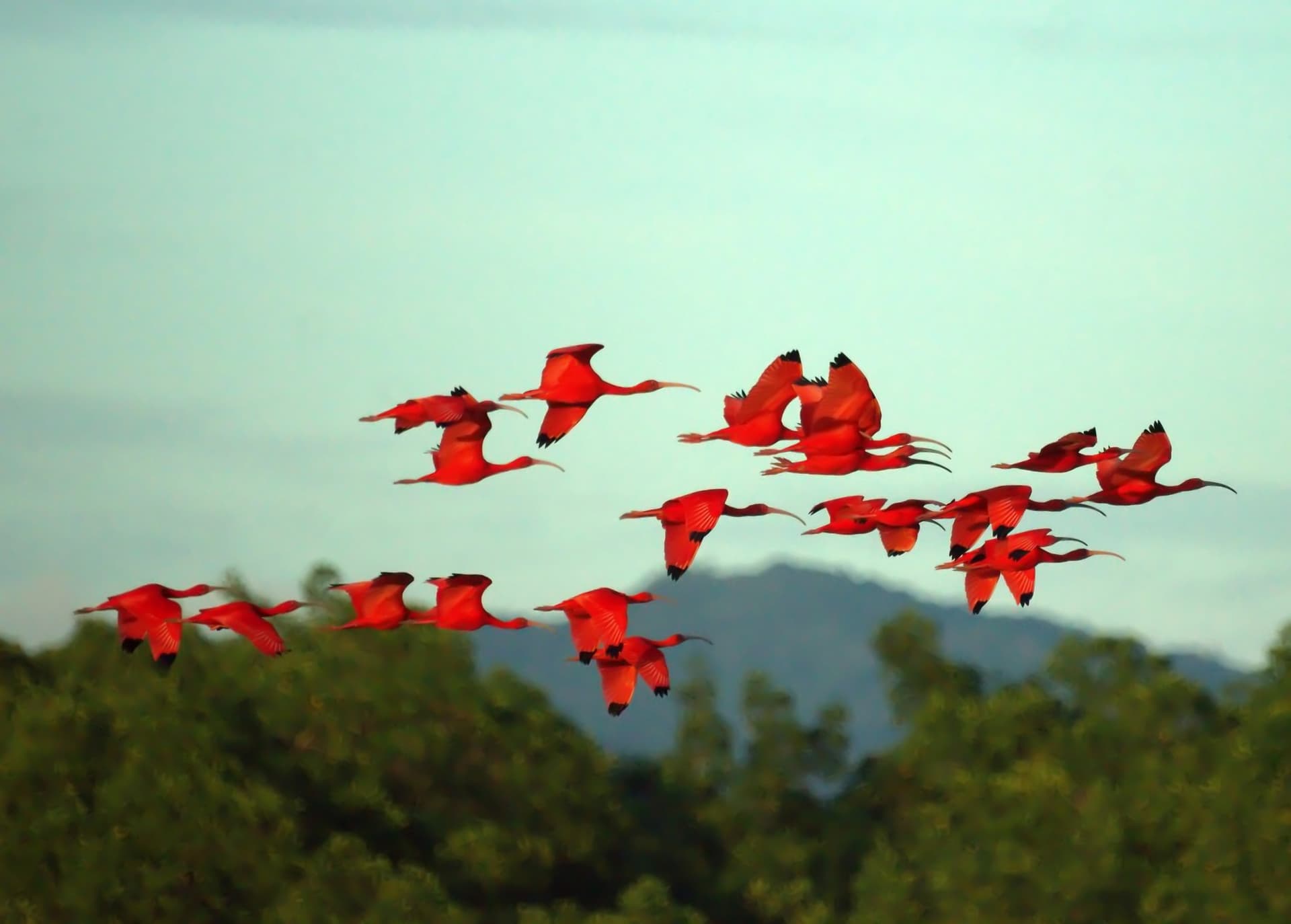
The Scarlet Ibis is the National Bird of Trinidad and Tobago and one of the most recognisable wetland birds on Earth. Each evening, thousands return from feeding grounds to roost in the mangroves of Caroni Swamp, painting the canopy a brilliant red in one of the world's great wildlife spectacles.
Identification
Adults are a deep, glowing scarlet from head to tail, with black wingtips visible only in flight. Juveniles are mottled brown and white and gradually acquire adult colour over two to three years. The long, curved bill and slender legs are unmistakable. Birds fly in long V-shaped or line formations, often crossing the sky in coordinated waves at dusk.
Ecology
The Scarlet Ibis feeds on small crabs, shrimp, aquatic insects, and small fish probed from soft estuarine mud. The species' colour comes entirely from carotenoid pigments in its crustacean diet; captive birds fade without it. Roost trees are large mangroves in protected wetland, primarily Caroni Swamp.
Legal Protection
As the National Bird, the Scarlet Ibis is fully protected under the Conservation of Wild Life Act and is listed as an Environmentally Sensitive Species under the EMA Act. Hunting, capture, and disturbance of nesting or roosting birds are criminal offences. Caroni Swamp is a Ramsar Site of international importance.
Threats
- Habitat degradation in Caroni and Nariva swamps
- Pollution and sedimentation from upstream development
- Illegal hunting and capture
- Disturbance of roost and nesting sites