Reptile
Reptile
Macajuel (Boa Constrictor)
Boa constrictor constrictor
The Macajuel is the most widely known and most frequently encountered large snake in Trinidad and Tobago, found on both islands and in almost every habitat from deep forest to suburban gardens.
The Macajuel is the most widely known and most frequently encountered large snake in Trinidad and Tobago, found on both islands and in almost every habitat from deep forest to suburban gardens. Non-venomous and non-aggressive by nature, it is nonetheless the subject of persistent folklore, a great deal of fear, and a long history of being killed on sight. The macajuel is fully protected by law and plays a measurable role in controlling rodent populations across the islands.
Description
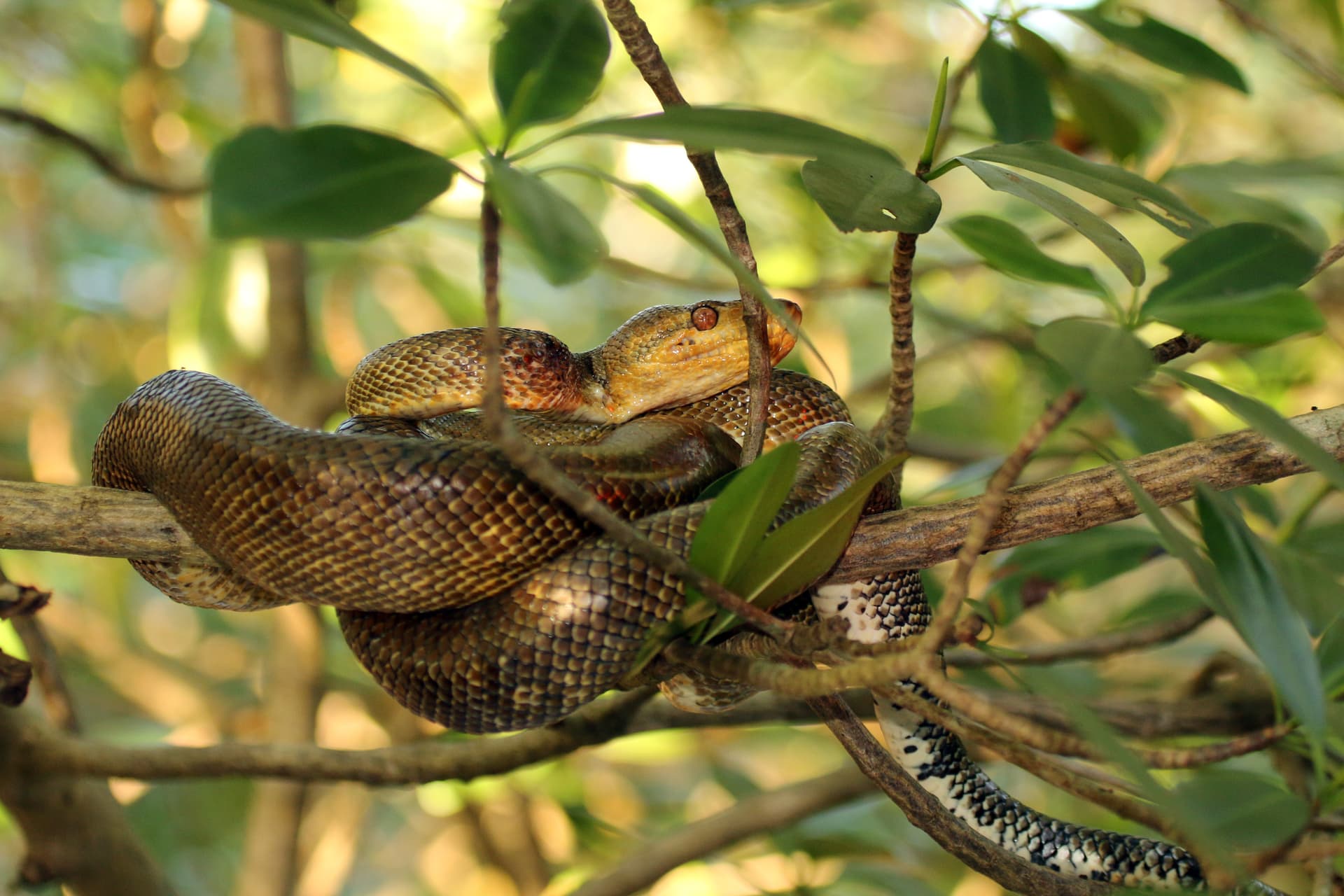
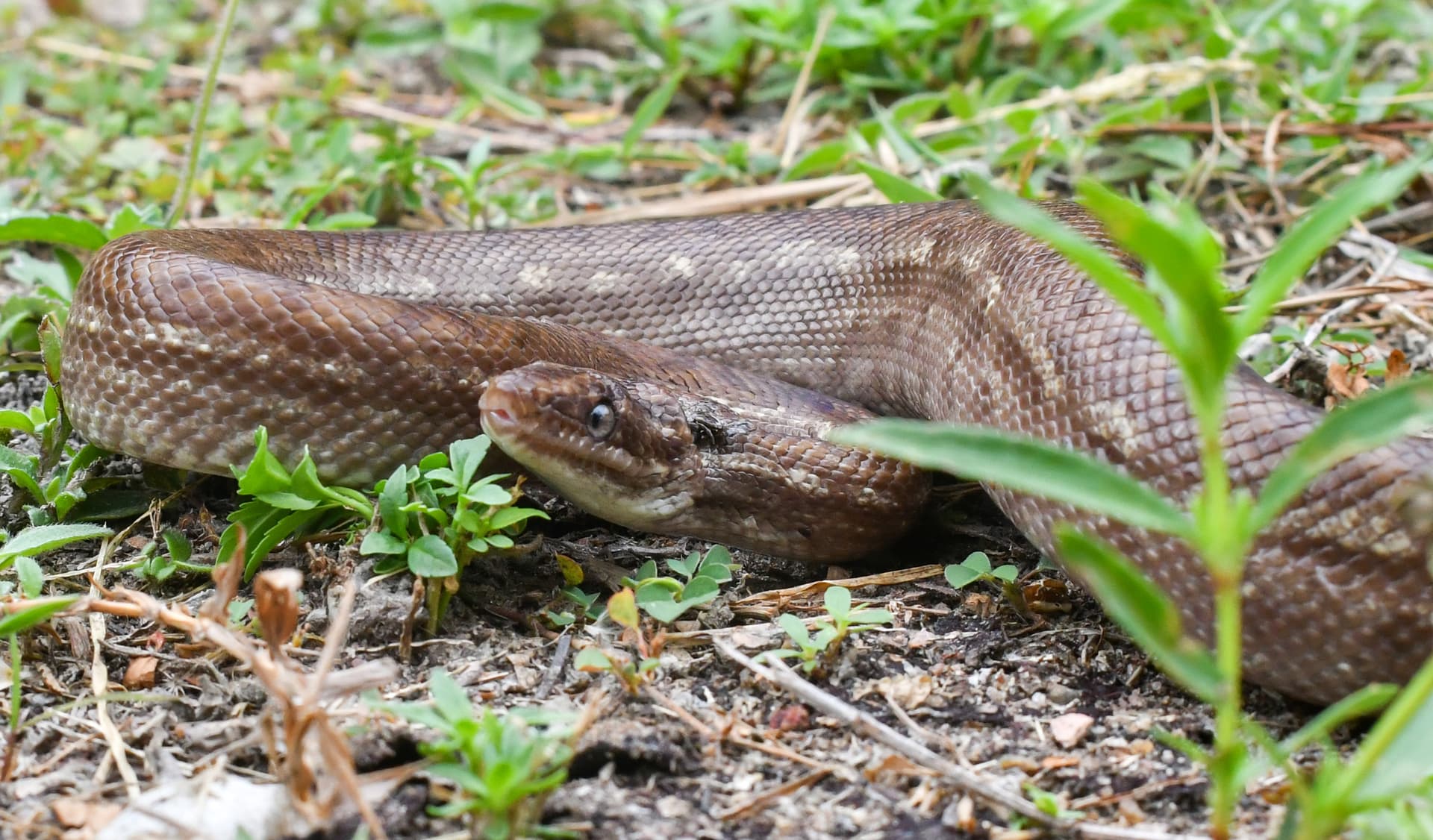
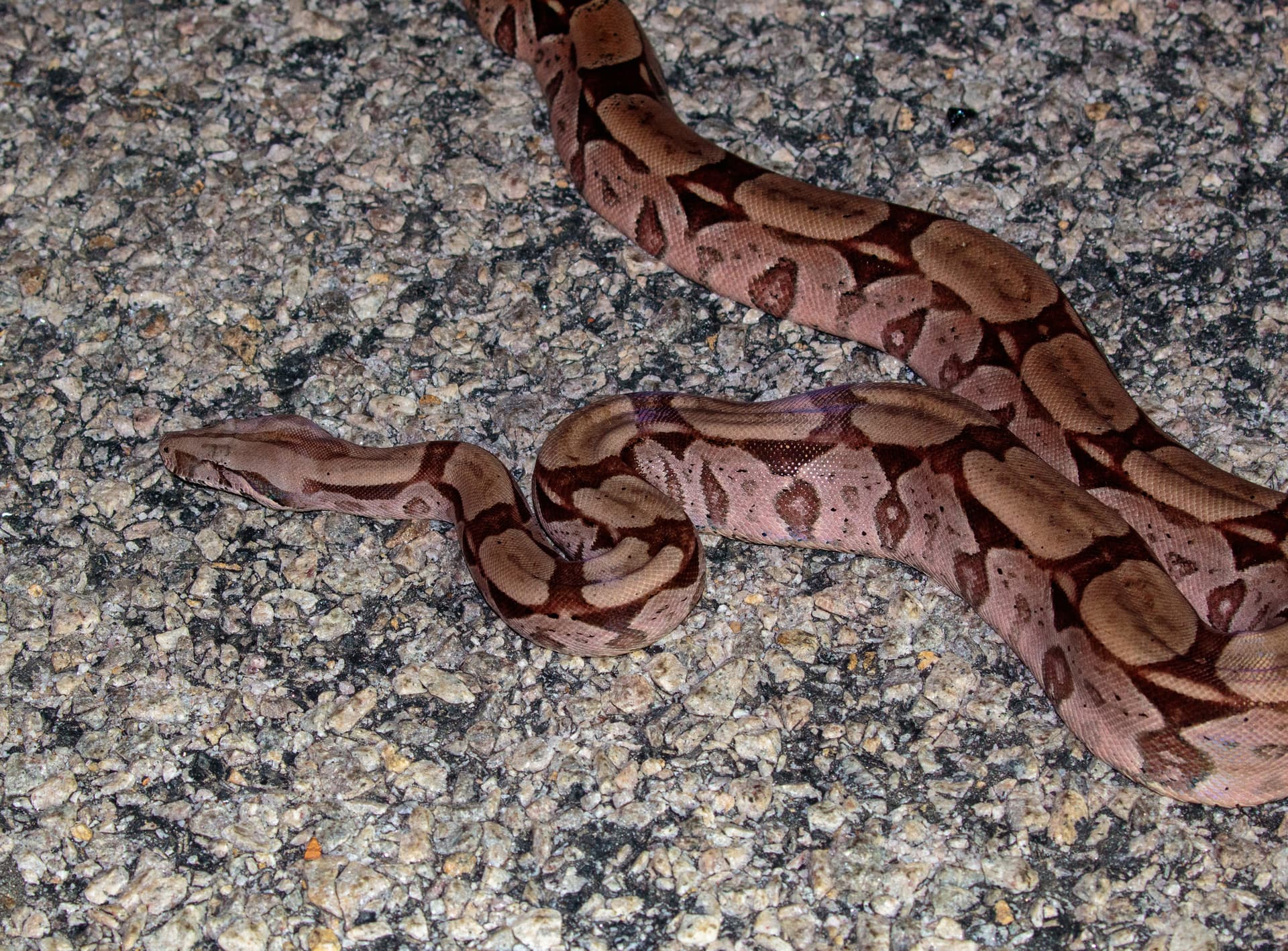
The Macajuel is a thick-bodied constrictor with a distinctly flattened, square-snouted head. The dorsal pattern varies considerably: generally a series of oblong, light-grey to cinnamon-brown blotches along the back, separated by darker crossbars with pale, almost white flashes along the sides. The tail is dramatically different in colour from the rest of the body, displaying rich red-brown patterning outlined with dirty-white or yellow areas. Females are typically larger than males, and the body is almost square in cross-section in large specimens. Adults can reach approximately 3 m, though reports of larger individuals, including the long-held "record" from Trinidad of over 18 feet, have been traced to misidentified anacondas. A true maximum of around 3 m is well supported.
Ecology
Found in deep forest, scrub, agricultural land, suburban gardens, and around human habitation, the macajuel is a generalist predator that occupies a wider range of habitats than any other large snake in T&T. Adults are mainly terrestrial but juveniles and sub-adults are partially arboreal. As adults they take any prey they can subdue, including rats, mice, ocelots, mongooses, domestic fowl, and occasionally domestic cats and dogs. Young macajuels eat small mammals, lizards, and frogs. Mating is observed between December and March, with 6 to 60 live young born between May and September, each approximately 40–50 cm at birth.
Natural History
The macajuel is fully protected under the Conservation of Wildlife Act (COWA) in Trinidad and Tobago, as are all non-venomous snakes. Despite this protection, killing of macajuels by homeowners, farmers, and passing motorists remains common; carcasses are periodically found beside highways, sometimes in groups. The species was featured on the 45-cent stamp in the 1983 national snake postage series. It is occasionally kept as a pet and has been proposed in the past as a candidate for commercial reptile farming.
Conservation
The name "macajuel" is derived from the Venezuelan "macaruel" and has accumulated numerous variants in local usage: macajuil, maracouil, mauccaw, mackawel. The widespread belief that large macajuels are poisonous, that their breath is toxic, that they hunt in pairs, and that they can swallow animals as large as a bull are all documented in historical accounts stretching back to the eighteenth century and persist in some communities today.
Why It Matters
The macajuel is Trinidad and Tobago's most widely distributed large predator. Across every habitat from deep forest to suburban back yards, it performs continuous, free rodent control, consuming rats and mice that would otherwise damage crops, contaminate stored food, and spread disease. In agricultural settings, a single large macajuel patrols an area that would otherwise require ongoing poison-baiting campaigns. The irony of killing the animal that protects your harvest to protect your harvest is not always recognised. The relationship between the macajuel and the people of T&T is one of the longest-running case studies in human-wildlife conflict in the Caribbean. Every fear attributed to it, from poisonous breath to hunting in pairs, has been documented, debunked, and documented again over 300 years of recorded history.
The belief that it is dangerous to humans persists despite zero documented fatalities attributable to boa constrictor attack in Trinidad and Tobago. The species cannot constrict anything as large as a human adult, lacks venom of any kind, and will almost invariably retreat when disturbed. The macajuel is protected by law. A person who kills one is committing an offence under the Conservation of Wildlife Act. More practically, a person who kills one is eliminating an animal that was doing real, measurable work for them in their immediate environment. The goal of conservation education on this species is not to ask people to love it; it is to ask them to recognise what they lose when they kill it.
Threats
- Killing on sight: persecution by homeowners, farmers, and motorists remains the primary threat
- Road kills
- Illegal capture for the pet trade
- Habitat loss and forest fragmentation