Fish
Fish
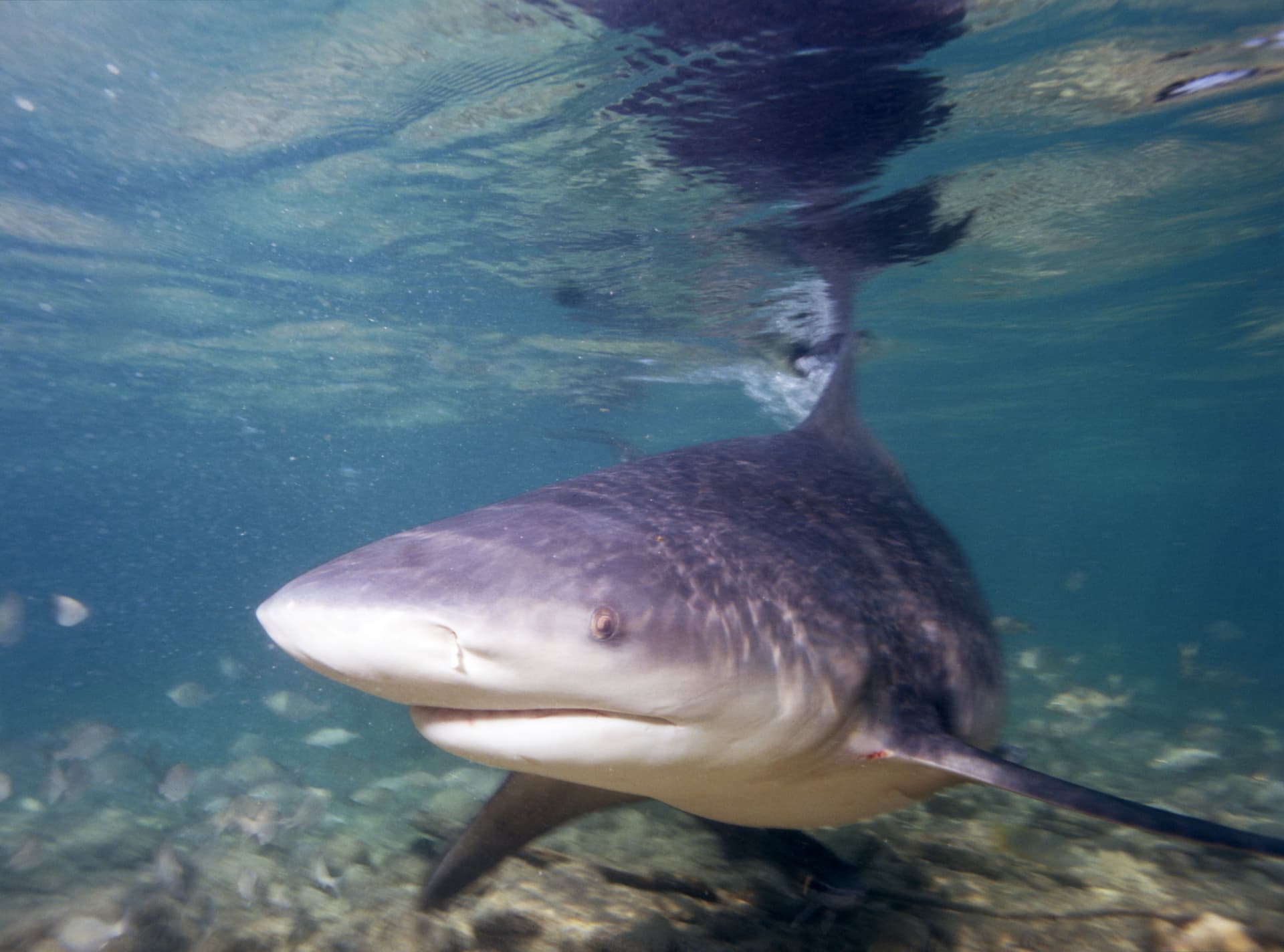
Bull Shark
Carcharhinus leucas
The bull shark is one of the few sharks able to thrive in fresh water as easily as in the sea.
The bull shark is one of the few sharks able to thrive in fresh water as easily as in the sea. Stocky, blunt-snouted and highly tolerant of low salinity, it readily pushes up estuaries and rivers, which makes the warm, muddy waters of the Gulf of Paria ideal habitat. It is among the most widely distributed coastal sharks in tropical waters worldwide.
Appearance
The bull shark has a heavy, robust body, a broad rounded snout much shorter than the typical requiem shark, and small eyes that reflect its often murky surroundings. The back is grey and the underside pale white, with the first dorsal fin large and triangular. Females grow larger than males, with big adults reaching around 2.4 metres and exceptionally up to 3.5 metres.
Behaviour
It is a strong, adaptable swimmer that patrols shallow coastal margins, river mouths and brackish lagoons, frequently in water only a few metres deep. Its standout trait is euryhalinity: specialised kidney and rectal-gland function lets it regulate salt and survive long periods in pure fresh water, and individuals have been recorded thousands of kilometres up rivers such as the Amazon.
Bull sharks are solitary hunters that tend to be more active at dusk and in turbid water, where reduced visibility favours an ambush predator.
Diet and breeding
The diet is broad and opportunistic, taking bony fishes, smaller sharks and rays, crustaceans, turtles and occasionally seabirds. Breeding is viviparous: embryos are nourished through a placental connection and females give birth to live young after a gestation of about ten to eleven months. Pups are born in low-salinity estuaries and river mouths, which act as sheltered nurseries with fewer large predators.
In Trinidad and Tobago
In Trinidad and Tobago the bull shark frequents the Gulf of Paria and the lower reaches and mouths of rivers draining into it, where its tolerance of fresh and brackish water lets it range further inland than most sharks. It is taken incidentally in coastal artisanal fisheries. Globally the species is assessed as Vulnerable by the IUCN, with coastal fishing pressure and the loss of estuarine nursery habitat the main concerns.