Bird
Bird
Blue and Gold Macaw
Ara ararauna
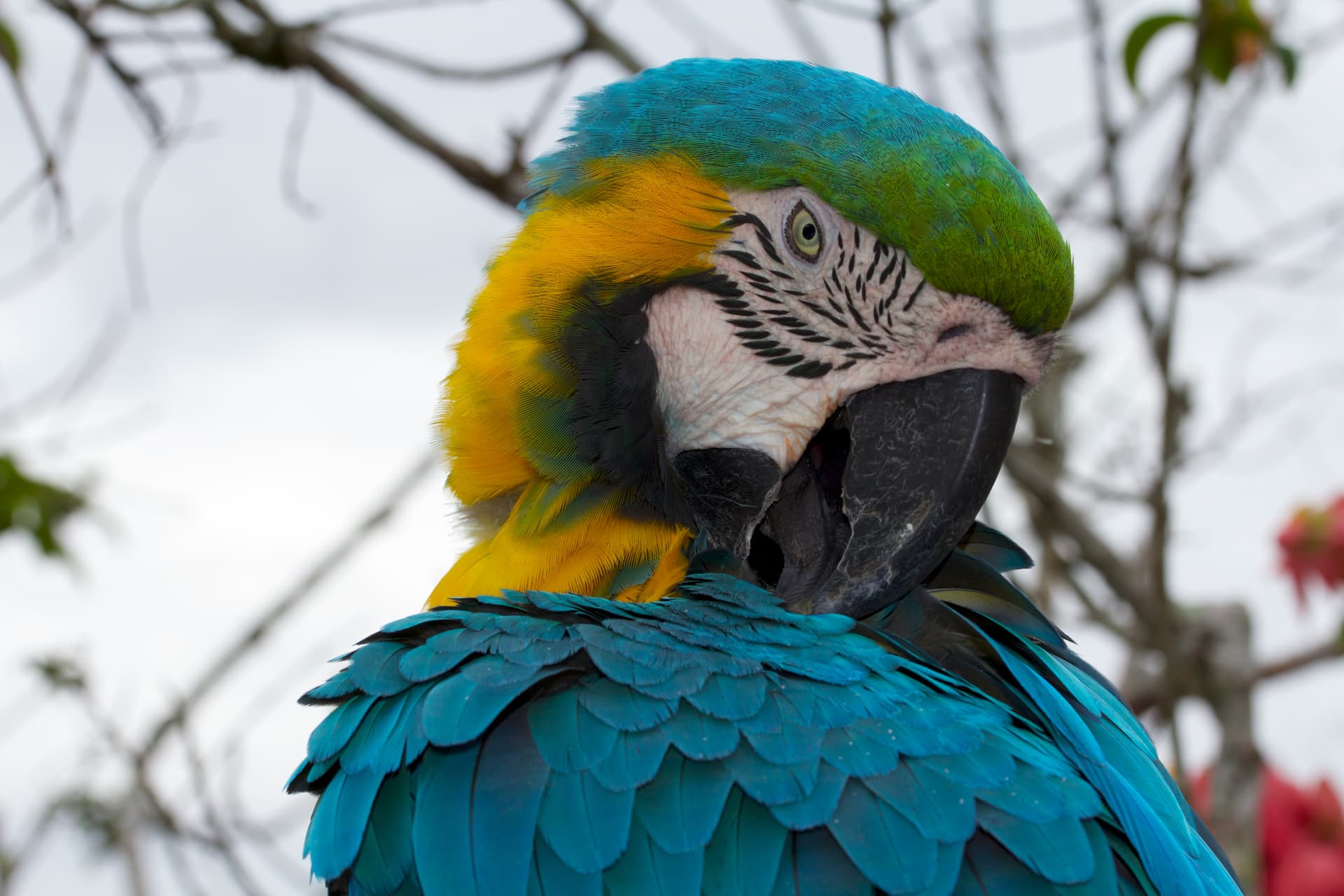
The Blue and Gold Macaw (Ara ararauna), also called the Blue-and-yellow Macaw, is a large, unmistakable Neotropical parrot with brilliant blue upperparts and golden-yellow underparts.
The Blue and Gold Macaw (Ara ararauna), also called the Blue-and-yellow Macaw, is a large, unmistakable Neotropical parrot with brilliant blue upperparts and golden-yellow underparts. Once a native breeding bird of Trinidad, it was wiped out locally in the 1960s through nest poaching for the pet trade and wetland habitat loss. Since 1999 it has been reintroduced to the Nariva Swamp using birds from Guyana, and a small flock now flies once more over Trinidad's east coast.
Identification
A very large parrot, roughly 81 to 91 cm long with a wingspan well over a metre, making it one of the biggest birds of the parrot family. The upperparts, wings, and tail are vivid blue, the underparts and underwings are rich golden-yellow, and the crown shades to green.
The massive, hooked black beak is built for cracking hard palm nuts, and the bare white face is crossed by fine lines of small black feathers, a pattern as individual as a fingerprint.
Ecology
The species feeds mainly on fruit, nuts, and seeds, with a strong preference for palm fruit, and it regularly visits exposed clay banks to eat soil (geophagy), which is thought to help neutralise toxins in its diet. Pairs nest in cavities high in dead trees and palms, especially the Moriche or Mauritia palm, laying a clutch of about two to three eggs.
Blue and Gold Macaws form lifelong pair bonds, fly and roost together in noisy flocks, and are long-lived, frequently passing 40 years of age.
Status in T&T
Blue and Gold Macaws once bred naturally in the Nariva Swamp on Trinidad's east coast but were extirpated (made locally extinct) by the 1960s, driven by chick poaching for the cage-bird trade and loss of swamp-forest habitat. They do not occur naturally in Tobago.
Beginning in 1999, a reintroduction led by the Forestry Division, the Cincinnati Zoo, and the conservation group CRESTT released birds sourced from Guyana into the Bush Bush Wildlife Sanctuary, with a further flock released in 2003. The translocated birds bred successfully, and an estimated population of around 86 macaws now lives in the Nariva area, making this one of the Caribbean's most successful parrot reintroductions.