Reptile
Reptile
African Woodslave (Twenty-four Hours)
Hemidactylus mabouia
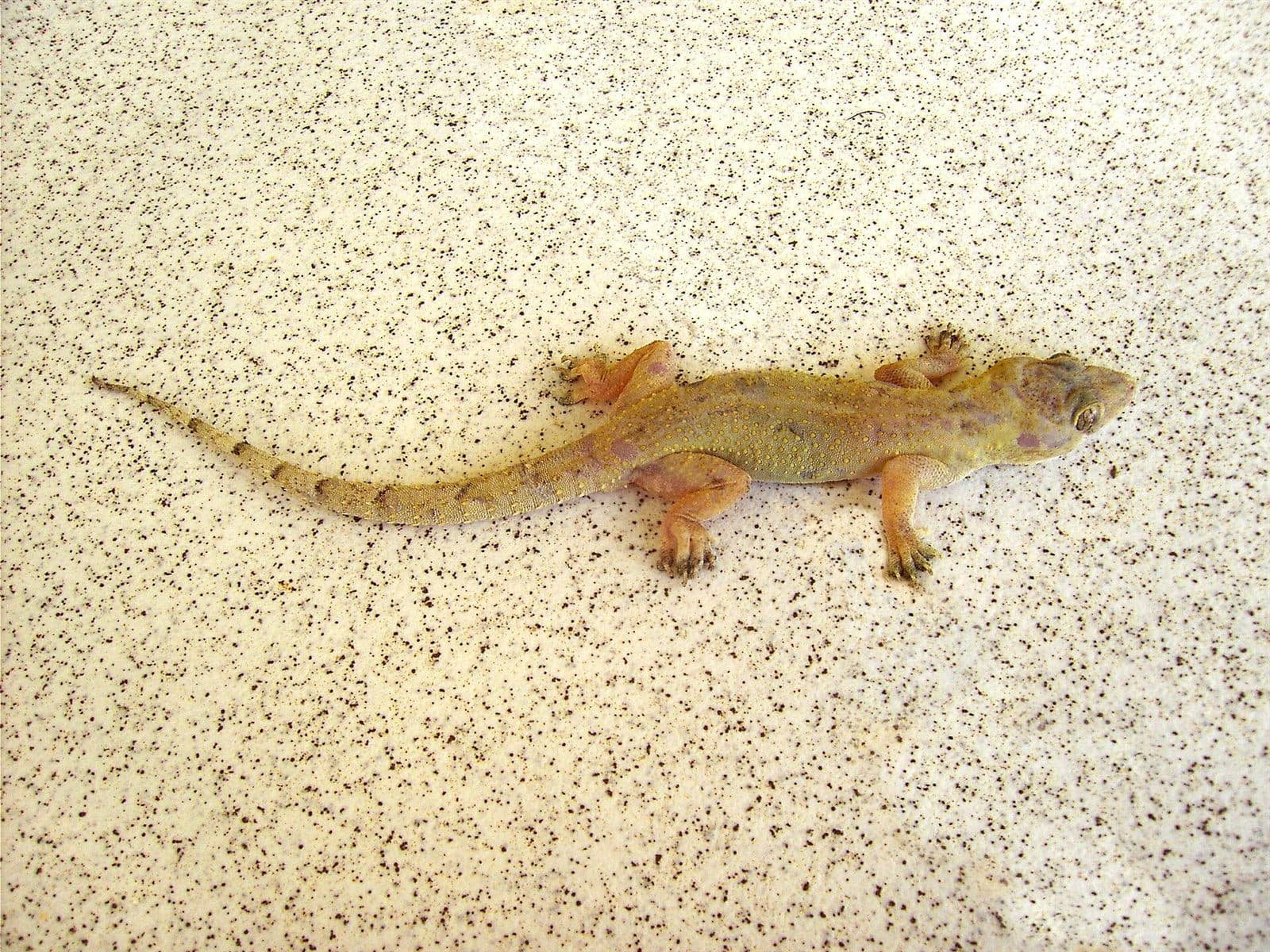
Known locally as the twenty-four hours gecko, the African Woodslave is a nocturnal house gecko introduced to the Americas from Africa centuries ago, likely via the transatlantic slave trade and early colonial shipping.
Known locally as the twenty-four hours gecko, the African Woodslave is a nocturnal house gecko introduced to the Americas from Africa centuries ago, likely via the transatlantic slave trade and early colonial shipping. It is now one of the most familiar reptiles in Trinidad and Tobago homes, commonly seen hunting insects around lights at night, and has largely displaced native geckos from buildings.
Identification
A pale grey to brownish gecko with warty, tubercle-covered skin and large adhesive toe pads (specialised lamellae) that let it climb smooth walls, glass, and ceilings with ease. Adults reach about 12 to 15 cm including the tail. Colour can shift markedly from pale, almost translucent, to dark mottled brown depending on background, temperature, and time of day, a form of rapid physiological colour change common in nocturnal geckos.
Ecology
Strongly nocturnal, gathering around porch lights, windows, and eaves to feed on moths and other insects attracted to artificial light, a feeding strategy that has made it extremely successful wherever humans have built lit structures. It is highly adaptable to human dwellings, tolerates a wide range of climates, and readily outcompetes native gecko species around buildings through more aggressive territorial behaviour and faster reproduction, contributing to the decline of native house-associated geckos across much of its introduced Caribbean and Latin American range.
In Trinidad and Tobago
Widespread and abundant around homes and buildings on both islands, to the point of being the default gecko encountered indoors. As an introduced species it is not native and can compete with native reptiles for shelter and food near human settlement, though it is not considered a major ecological threat within wild, undisturbed habitat, remaining largely confined to buildings and their immediate surroundings.