Reptile
Reptile
Yellow-Tail Cribo
Drymarchon corais corais
The Yellow-Tail Cribo is a large, powerful, diurnal colubrid found on both Trinidad and Tobago.
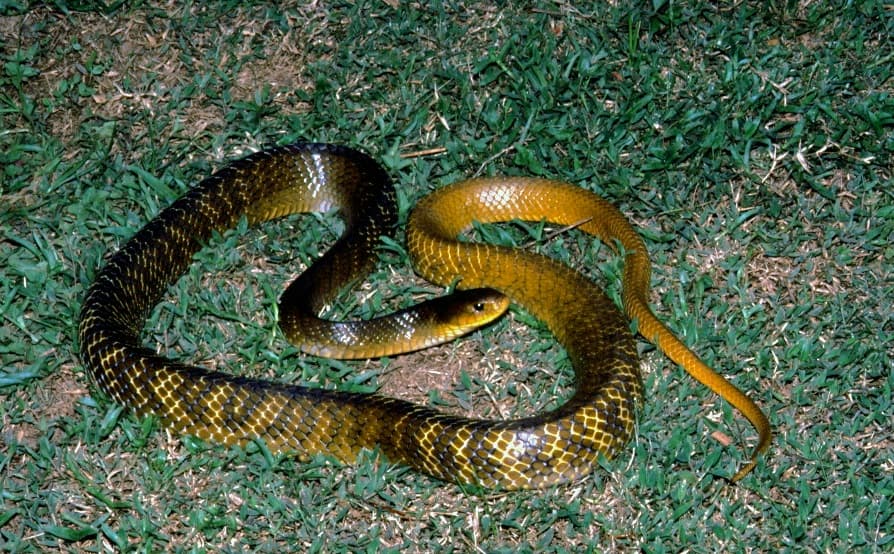
The Yellow-Tail Cribo is a large, powerful, diurnal colubrid found on both Trinidad and Tobago. Named for the vivid yellow, orange, or red colouration of its tail and rear body, it is one of the most impressive non-venomous snakes in T&T, capable of reaching 2.5 m. An aggressive defensive display and large size lead to frequent misidentification and killing, yet it is completely harmless to humans and a vital predator in forest ecosystems.
Description
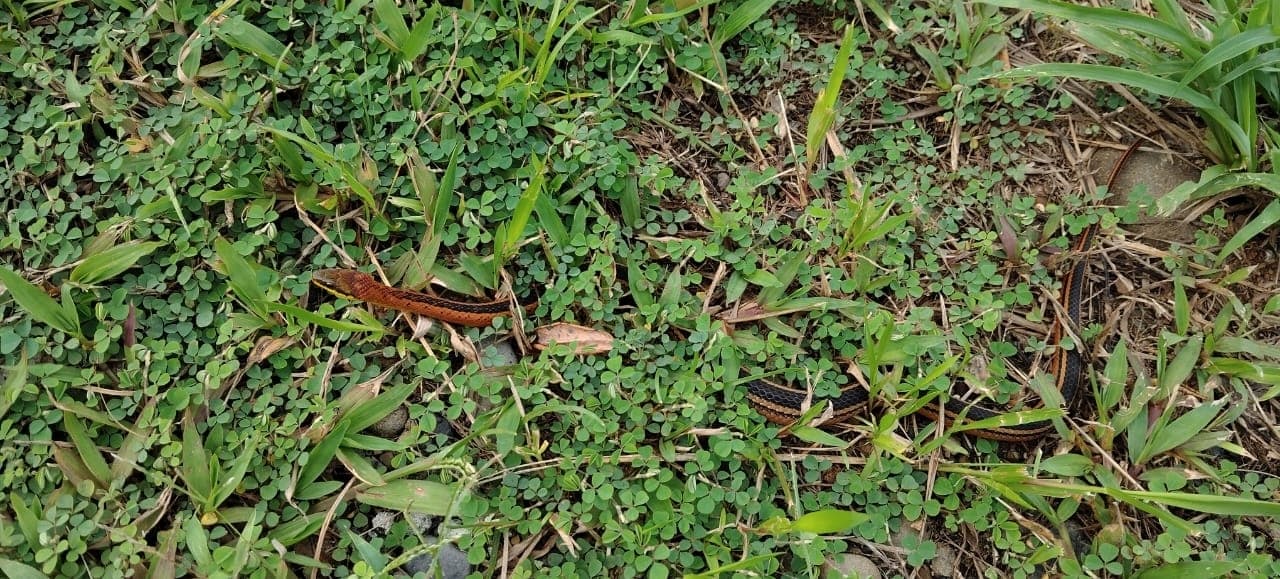
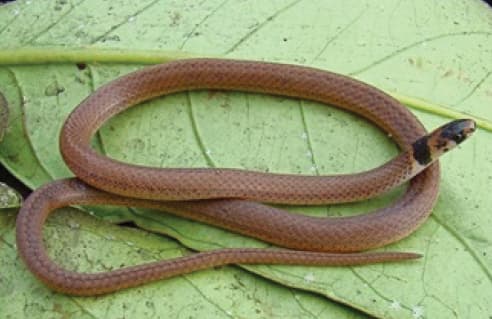
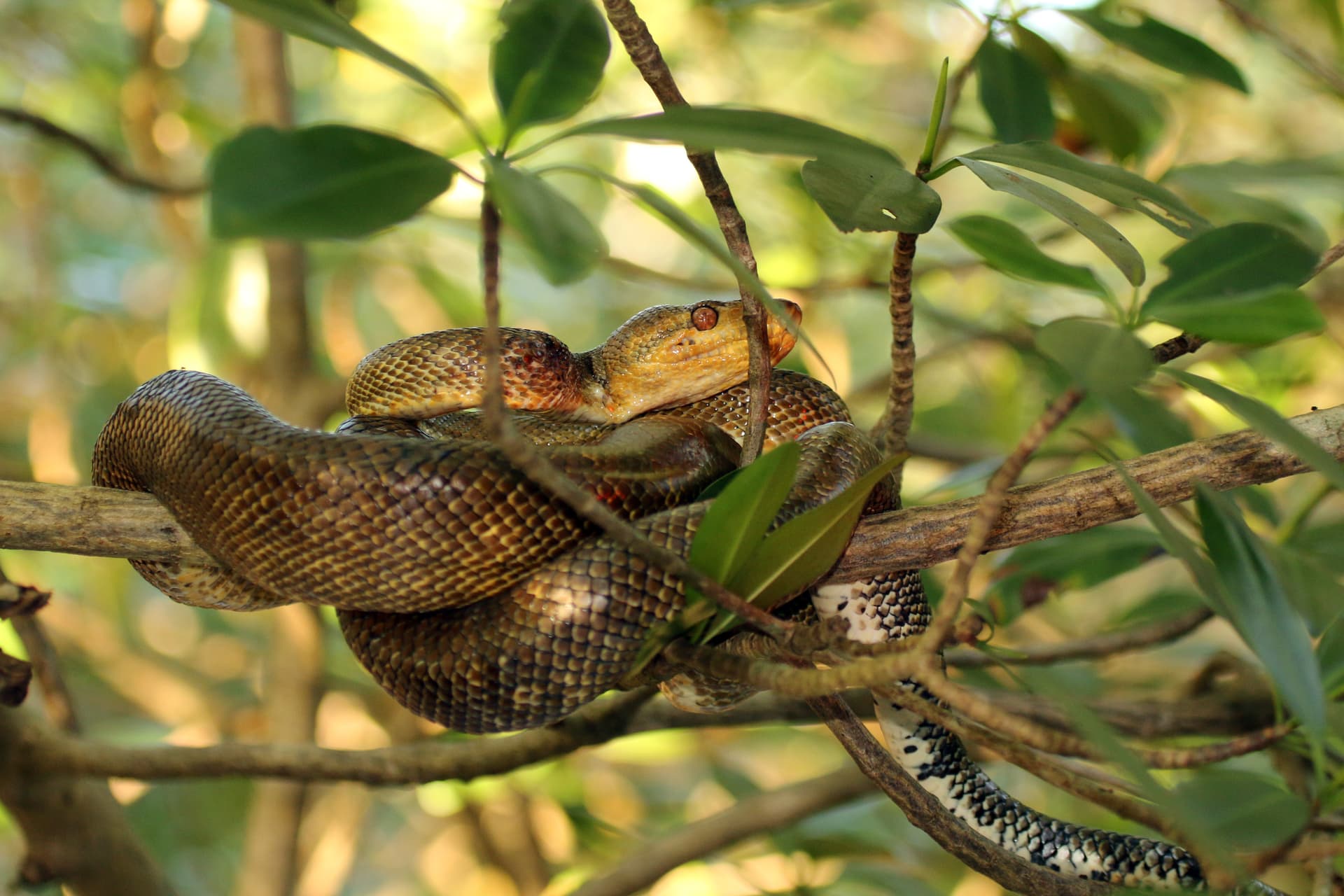
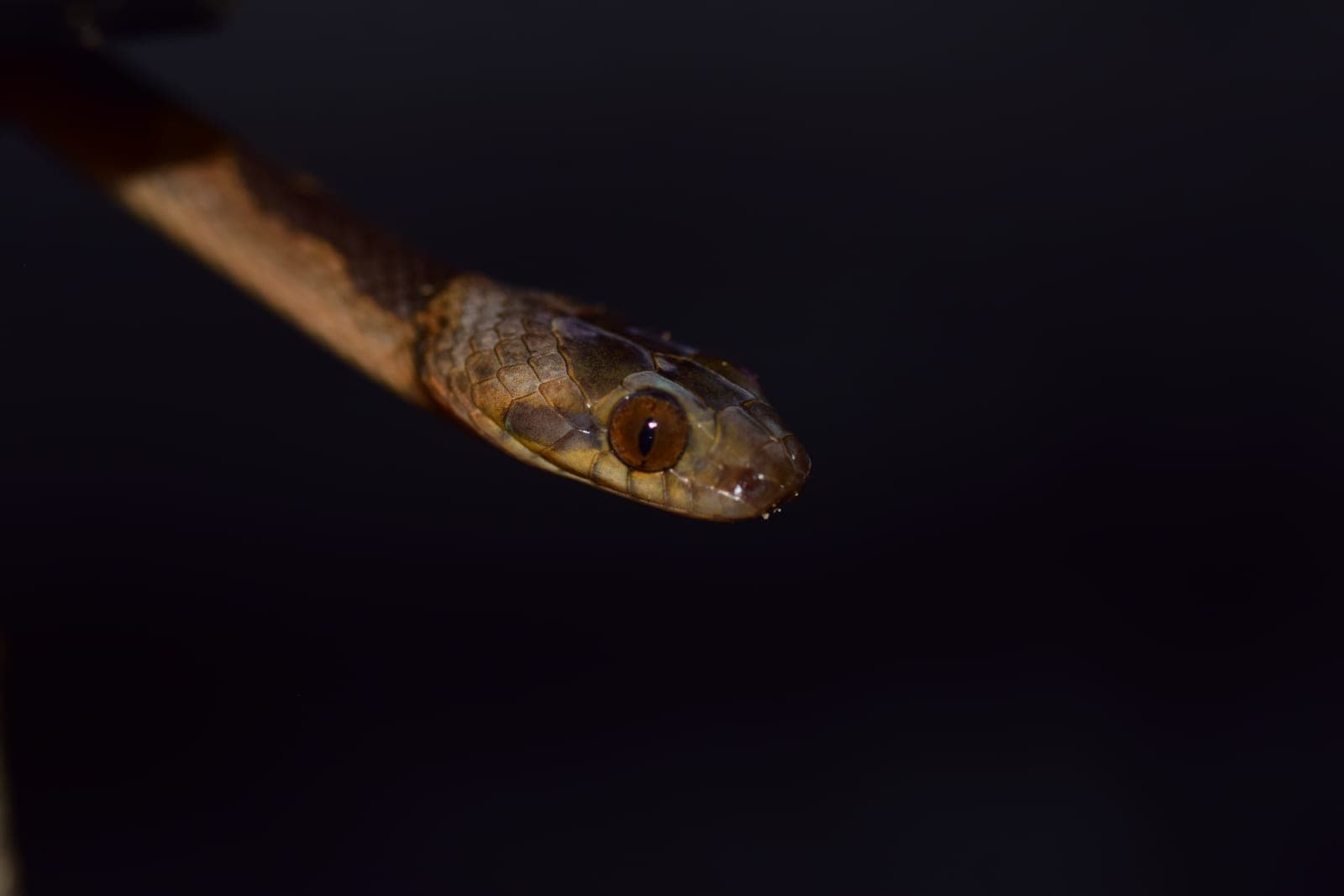
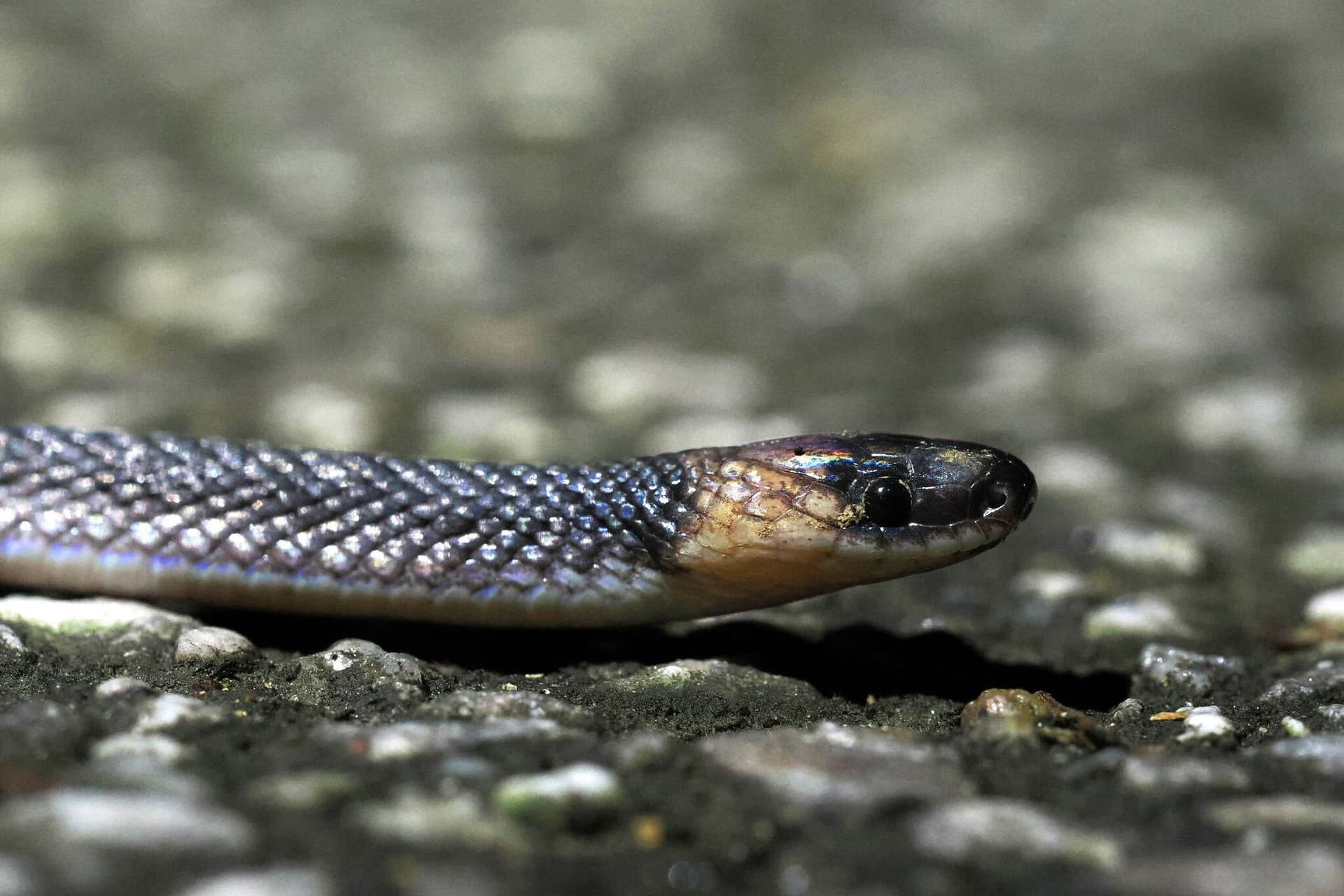
Drymarchon corais corais is a large, muscular, fast-moving colubrid reaching up to 2.5 m or more. The front two-thirds of the body are a glossy blue-black or dark olive, transitioning abruptly through orange-brown to a vivid yellow, orange, or red tail. This colour pattern makes it instantly recognisable if the full body is seen. The head is large and the neck is muscular.
Ecology
The Yellow-Tail Cribo is a diurnal generalist predator, consuming frogs, lizards, snakes (including venomous species), small mammals, and birds. Like the Black Cribo, it is immune to pit viper hemotoxin and will actively pursue and eat Mapepire Balsains. When threatened it vibrates its tail against dry leaves, producing a rattling sound, flattens its neck, and strikes hard. This display is alarming but the bite, while capable of drawing blood, is not medically significant. Fully protected under COWA.
Why It Matters
Like the Black Cribo, the Yellow-Tail Cribo is a natural predator of venomous pit vipers. Both species play a genuine pest-control role in Trinidad's forests and agricultural margins, targeting the same rodents and venomous snakes that cause most human-wildlife conflict on the island. The ecological logic of killing them is backwards.
Threats
- Persecution: frequently killed due to large size and aggressive display
- Habitat loss and forest fragmentation
- Road kills