Reptile
Reptile
Yellow-Belly Puffing Snake
Pseustes sulphureus sulphureus
The Yellow-Belly Puffing Snake is one of the largest non-venomous snakes in Trinidad, a powerful arboreal colubrid named for its vivid sulphur-yellow belly and dramatic defensive display.
The Yellow-Belly Puffing Snake is one of the largest non-venomous snakes in Trinidad, a powerful arboreal colubrid named for its vivid sulphur-yellow belly and dramatic defensive display. When threatened it inflates the neck and body, raises the front of the body, hisses loudly, and strikes. Despite appearances, it is completely non-venomous and plays an important ecological role as a predator of birds, eggs, and lizards in the forest canopy.
Description
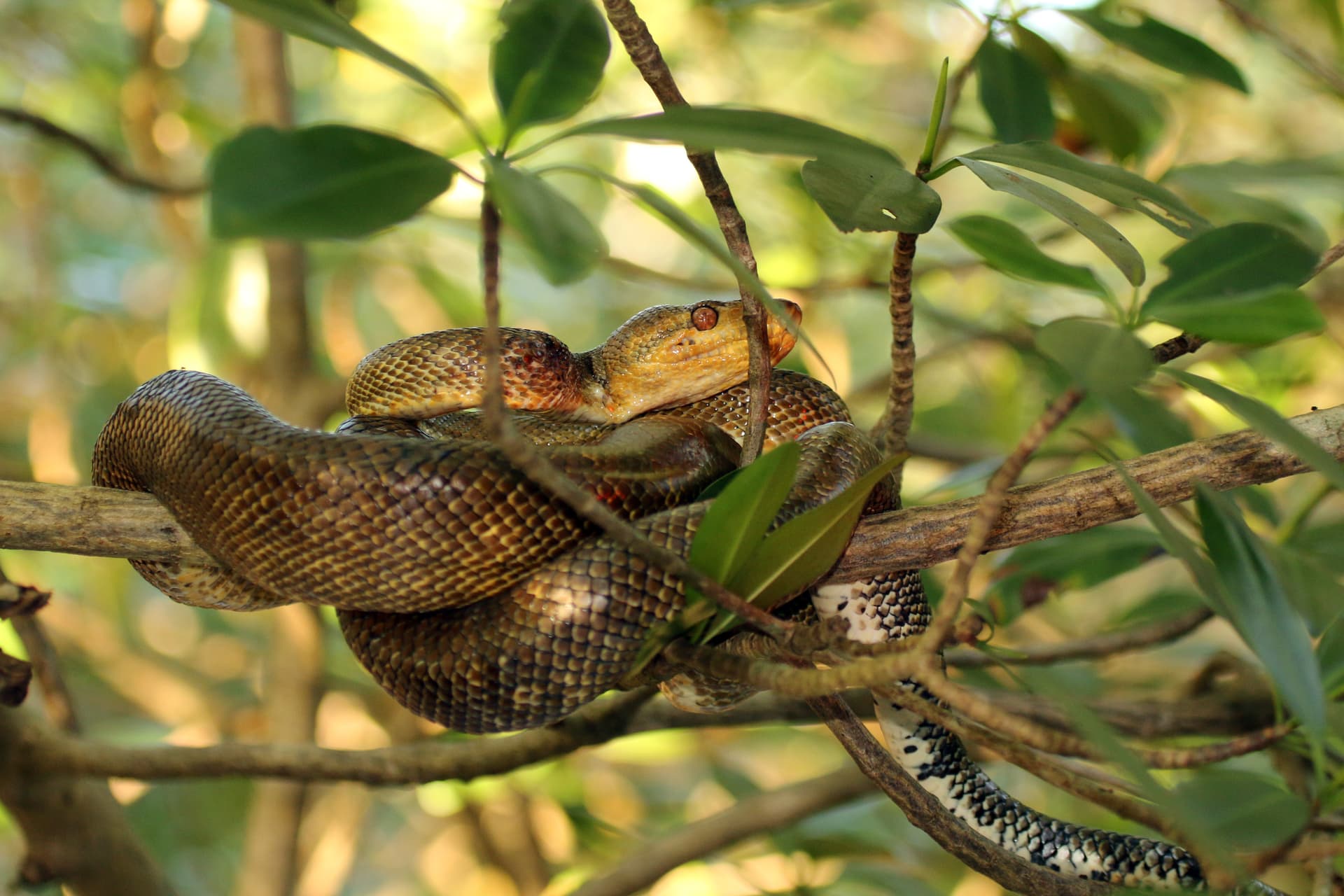
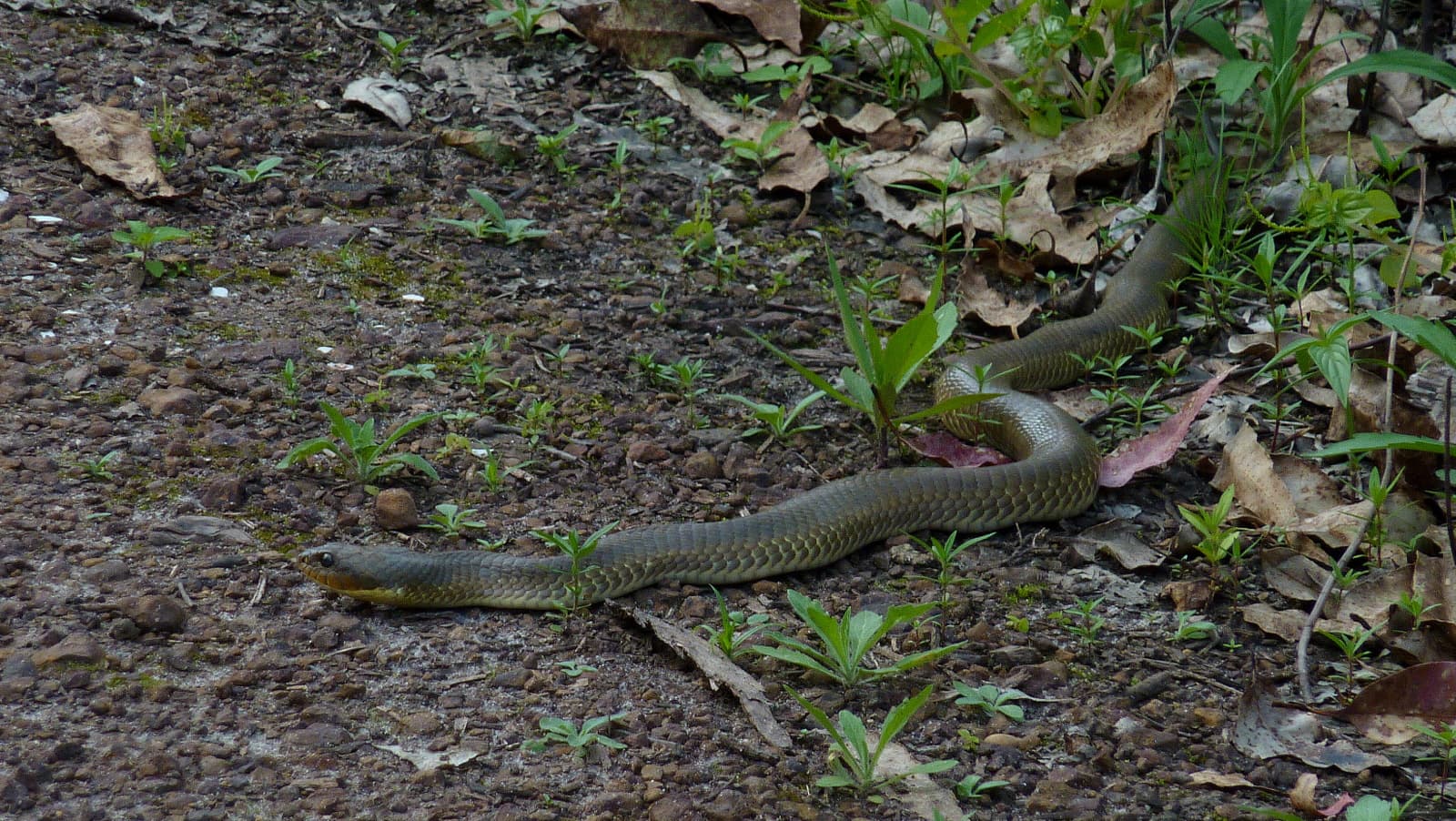
Pseustes sulphureus sulphureus is a large, moderately robust colubrid reaching up to 2.5 m or more. The dorsal surface is dark olive-green, brownish-green, or yellowish-brown, with individual scales sometimes edged in darker pigment, giving the body a slightly reticulated or spotted appearance. The belly is a vivid sulphur-yellow or bright yellow, a striking colour that becomes visible when the snake inflates its body and spreads its scales during defensive displays or when it basks. The Latin name sulphureus directly references this yellow belly.
Ecology
Both arboreal and terrestrial, the Yellow-Belly Puffing Snake is an opportunistic predator that takes birds and their eggs, lizards, frogs, and small mammals. It climbs well into the forest canopy to raid bird nests, and it is among the largest non-venomous nest raiders in T&T. The defensive inflation of the neck and body, accompanied by loud hissing and repeated strikes, is the most dramatic threat display of any non-venomous snake in T&T. This display is entirely bluff: the bite, while capable of drawing blood, carries no venom and is not medically significant.
Conservation
The nominate subspecies sulphureus occurs on Trinidad; other subspecies are found across northern South America. In T&T, only Trinidad records exist; the species is not found on Tobago. It is fully protected under the Conservation of Wildlife Act. The closely related Dos Cocorite (Pseustes poecilonotus polylepis) also occurs in Trinidad and shares similar habits but is smaller and more strongly iridescent.
Threats
- Persecution: frequently killed due to dramatic defensive display and large size
- Habitat loss and forest clearance