Reptile
Reptile
Trinidad Burrowing Snake
Typhlops trinitatus
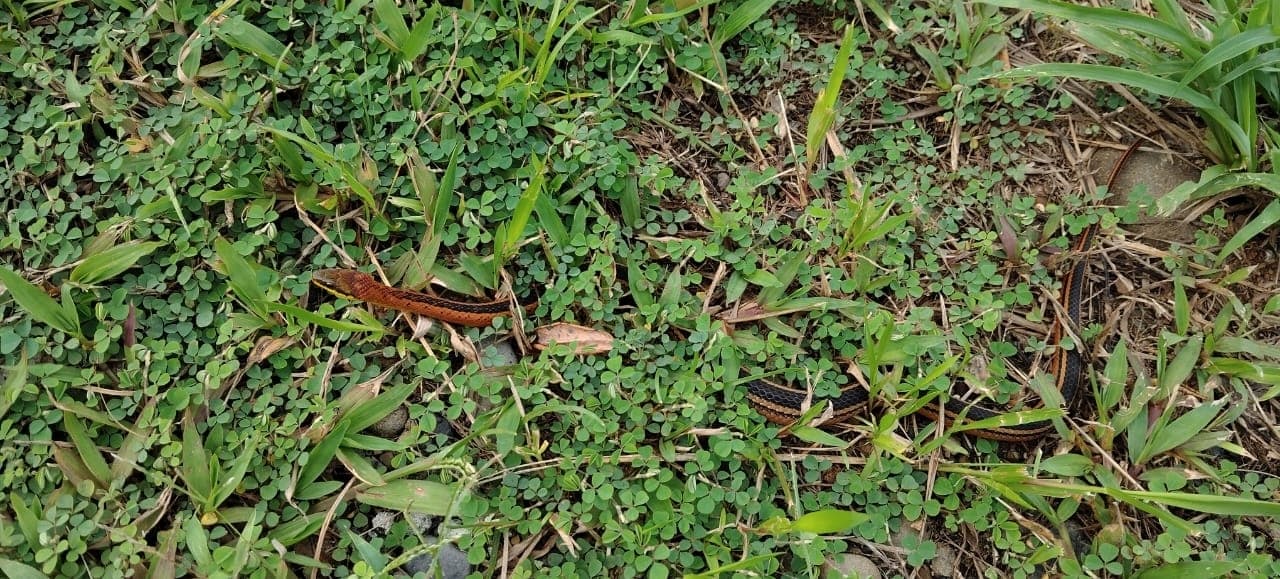
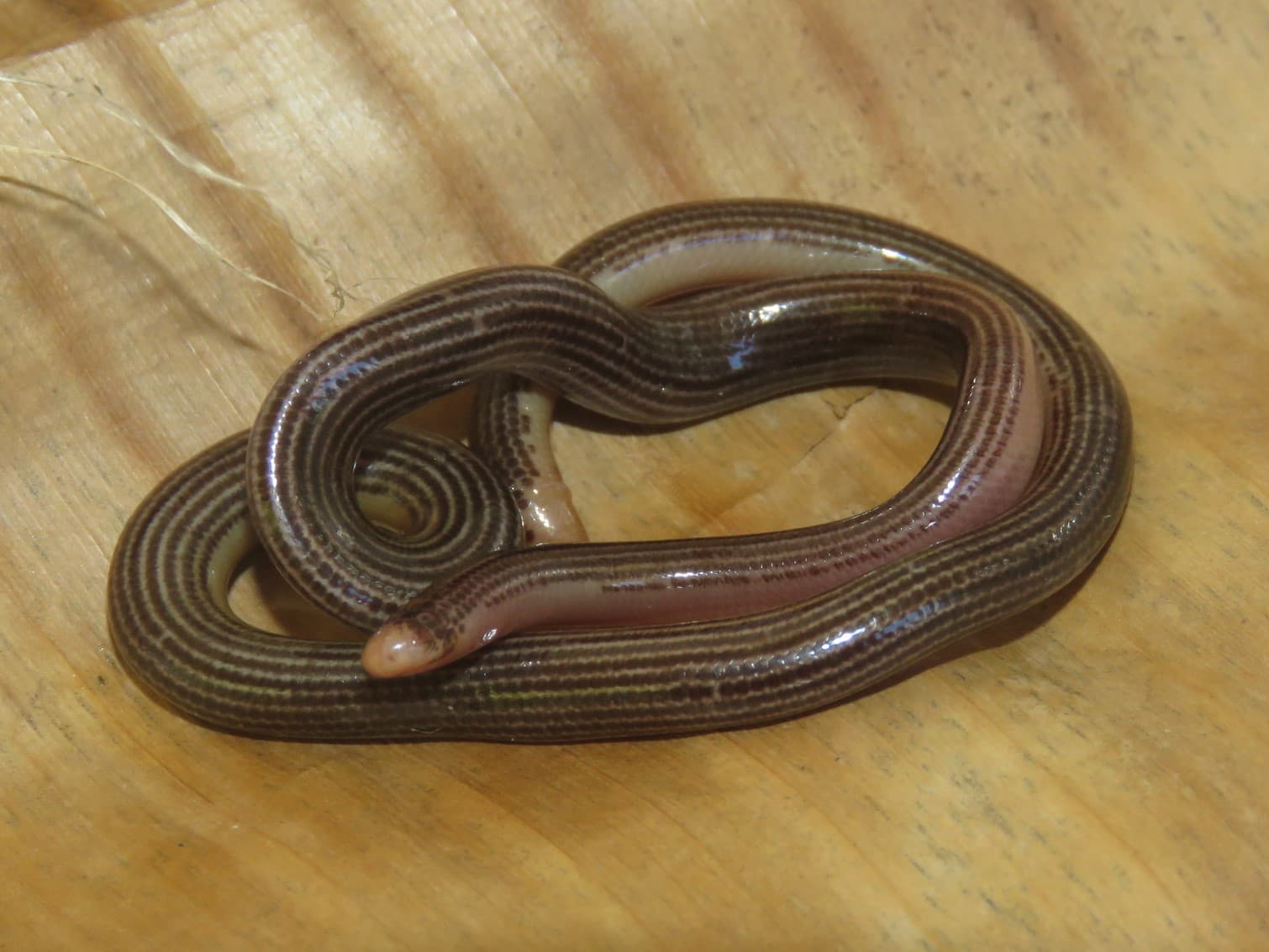
The Trinidad Burrowing Snake is a typhlopid blind snake found on both Trinidad and Tobago, one of only a handful of snake species shared across both islands.
The Trinidad Burrowing Snake is a typhlopid blind snake found on both Trinidad and Tobago, one of only a handful of snake species shared across both islands. Like all members of the family, it is small, cylindrical, and entirely fossorial, spending its life underground in the nests of ants and termites. Completely harmless to humans and fully protected by law.
Description
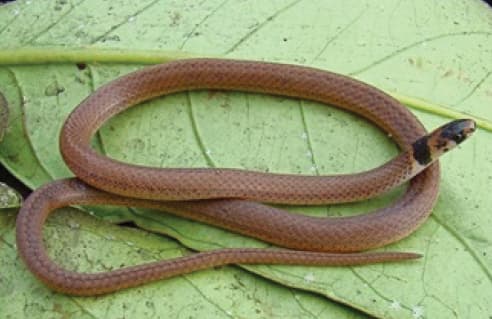
Typhlops trinitatus closely resembles T. brongersmianus in form: smooth, shiny, pinkish-brown to purplish, and roughly the diameter of a pencil. The head is blunt and barely distinct from the neck; the vestigial eyes are covered by head scales; and the short, hardened tail spine aids in burrowing. Distinguishing the two Typhlops species of T&T in the field requires careful scale counts. The species name trinitatus refers specifically to Trinidad, reflecting the fact that the species was first described from specimens collected there.
Ecology
Like its congener, T. trinitatus is a specialist predator of ant and termite brood, locating nests by following chemical signals through soil and leaf litter. The fossorial lifestyle means these snakes are rarely observed unless specifically sought by sifting soil and leaf litter or turning large logs and rocks. They surface occasionally after heavy rain, when they may be found on paths and in gardens, where they are harmless and should be left alone.
Conservation
The distribution of T. trinitatus on both Trinidad and Tobago, whereas T. brongersmianus appears restricted to Trinidad, suggests a different biogeographic history, possibly colonisation of Tobago before the two islands became separated, or a more recent cross-island dispersal. It is protected under the Conservation of Wildlife Act alongside all other non-venomous snakes in T&T.
Threats
- Habitat disturbance and soil degradation
- Deforestation reducing moist forest soil habitat