Reptile
Reptile
Three-Lined Snake
Atractus trilineatus
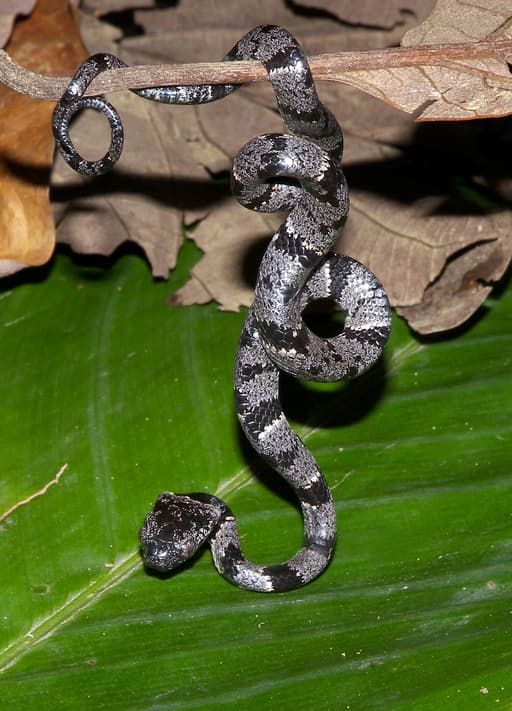
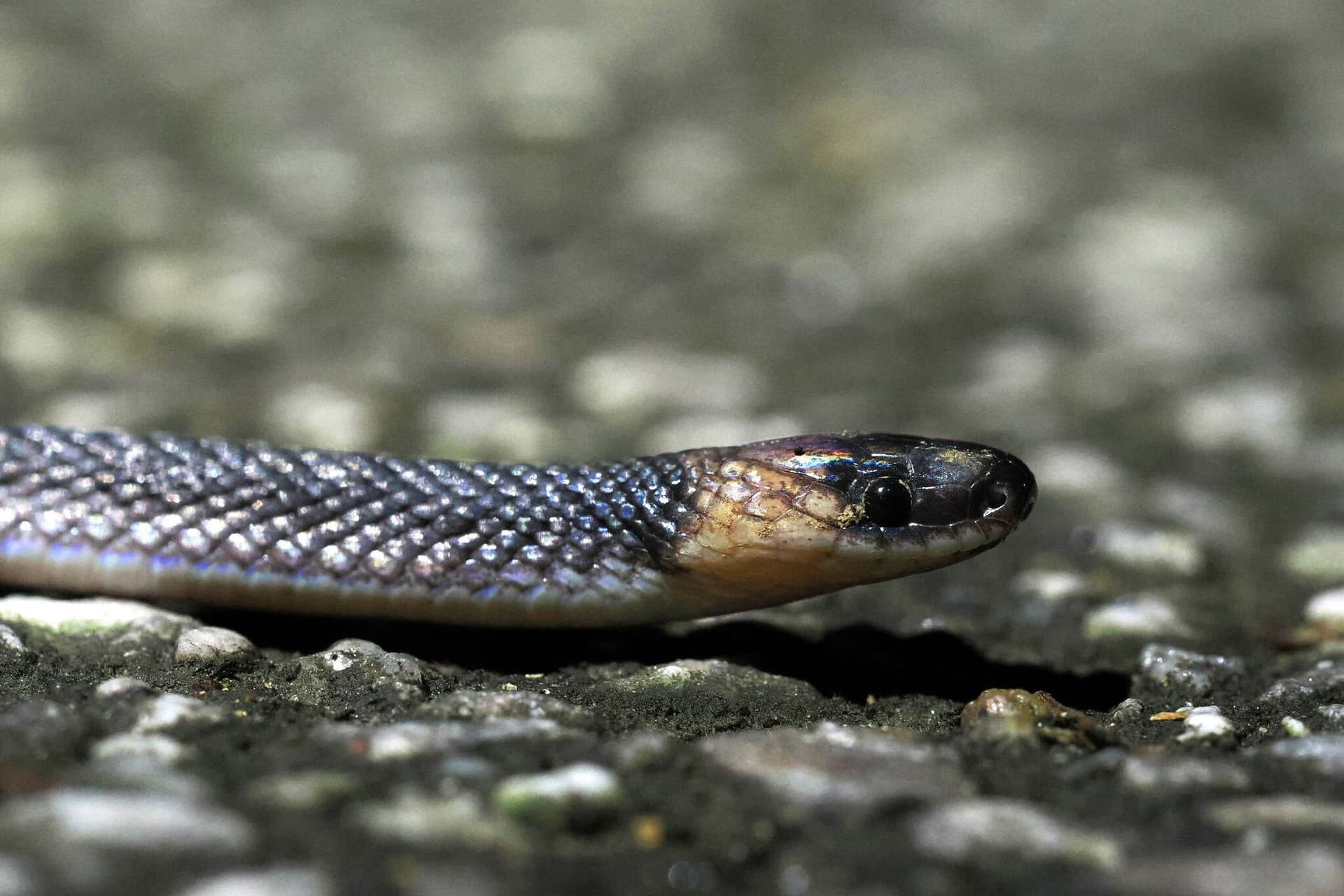
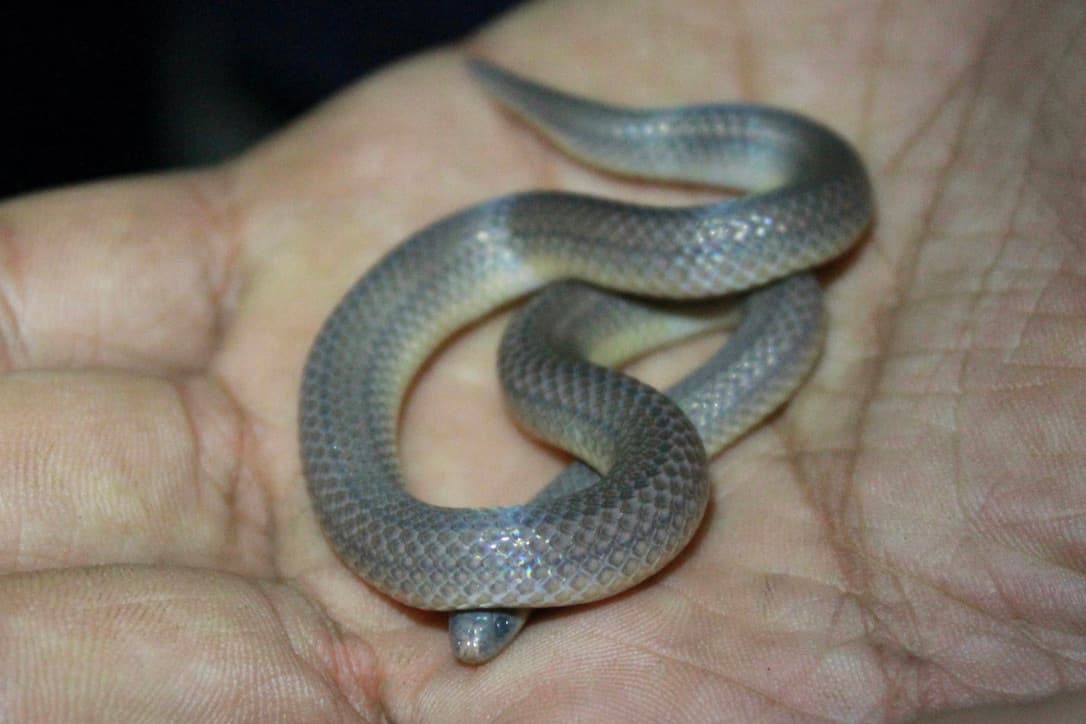
The Three-Lined Snake is a small, fossorial colubrid found on both Trinidad and Tobago.
The Three-Lined Snake is a small, fossorial colubrid found on both Trinidad and Tobago. Named for the three pale stripes running along its otherwise dark body, it is a secretive species of forest soil and leaf litter. Non-venomous, completely harmless, and feeding exclusively on earthworms and soil invertebrates, it is rarely seen above ground and is often confused with the Thread Snakes (Leptotyphlops) when it does surface.
Description
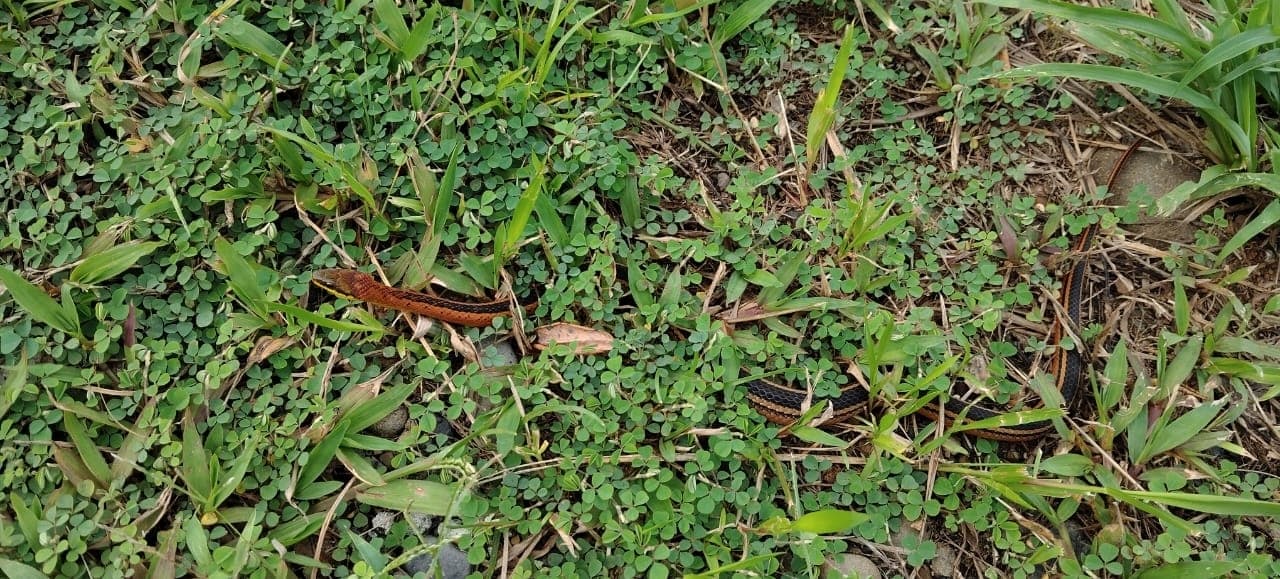
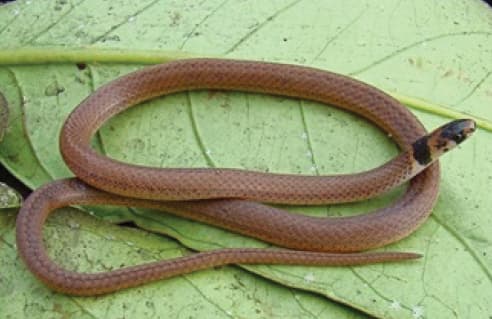
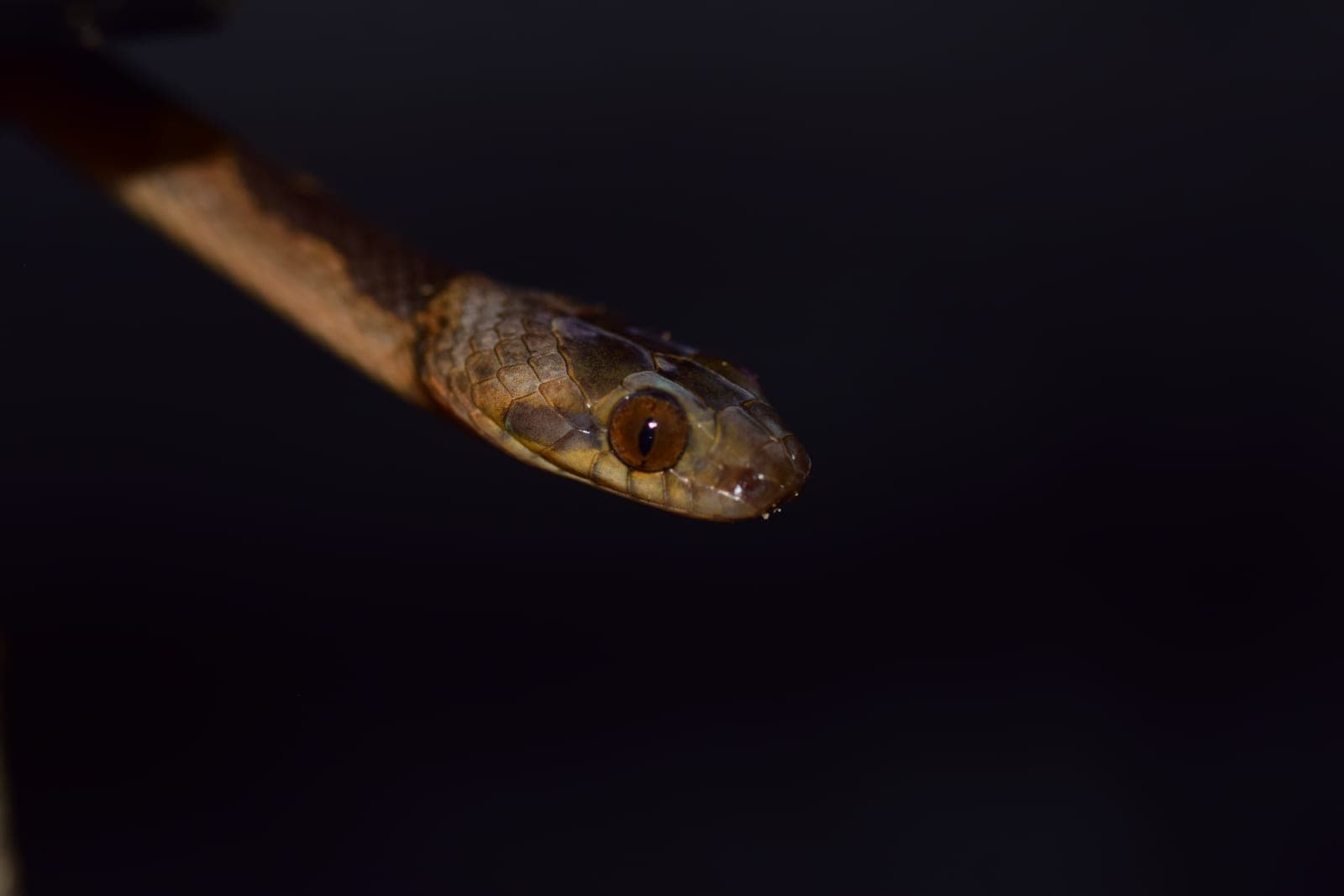
Atractus trilineatus is a small, cylindrical snake reaching approximately 25 to 40 cm. The body is dark brown to black with three cream, pale yellow, or whitish longitudinal stripes, one dorsal and two lateral, that run from head to tail. The head is small, blunt, and barely distinguishable from the neck, an adaptation for moving through soil. The eyes are small but functional. The scales are smooth and tightly overlapping, giving the body a shiny appearance.
Ecology
Almost entirely fossorial, the Three-Lined Snake spends its life in moist forest soil, leaf litter, and rotting logs, surfacing most commonly after heavy rain when earthworms are also driven to the surface. It feeds primarily on earthworms and soft-bodied soil invertebrates, which it swallows alive without venom. Unlike the blind snakes (Typhlopidae) and thread snakes (Leptotyphlopidae), Atractus species have functional, visible eyes and more complete dentition, reflecting an intermediate level of fossorial specialisation.
Conservation
The genus Atractus is the most species-rich snake genus in the Americas, with over 140 described species. In T&T, the genus is represented by A. trilineatus on both islands and the endemic Tobago form A. cf. univittatus. The T&T populations of A. trilineatus are part of a wide-ranging species found across northern South America including Venezuela, Colombia, and the Guianas. Both Atractus species in T&T are completely inoffensive and are fully protected under the Conservation of Wildlife Act.
Threats
- Soil disturbance and compaction by livestock and agriculture
- Deforestation removing moist forest floor habitat