Bird
Bird
Solitary Sandpiper
Tringa solitaria
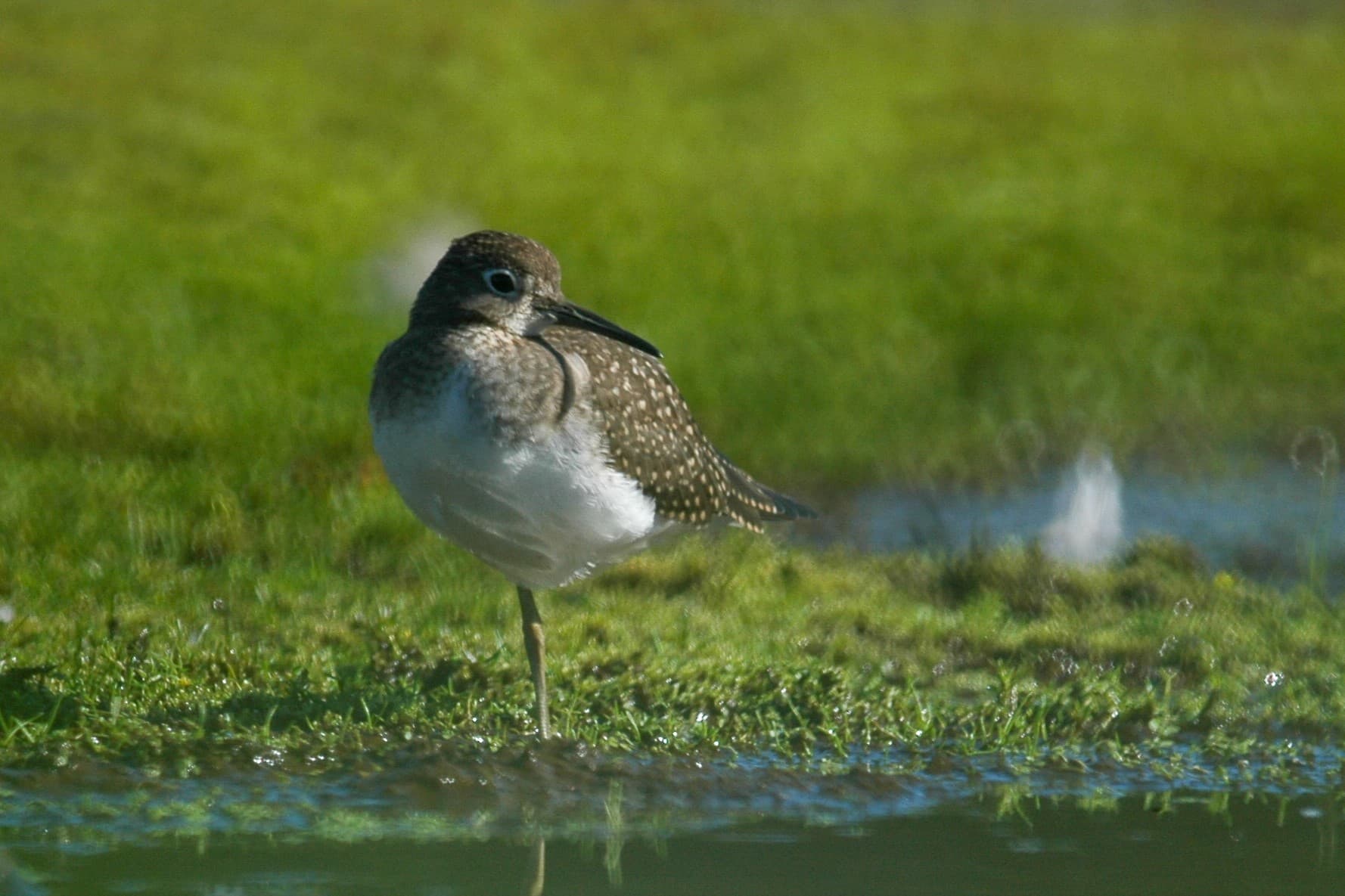
The Solitary Sandpiper is a slim, dark shorebird that, true to its name, is usually seen alone rather than in flocks, visiting Trinidad's freshwater pools and ditches during the northern winter after breeding in the boreal forests of Canada and Alaska.
The Solitary Sandpiper is a slim, dark shorebird that, true to its name, is usually seen alone rather than in flocks, visiting Trinidad's freshwater pools and ditches during the northern winter after breeding in the boreal forests of Canada and Alaska.
Identification
A medium-small shorebird around 19 to 21 cm long, with dark olive-brown upperparts finely spotted with white, a bold white eye-ring, and a dark tail with white barring visible in flight. Unlike most sandpipers it lacks a white rump, distinguishing it in flight from similar Tringa species. Its habit of bobbing the rear body while standing is a useful field mark.
Migration
A non-breeding migrant present in Trinidad roughly from August to April, having bred in boggy boreal forest across Canada and Alaska, often using old songbird nests in trees rather than nesting on the ground. It winters throughout Central America, the Caribbean, and South America, and is absent from Trinidad outside this non-breeding season.
Status in T&T
A fairly common non-breeding visitor to freshwater pools, ditches, and marsh edges across Trinidad, typically seen singly rather than in flocks. Not threatened, and it is protected as a migratory species under the Conservation of Wildlife Act.