Reptile
Reptile
Snail-Eating Snake
Dipsas variegata trinitatis
The Snail-Eating Snake is a highly specialised arboreal colubrid found in Trinidad.
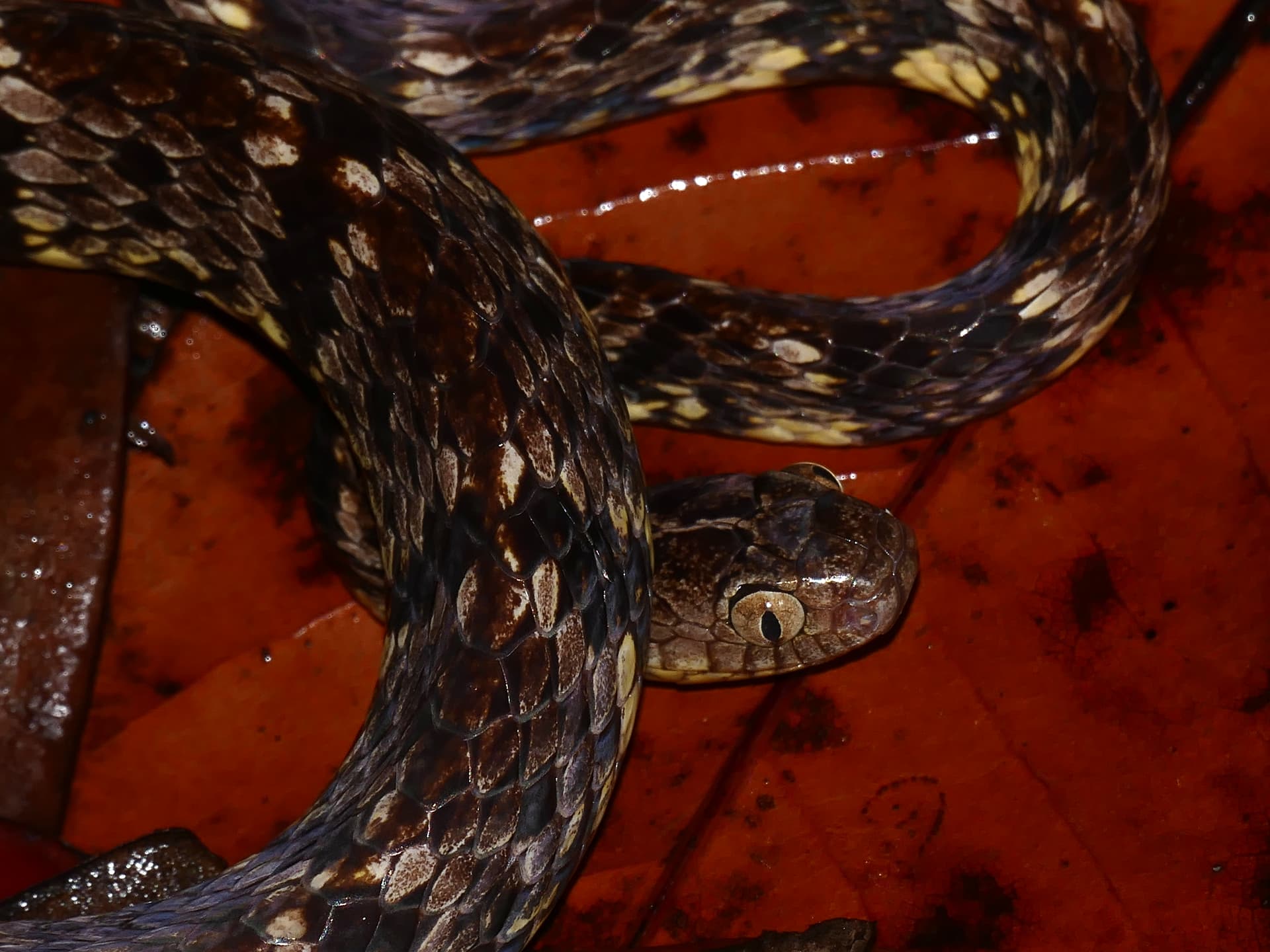
The Snail-Eating Snake is a highly specialised arboreal colubrid found in Trinidad. As its name suggests, it has evolved to feed almost exclusively on snails and slugs, using its lower jaw anatomy to extract snails from their shells. The Trinidad population is an endemic subspecies. It is completely harmless to humans.
Description
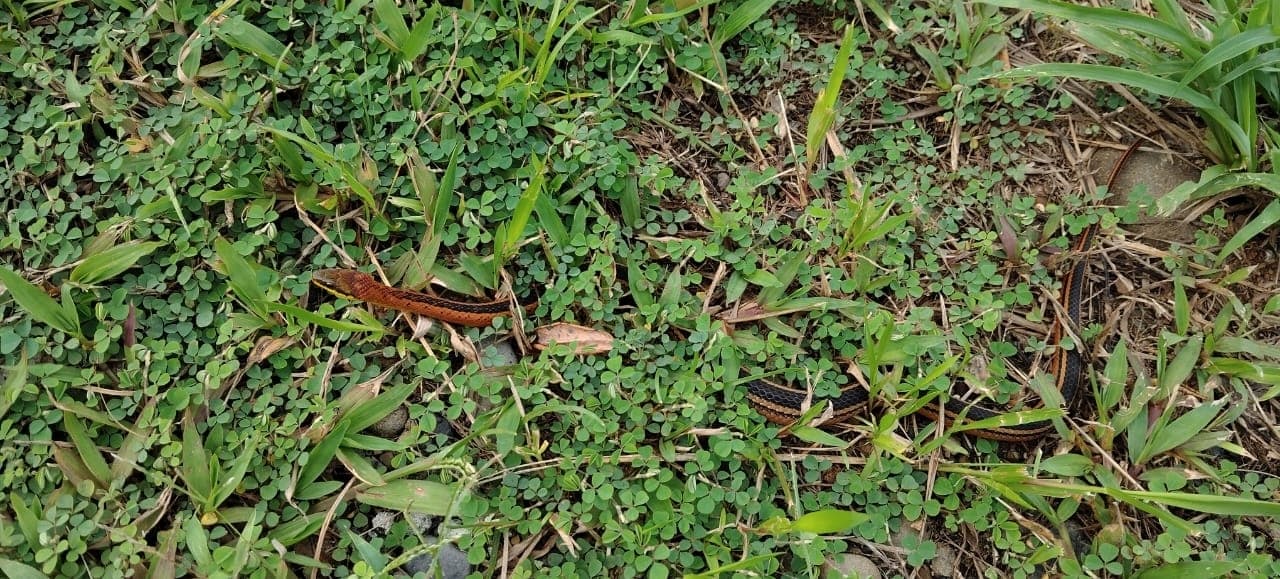
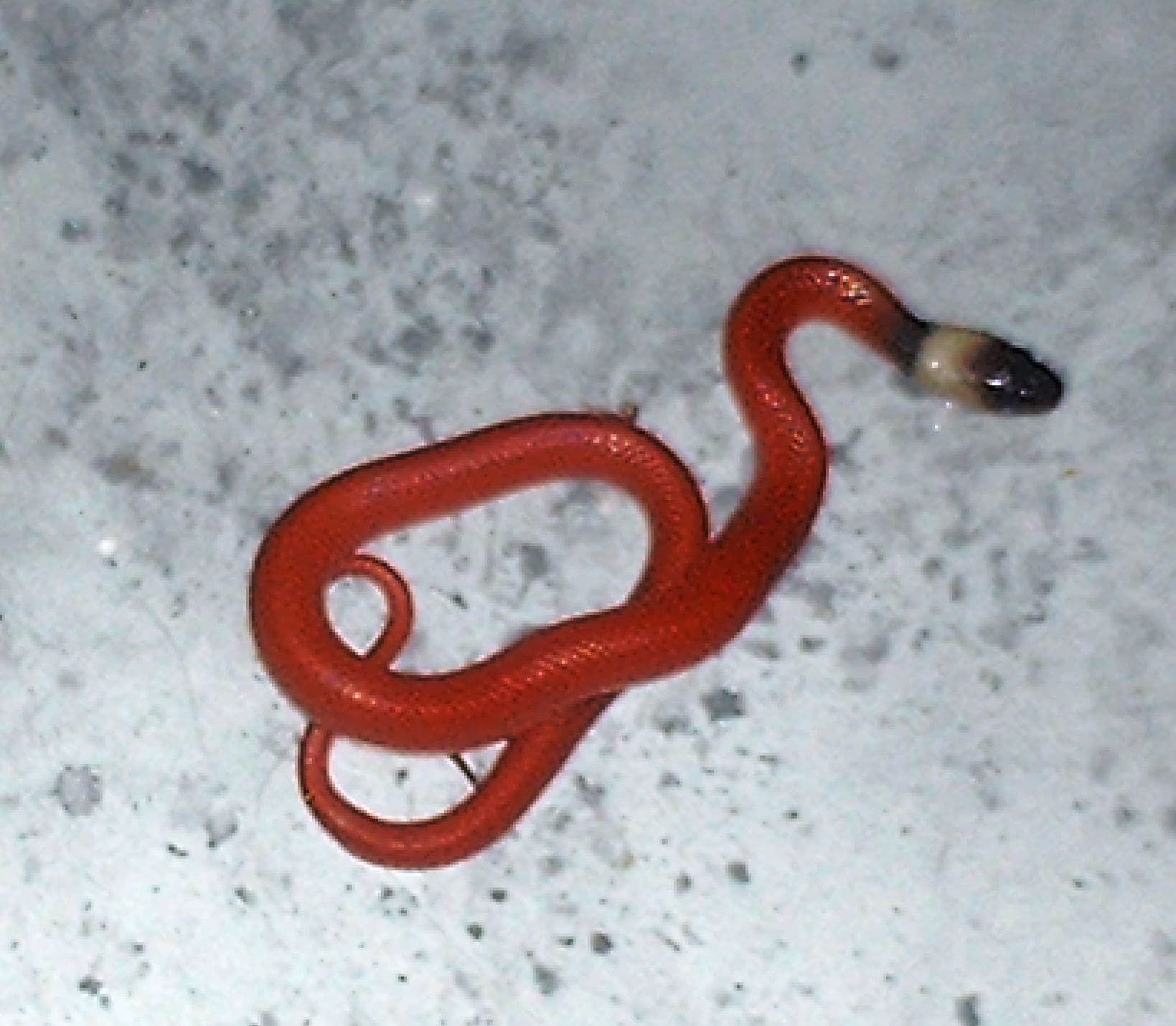
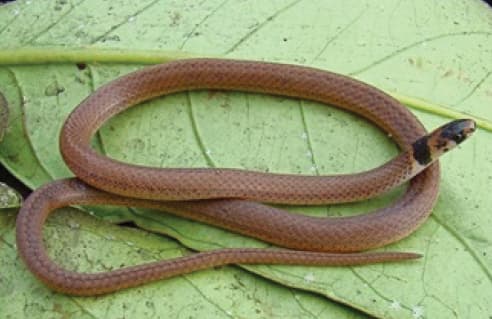
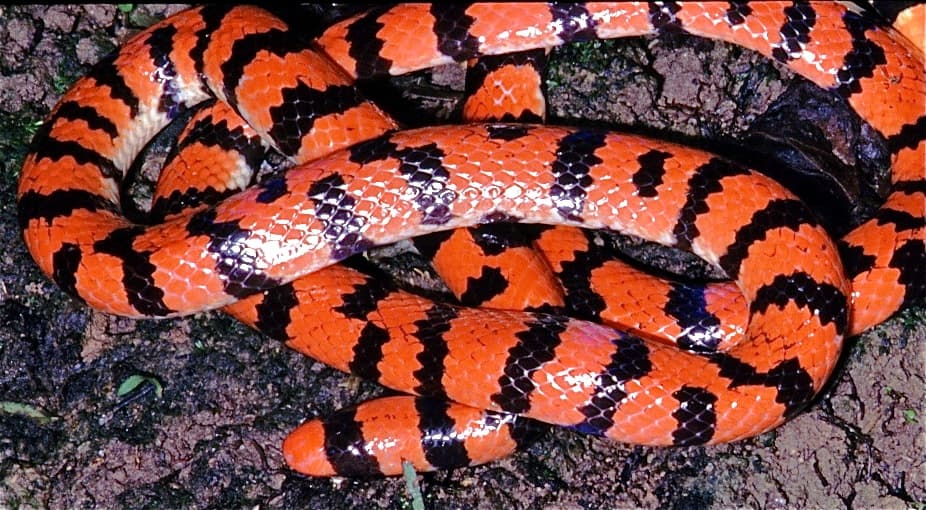
Dipsas variegata trinitatis is a slender, laterally compressed snake reaching approximately 50 to 70 cm. The head is large and strongly distinct from the narrow neck, the eyes are very large (reflecting its nocturnal arboreal lifestyle), and the lower jaw is highly asymmetrical to allow snail extraction from coiled shells. The body is blotched or banded in brown and cream.
Ecology
The snail-eating specialisation is a remarkable evolutionary adaptation. The mobile lower jawbones allow the snake to insert its lower jaw into a snail shell and hook the snail body to pull it free while the shell rotates. This snake is oviparous, nocturnal, and arboreal. It is an endemic subspecies found only on Trinidad. Fully protected under the Conservation of Wildlife Act.
Threats
- Habitat loss and forest fragmentation
- Decline of prey base (land snail populations)