Reptile
Reptile
Ratonel
Pseudoboa neuwiedii
The Ratonel is a nocturnal, rear-fanged colubrid found on both Trinidad and Tobago.
The Ratonel is a nocturnal, rear-fanged colubrid found on both Trinidad and Tobago. Its local name derives from the French Creole for rat, reflecting its role as a mammal-eating predator. A robust, dark-coloured snake of humid forest and secondary growth, it is non-venomous to humans and fills an important niche as a nocturnal predator of rodents, lizards, and other snakes.
Description
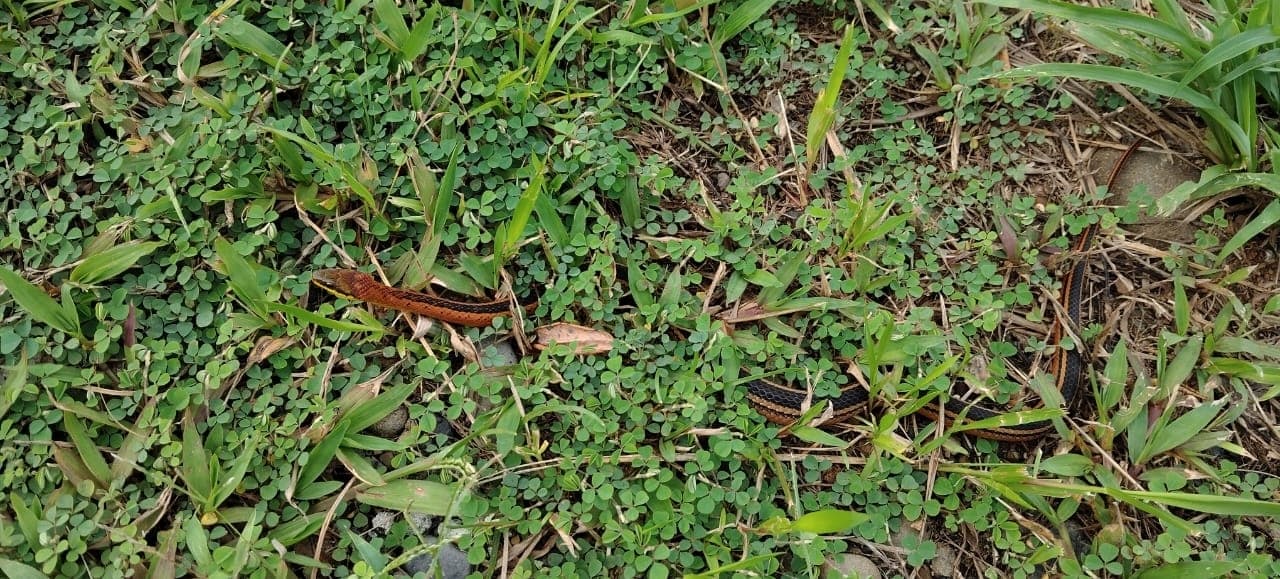
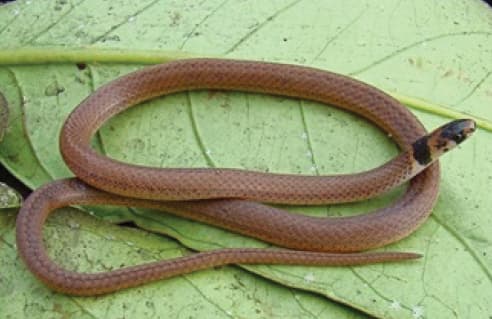
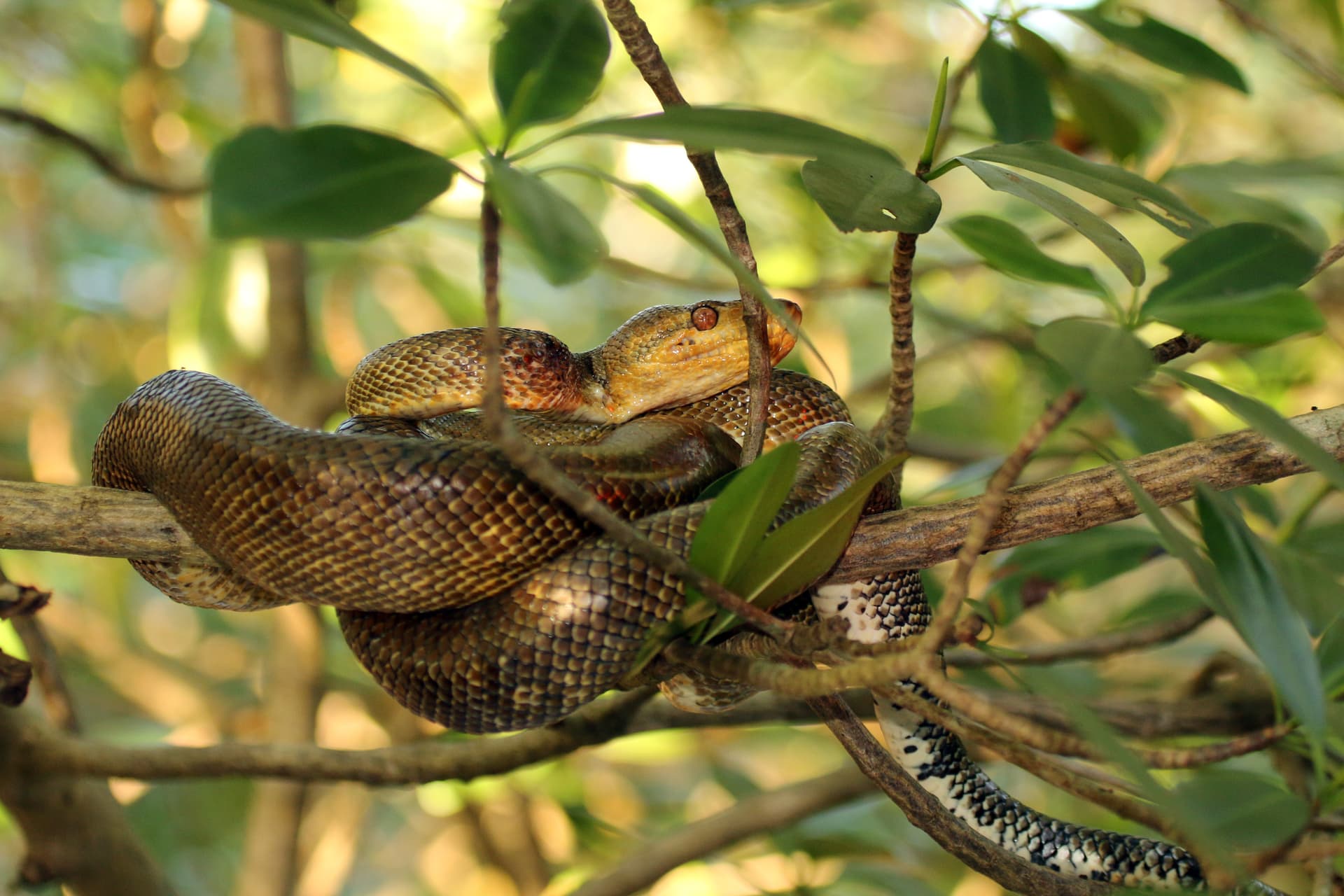
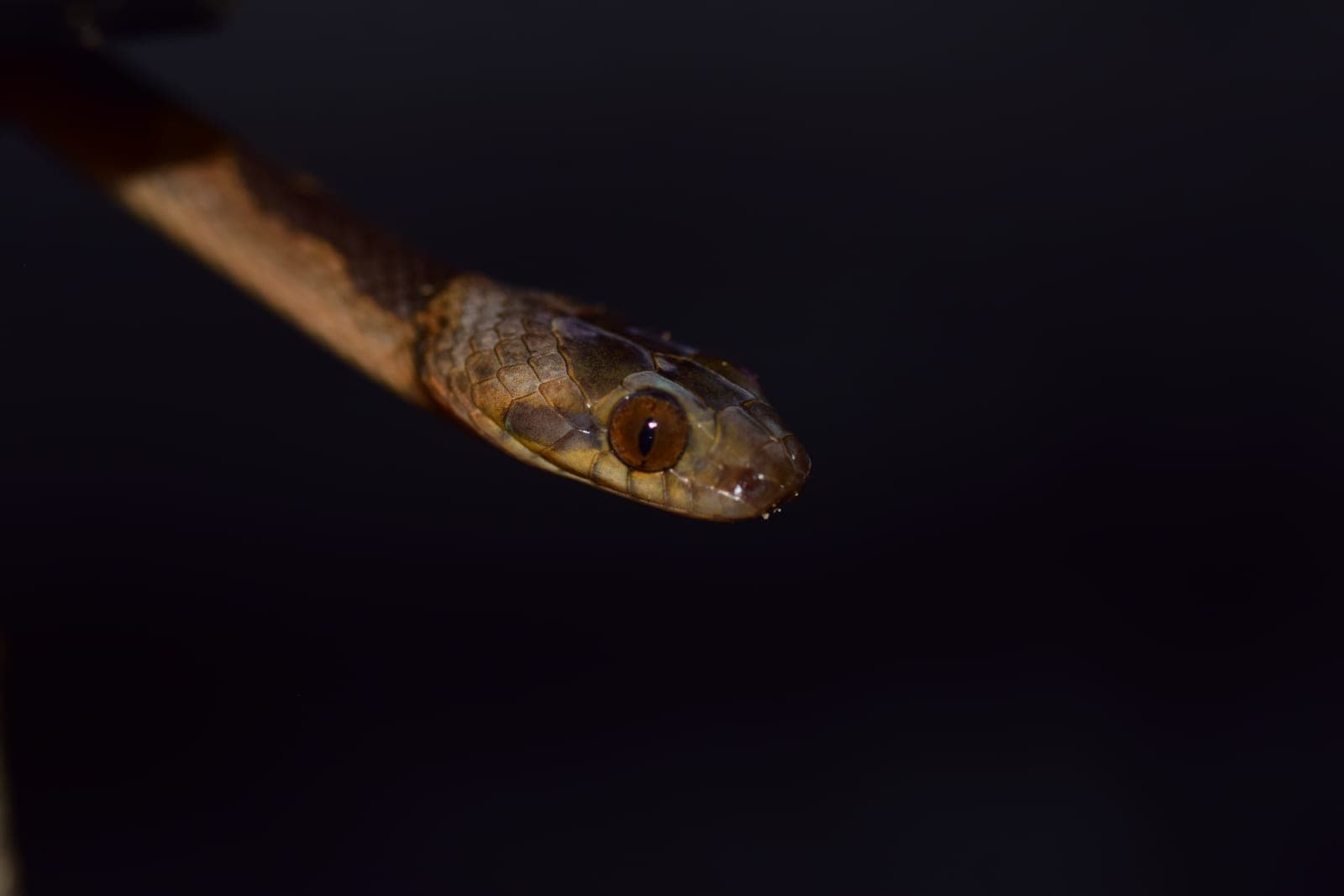
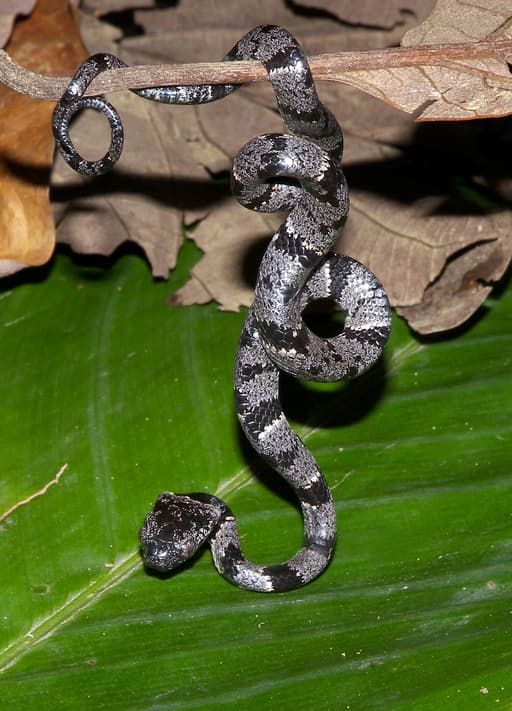
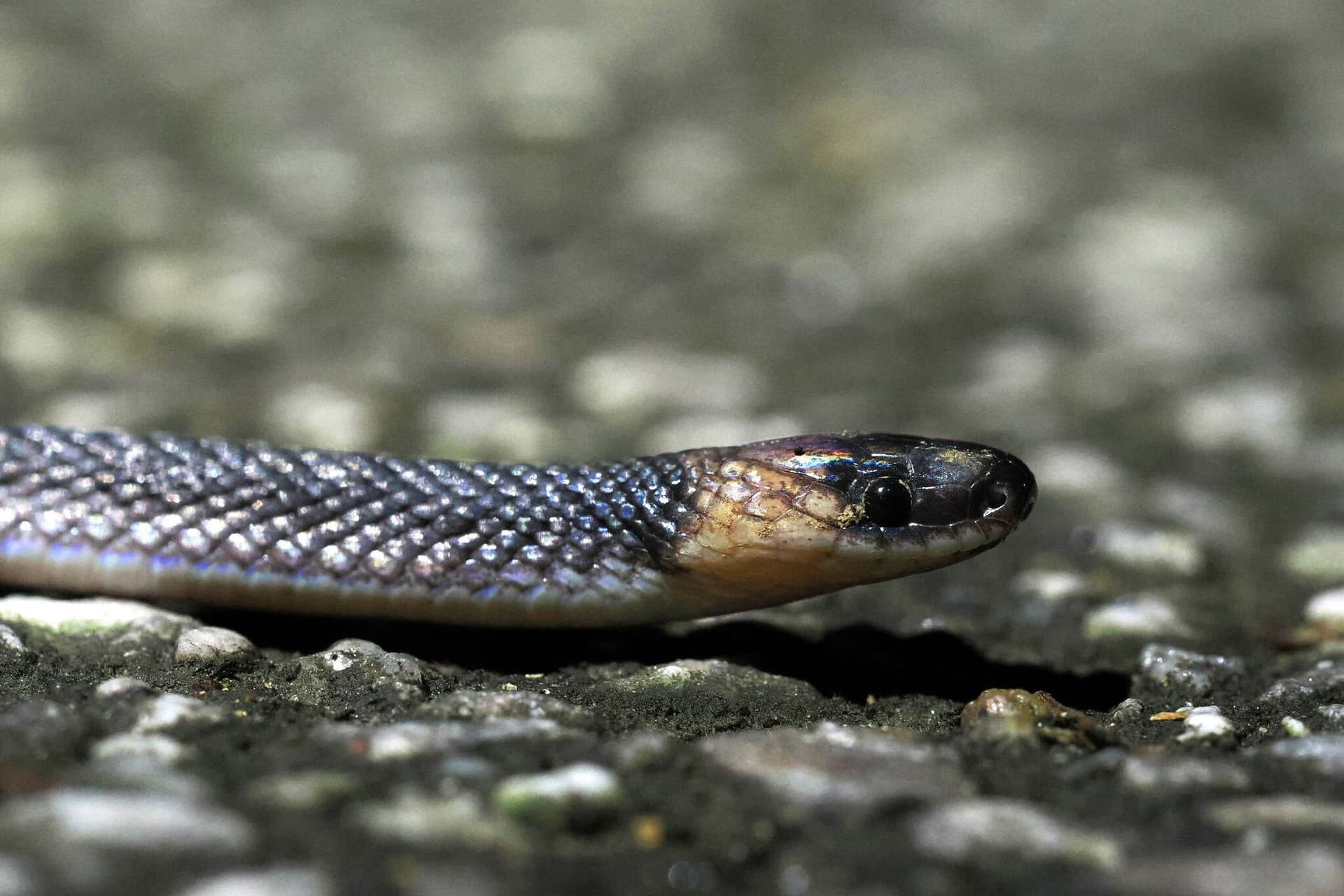
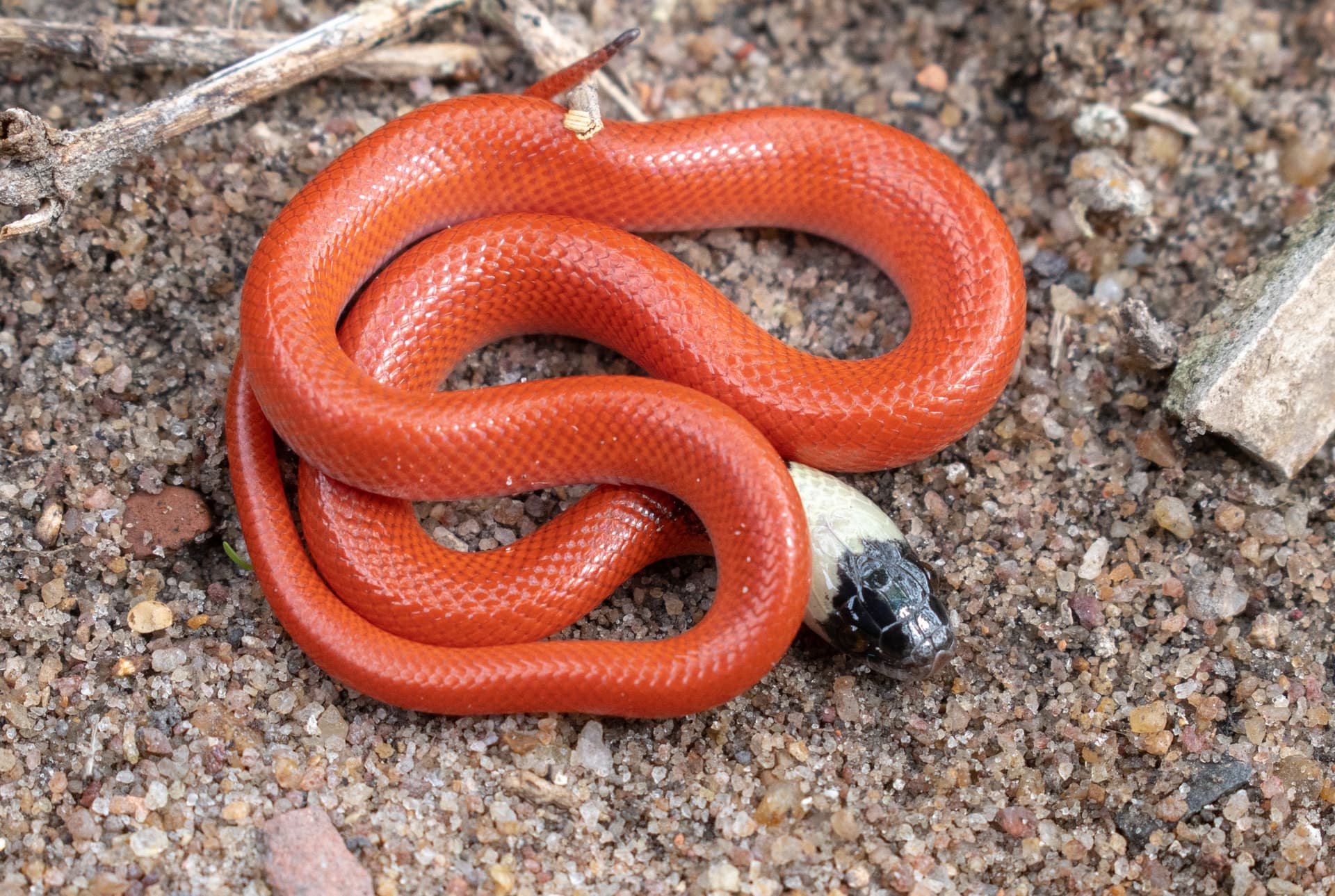
Pseudoboa neuwiedii is a medium to large colubrid, typically reaching 80 to 120 cm with a moderately robust build. Adults are generally uniform dark reddish-brown to black above with a pale or whitish belly; the juvenile pattern is more contrasting, often with lighter dorsal markings that darken progressively with age. The head is broad and somewhat distinct from the neck, with large eyes suited to nocturnal hunting. Juveniles can appear strikingly different from adults and are sometimes misidentified as different species.
Ecology
A dedicated nocturnal hunter, the Ratonel actively forages on the forest floor for small rodents, bats, lizards, and other snakes. It is rear-fanged, with enlarged grooved teeth at the back of the jaw that deliver Duvernoy's gland secretions to immobilise prey. This venom is effective against the small mammals and reptiles it targets but presents no medical risk to humans. The species is immune to, or at least highly tolerant of, the venom of at least some prey snakes, a trait shared with other ophiophagous colubrids.
Conservation
The Ratonel is found in humid forest, secondary woodland, and occasionally in cultivated areas with adjacent forest on both Trinidad and Tobago. It is most likely to be encountered at night on forest tracks and roads, where it is often killed by traffic or by people who encounter it unexpectedly. As a predator of rodents, it provides valuable pest control in agricultural and forest settings. It is fully protected under the Conservation of Wildlife Act.
Threats
- Persecution and road kills at night
- Habitat loss and forest fragmentation