Reptile
Reptile
Mapepire de Fe
Tripanurgos compressus
The Mapepire de Fe is a very slender, laterally compressed, arboreal colubrid found in Trinidad's forest understorey.
The Mapepire de Fe is a very slender, laterally compressed, arboreal colubrid found in Trinidad's forest understorey. Despite the alarming local name ("iron mapepire"), it bears no relationship to the venomous pit vipers and poses no medical risk to humans. A nocturnal ambush predator of sleeping lizards, it is among the most specialised arboreal hunters in T&T's snake fauna.
Description
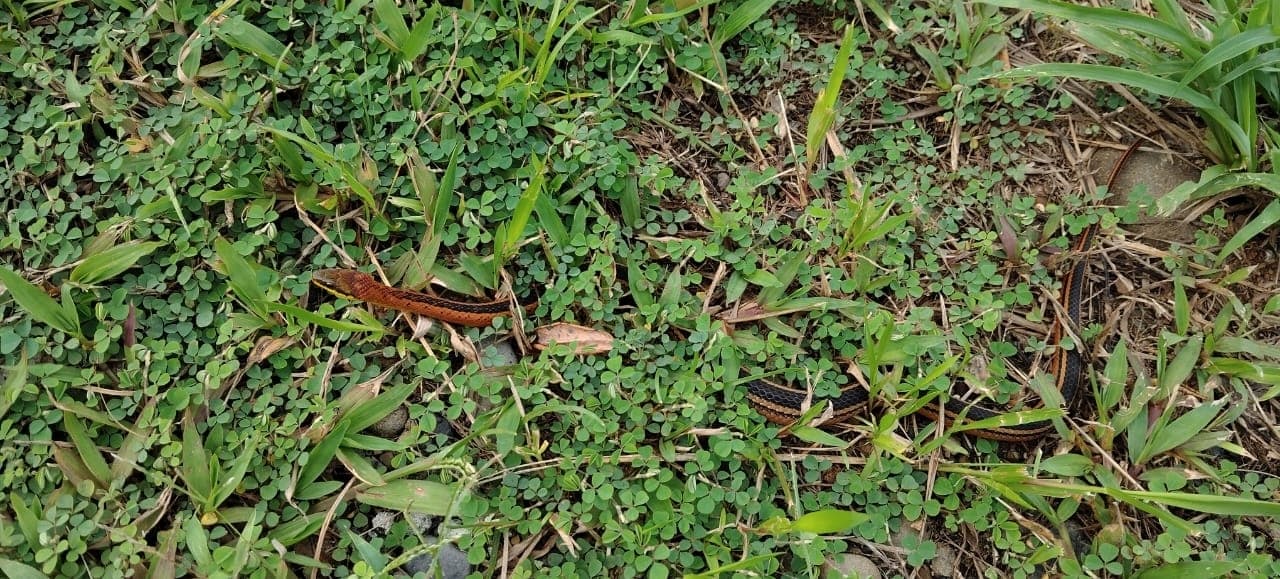
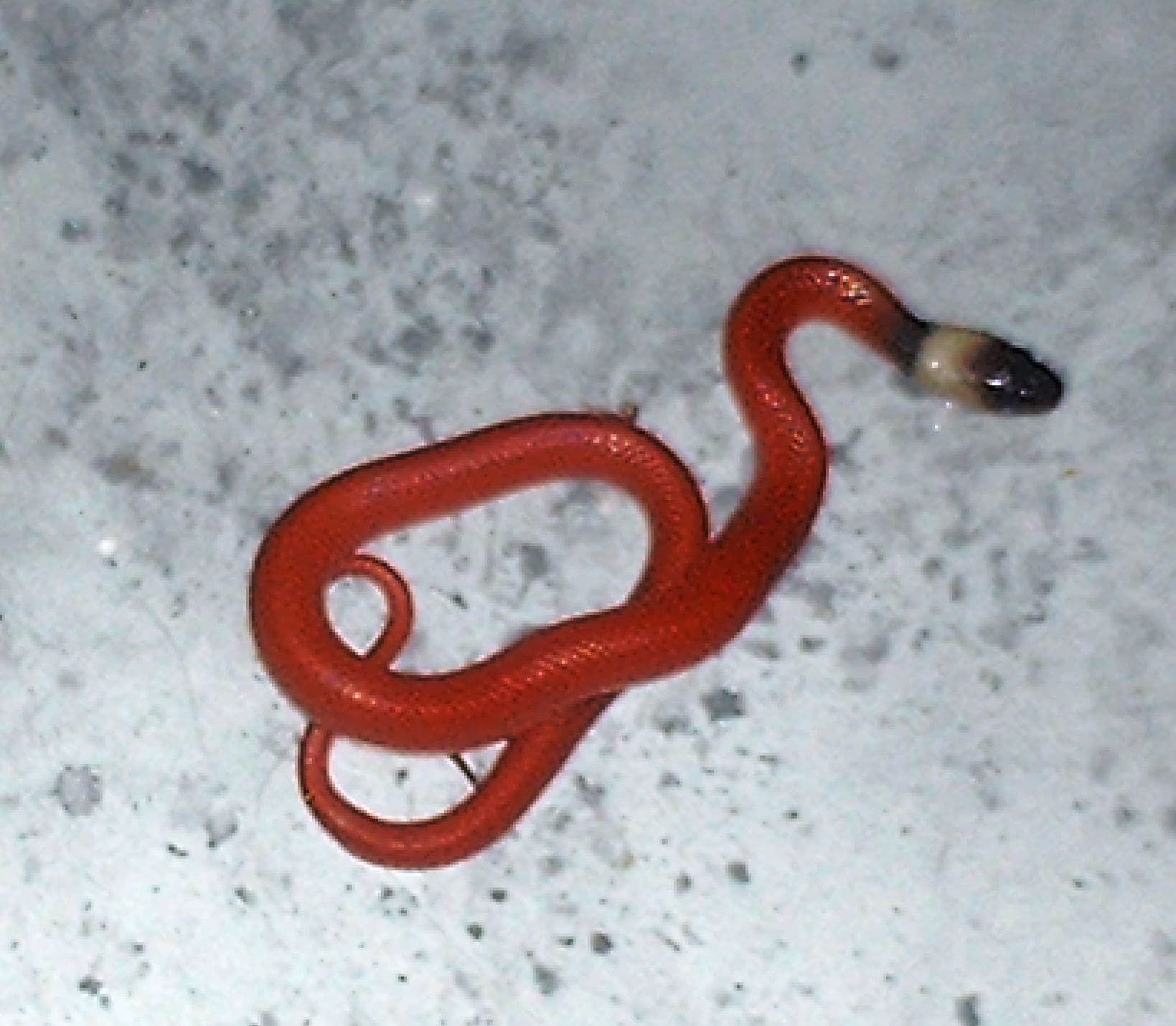
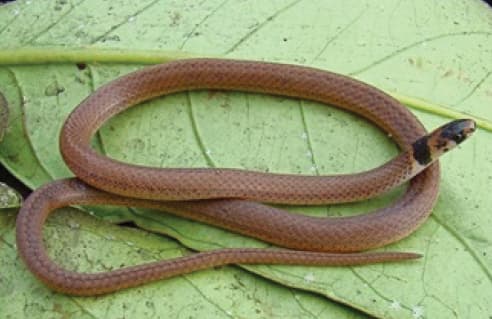
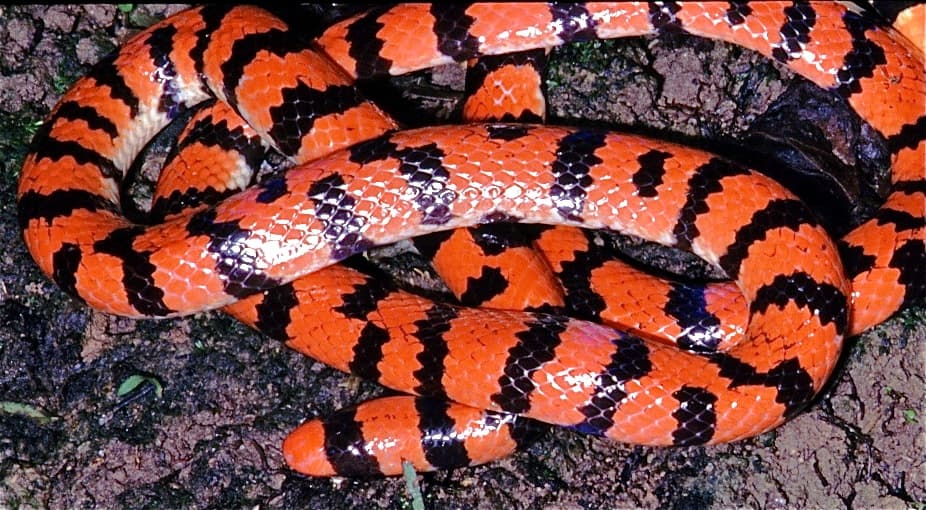
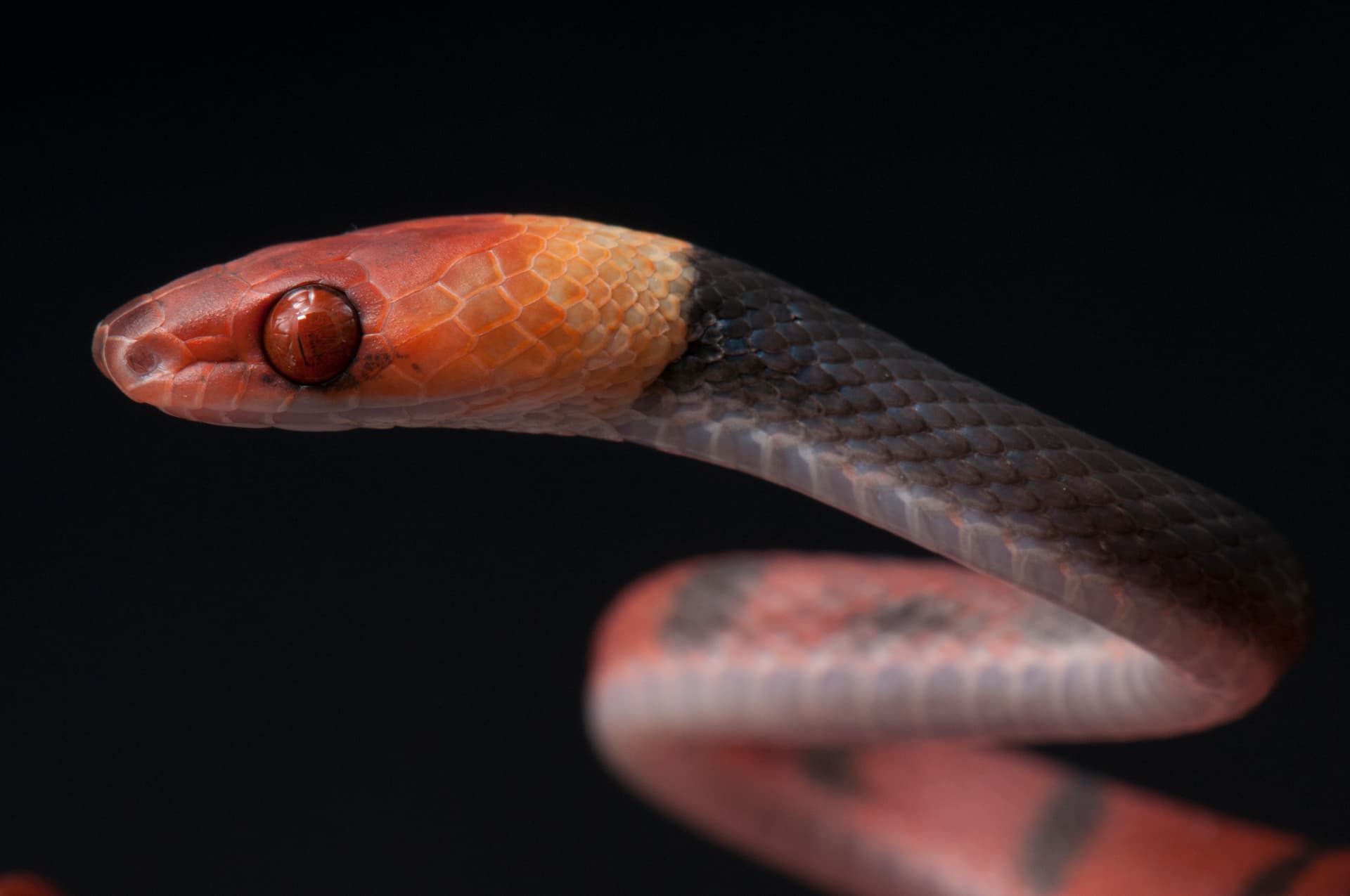
Tripanurgos compressus is a strikingly slender snake reaching approximately 80 to 100 cm. The body is laterally compressed, flat from side to side rather than rounded, an unusual adaptation among T&T snakes and a feature that allows it to press flat against a branch or vine and be nearly invisible in silhouette. The head is narrow and elongated with a somewhat triangular outline; the eyes are large and suited to low-light vision; the tail is long and prehensile, gripping branches securely. The dorsal colour is pale brownish or reddish-grey with darker dorsal blotching.
Ecology
The Mapepire de Fe uses an ambush strategy that takes advantage of the physiology of its prey. At night, anoles and other small lizards become torpid and cling motionless to leaves and twigs, making them highly vulnerable to a slow, careful predator. The Mapepire de Fe approaches along branches and uses its prehensile tail to anchor itself while extending its slender body toward a sleeping lizard. The rear-fanged Duvernoy's gland secretions quickly immobilise the prey. The long prehensile tail and laterally compressed body are co-adaptations for this hunting method.
Conservation
Its local name "de fe" is of uncertain etymology; one interpretation is that it derives from "de fer" (of iron), referring to the perceived hardness or toughness of the snake or its body; another links it to colour. The genus Tripanurgos is monotypic, containing only this one species. It is found across northern South America from Trinidad and Venezuela through Colombia, Ecuador, Peru, and Bolivia into Brazil. Fully protected under the Conservation of Wildlife Act in Trinidad.
Threats
- Habitat loss and forest fragmentation reducing arboreal understorey
- Persecution due to the alarming mapepire name