Reptile
Reptile
Machete Couesse
Mastigodryas boddaerti boddaerti
The Machete Couesse is a large, fast-moving diurnal colubrid and one of the most commonly encountered large snakes in Trinidad.
The Machete Couesse is a large, fast-moving diurnal colubrid and one of the most commonly encountered large snakes in Trinidad. Found throughout the island from lowland forest to open agricultural land, it is a powerful and alert predator of frogs, lizards, and small mammals. Non-venomous and entirely harmless to humans, it is fully protected by law. The local name "couesse" is from French Creole.
Description
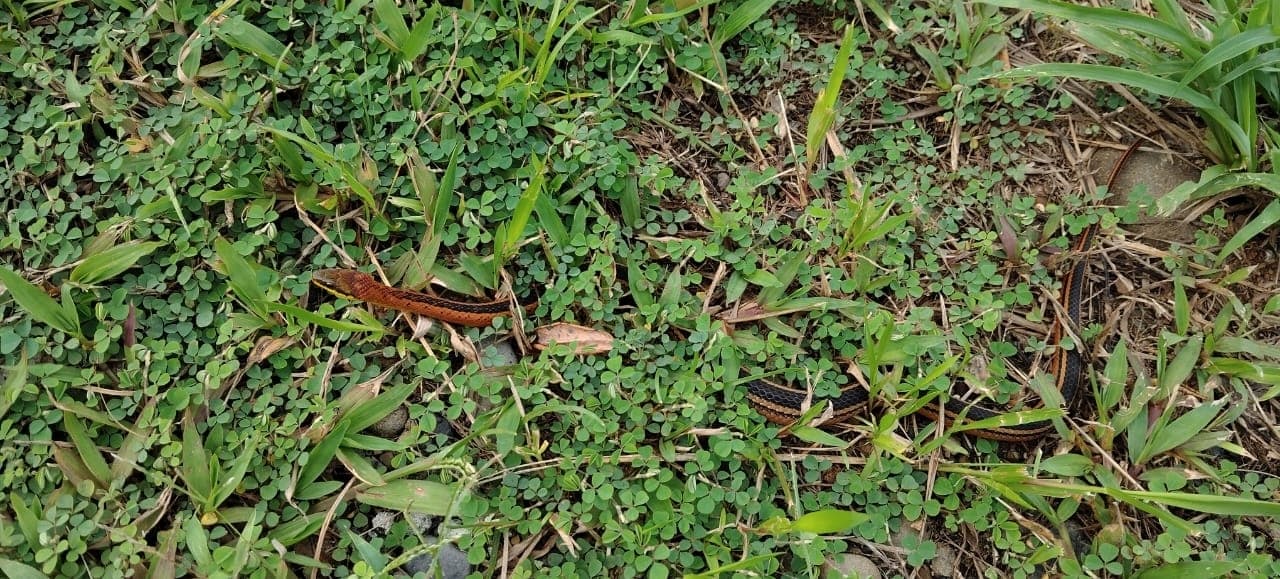
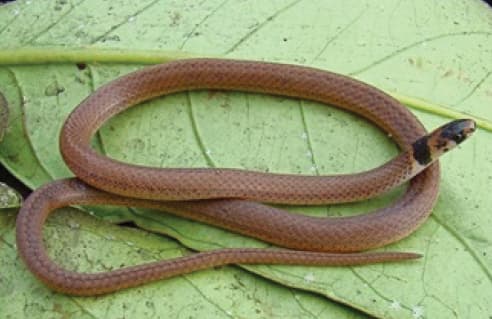
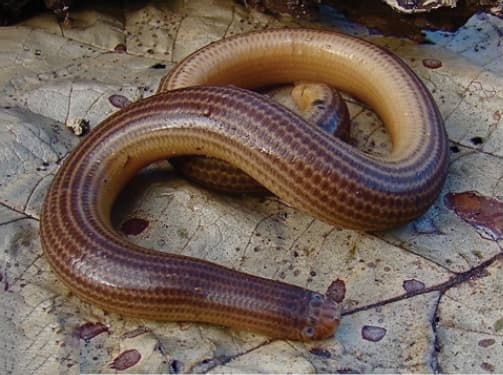
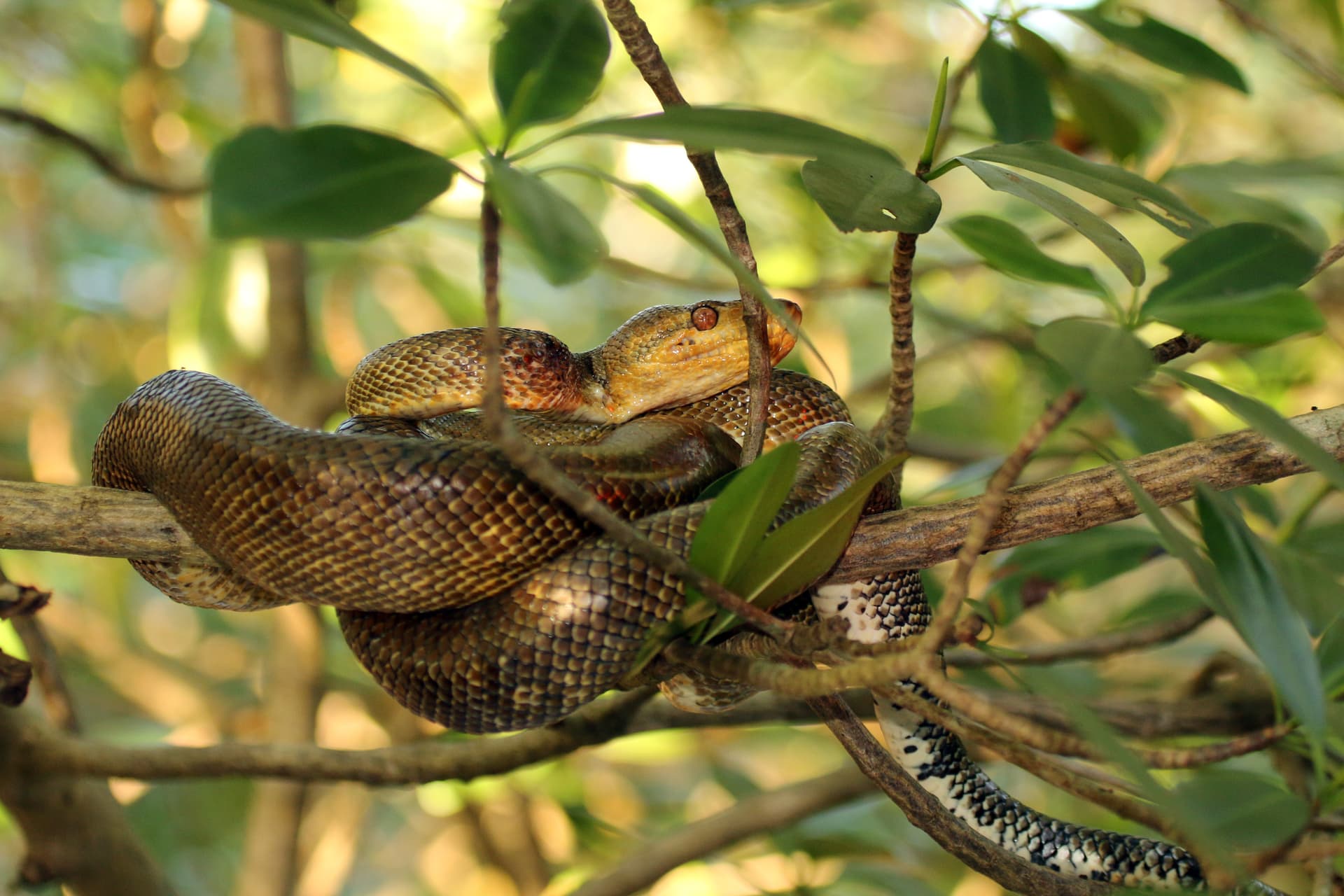
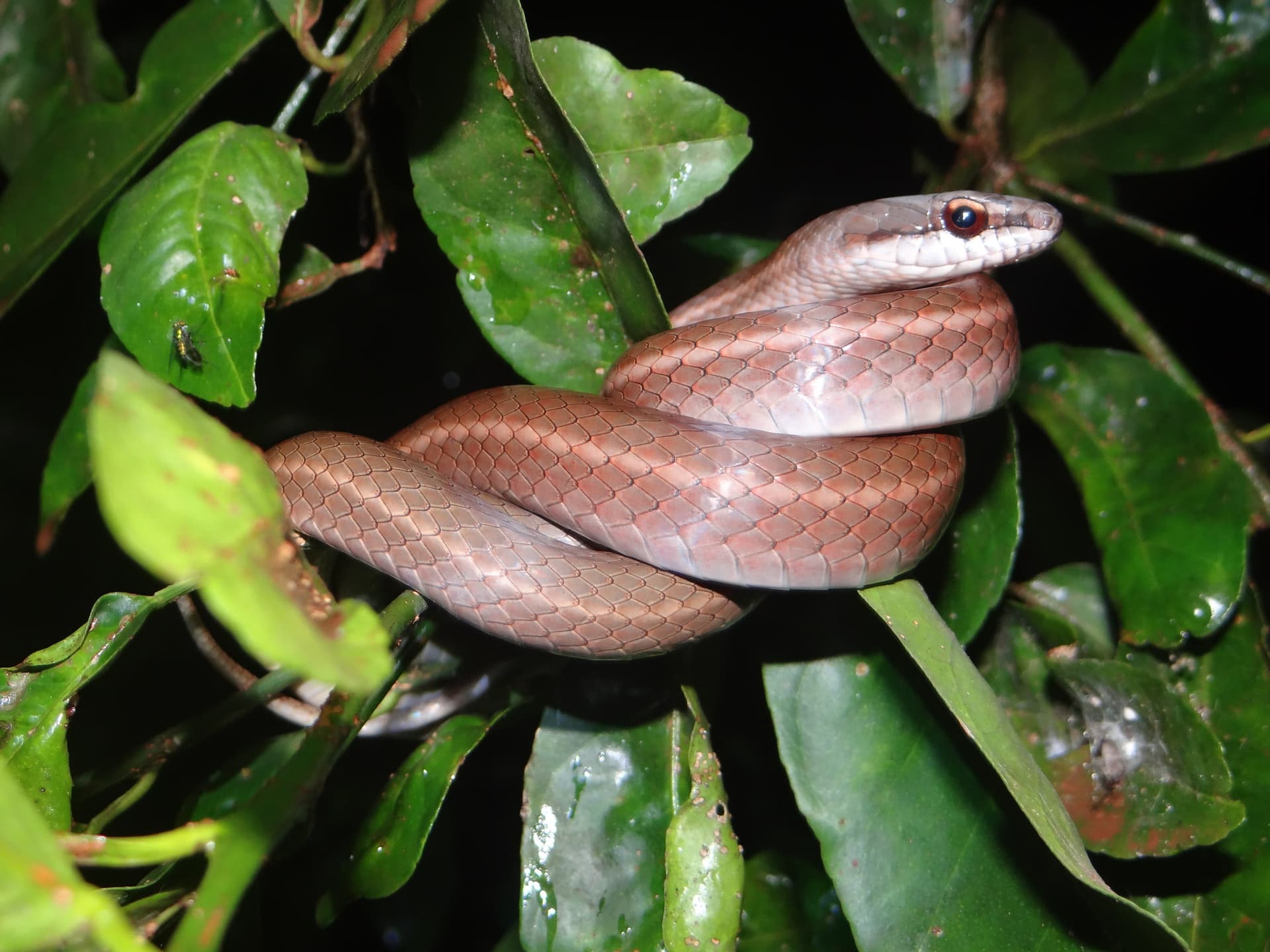
Mastigodryas boddaerti boddaerti is a robust, large-headed colubrid reaching up to 1.5 to 2 m. The dorsal colour is olive-brown, grey-brown, or tan, typically with a faint pattern of darker blotching or a pale lateral stripe along the lower flanks. The belly is yellowish or cream. The head is broad and noticeably distinct from the neck, with large eyes and a long snout. It is well-muscled and can move very quickly over ground.
Ecology
An active diurnal predator, the Machete Couesse hunts by active search, ranging through open forest, secondary growth, agricultural margins, and stream banks for frogs, lizards, small mammals, and other snakes. When encountered it will often hold its ground, vibrate the tail rapidly against dry vegetation, flatten its neck, and strike hard if further threatened. This bluff is convincing but the bite is not venomous or medically significant. Road casualties are high because of its habit of crossing roads during the heat of the day.
Conservation
The nominate subspecies M. b. boddaerti occurs on Trinidad; the Tobago population is the endemic subspecies M. b. dunni, which differs in scalation and is found only on that island. The name "machete" in the common name refers to the sharp, machete-like head profile; "couesse" is a French Creole term. Fully protected under the Conservation of Wildlife Act.
Threats
- Road kills: high mortality due to daytime road crossing
- Persecution: killed on sight due to large size and aggressive defensive display
- Habitat loss and agricultural conversion