Invertebrate
Invertebrate
Leaf-cutter Ant
Atta cephalotes
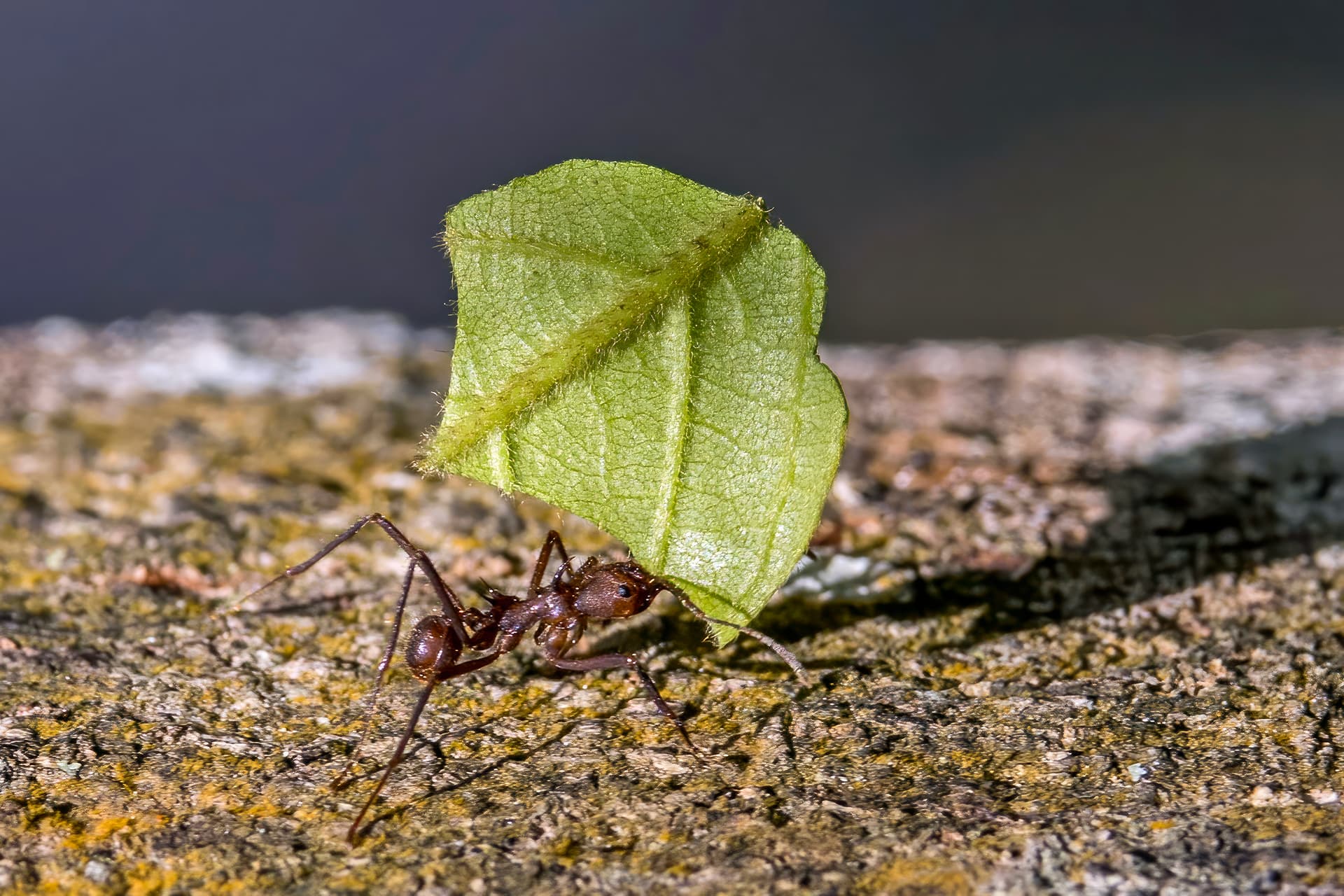
The Leaf-cutter Ant is one of Trinidad's most ecologically significant insects, forming massive underground colonies that farm a fungus cultivated on freshly cut leaf fragments carried along conspicuous forest trails.
The Leaf-cutter Ant is one of Trinidad's most ecologically significant insects, forming massive underground colonies that farm a fungus cultivated on freshly cut leaf fragments carried along conspicuous forest trails.
Identification
A reddish-brown ant with a strongly polymorphic colony, from tiny minim workers only a few millimetres long to large soldiers over a centimetre, all bearing spined body segments. The most recognisable sight is a column of medium workers each carrying a disc of cut leaf many times its own body size, held aloft like a sail.
Behaviour
Colonies can contain millions of individuals organised into a strict division of labour: foragers cut and transport leaf fragments back to the nest, where smaller workers process the material into a mulch used to cultivate a specialised fungus, the colony's sole food source. Underground nests can span many metres and persist for years, with distinct chambers for fungus gardens, brood, and waste.
Status in T&T
Common and widespread in forest and forest edge across Trinidad, playing a major role in nutrient cycling and vegetation turnover. Not threatened, though colonies are sometimes controlled in agricultural areas where they can defoliate crops.
Threats
- Sometimes controlled as an agricultural pest despite its ecological importance