Reptile
Reptile
Horse Whip
Oxybelis aeneus
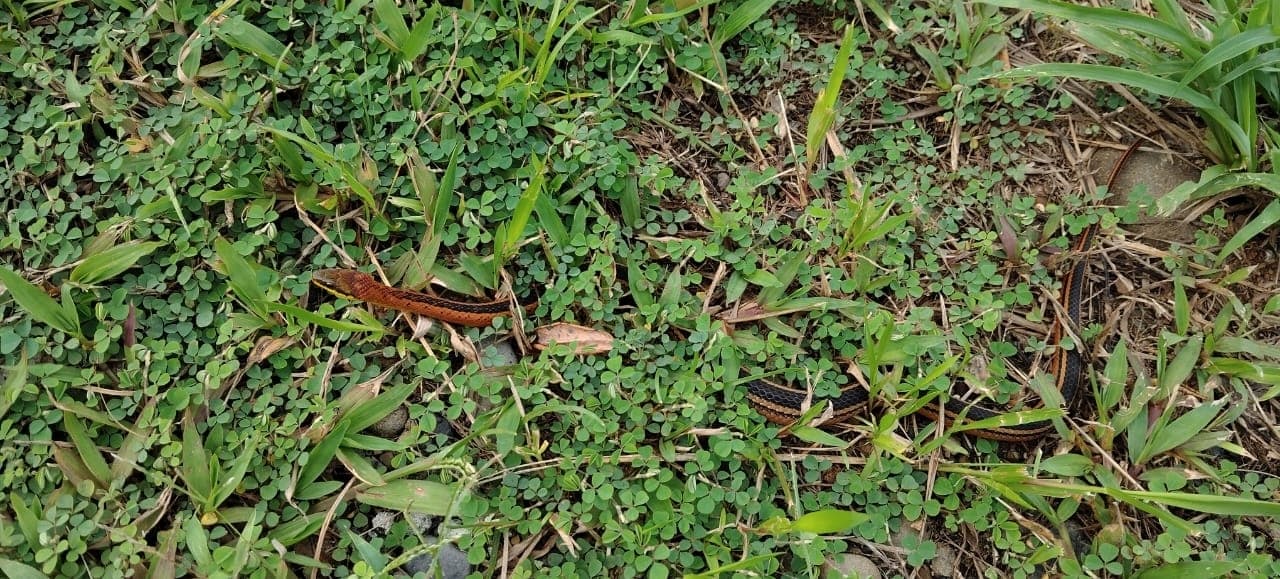
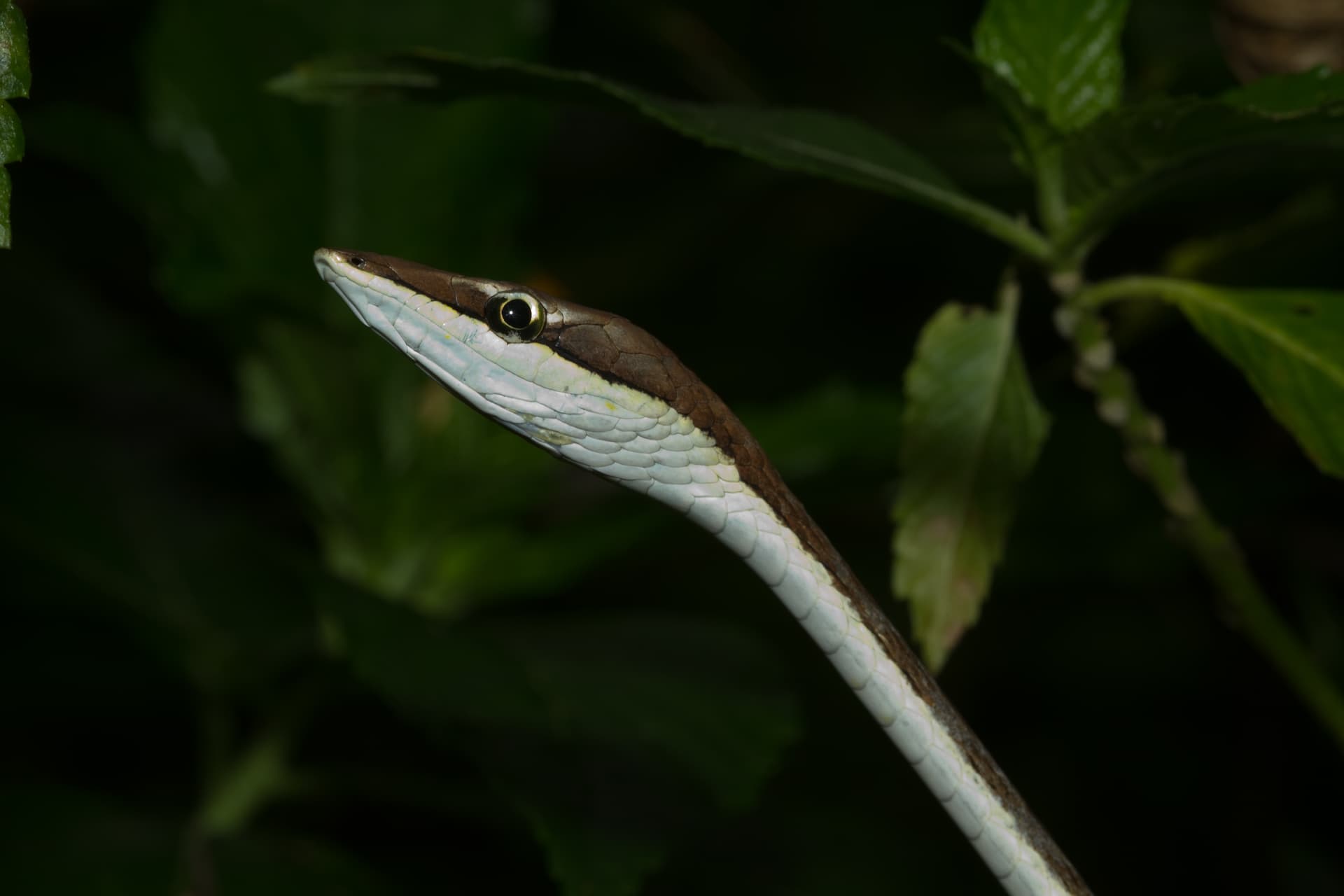
The Horse Whip is an extremely slender, arboreal colubrid that achieves near-perfect camouflage among dry twigs and vines.
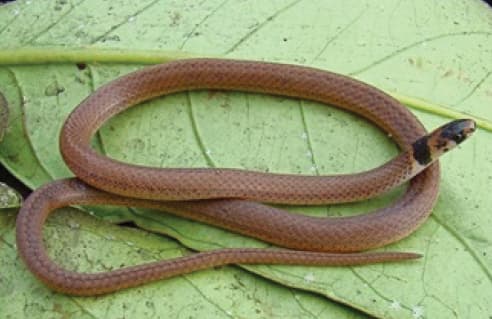
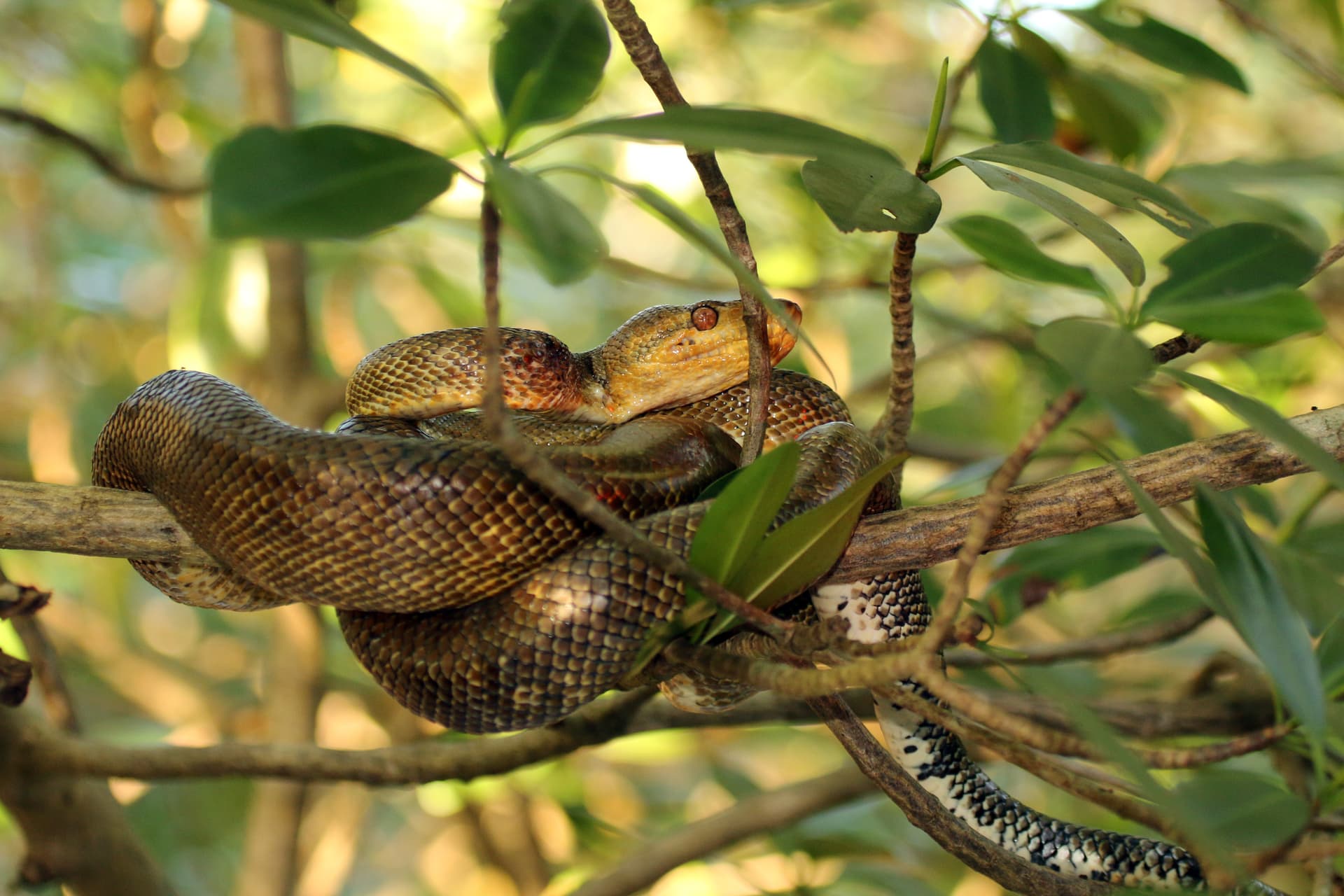
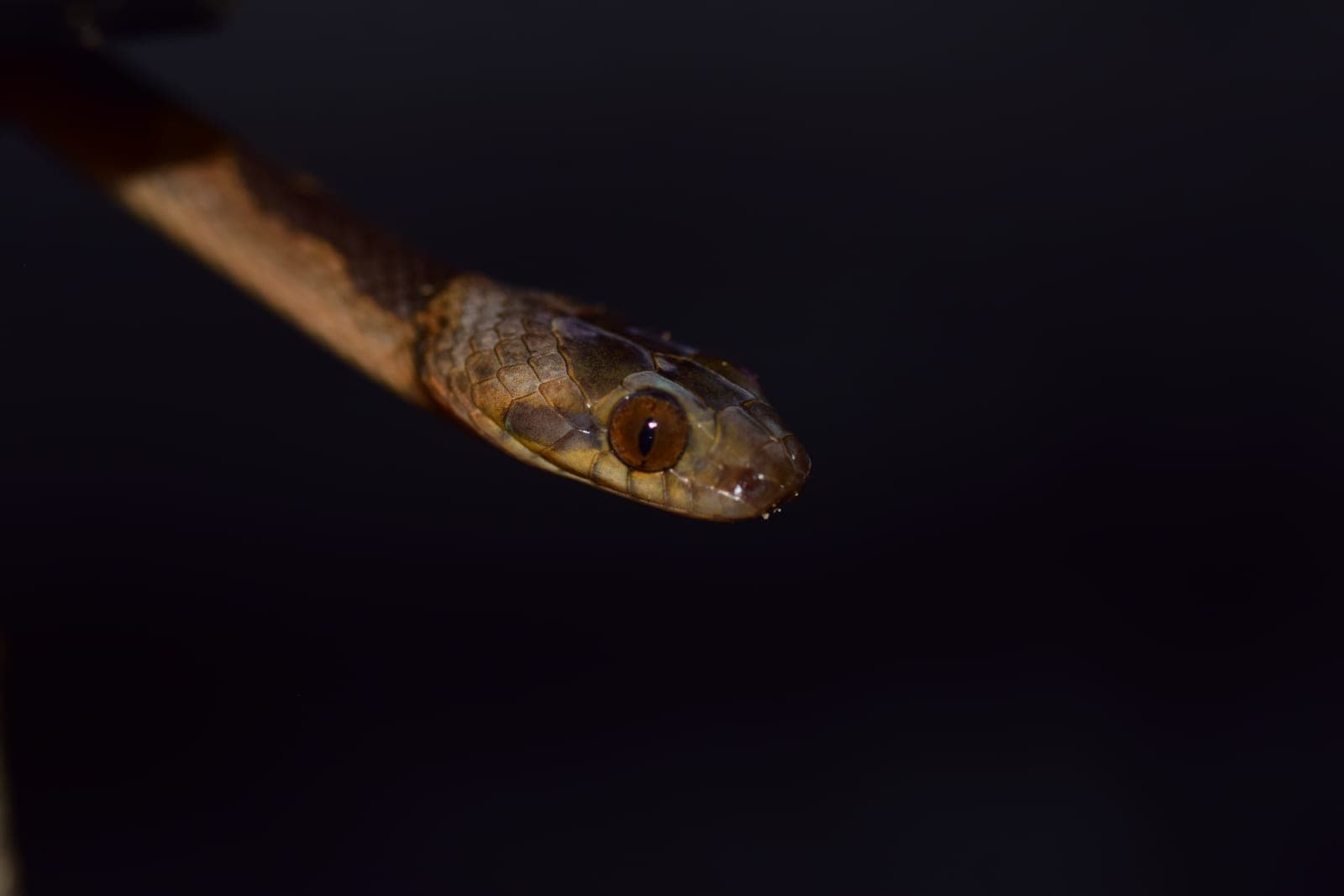
The Horse Whip is an extremely slender, arboreal colubrid that achieves near-perfect camouflage among dry twigs and vines. Found on both Trinidad and Tobago, it is one of the most cryptic snakes in T&T: motionless in low vegetation, it is virtually indistinguishable from the surrounding dead stems. Rear-fanged with mild venom, it poses no significant medical risk. It is fully protected by law.
Description
Oxybelis aeneus is extraordinarily slender, reaching up to 1.5 m in length but as thin as a pencil throughout most of its body. The head is long, narrow, and distinctly pointed, with a noticeably projecting snout that adds to the twig-like profile. The body is a uniform brownish-grey or tan above and lighter below, closely matching the colour of dead vine stems and dry branches. When alarmed, it may freeze completely or sway in place like a twig in a light breeze, an active behavioural reinforcement of its cryptic camouflage.
Ecology
A diurnal arboreal predator, the Horse Whip hunts lizards, particularly small geckos and anoles, in the drier parts of forest vegetation and forest edges. It pursues lizards actively and uses its rear-fanged Duvernoy's gland secretions to immobilise them quickly. It is oviparous. The defensive gape display, in which the snake opens its mouth wide to reveal the dark interior lining, is a bluffing strategy used by several arboreal colubrids. The bite can cause local swelling and numbness in sensitive individuals but is not classified as medically significant.
Conservation
Found on both Trinidad and Tobago, the Horse Whip ranges widely from Arizona and Texas south through Central America and into South America. In T&T it favours drier forested margins, secondary growth, and forest edges rather than wet rainforest interior. It is fully protected under the Conservation of Wildlife Act. The name "horse whip" refers to the snake's extraordinary slenderness, resembling a riding crop or whip.
Threats
- Habitat loss: removal of dry secondary growth reduces foraging habitat
- Persecution by people who disturb it in vegetation