Reptile
Reptile
Gray Lora
Leptophis stimsoni
The Gray Lora is a rare, slender arboreal colubrid closely related to the common Lora (Leptophis ahaetulla), known from only a few specimens in Trinidad.
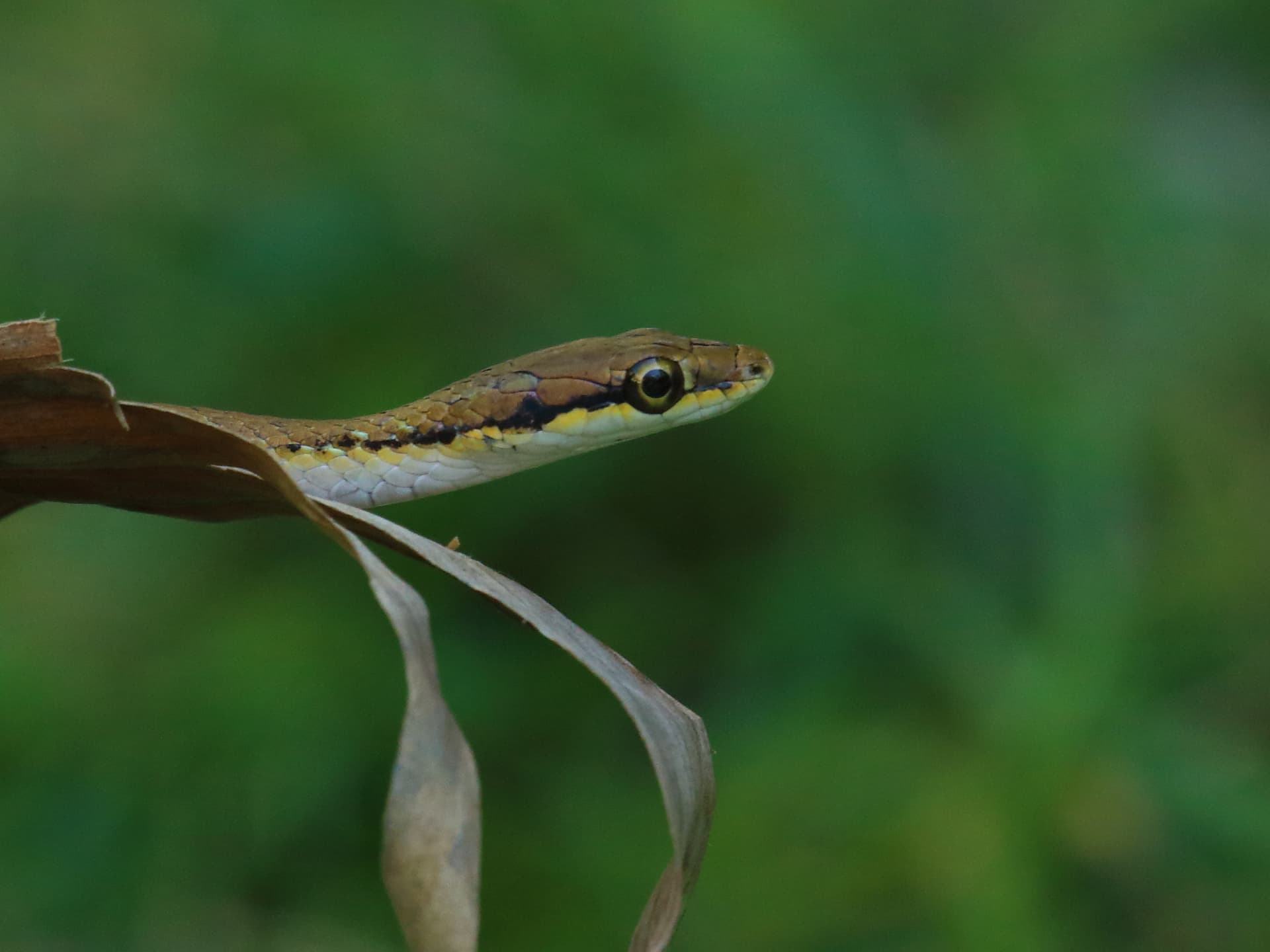
The Gray Lora is a rare, slender arboreal colubrid closely related to the common Lora (Leptophis ahaetulla), known from only a few specimens in Trinidad. Unlike the brilliant emerald green of its congener, it has a greyer or brownish dorsal colouration. Its ecology on the island is poorly documented due to the scarcity of records. Non-venomous and fully protected by law.
Description
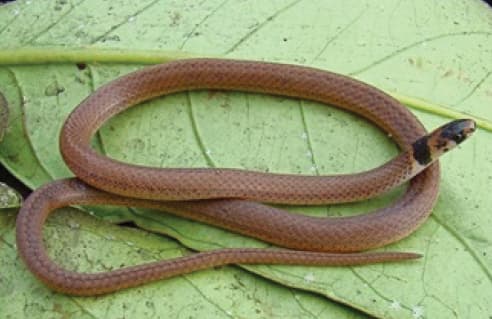
Leptophis stimsoni is similar in body form to L. ahaetulla: slender, fast-moving, with an elongated head and large eyes suited to a diurnal arboreal lifestyle. The dorsal colouration, however, is greyer, brownish-grey, or olive-drab rather than vivid green, and it lacks the striking iridescent sheen of the Lora. The black eye stripe may be less pronounced or absent. It is a smaller and less conspicuous species overall.
Ecology
The habits of the Gray Lora in Trinidad are inferred from its closely related congeners rather than directly observed. It is expected to be a diurnal, arboreal predator of frogs and lizards in forest canopy and secondary growth, active in the same microhabitats as the Lora. Its rarity in collections may reflect genuine scarcity on Trinidad, restricted habitat use in densely vegetated areas that are difficult to survey, or both.
Conservation
Leptophis stimsoni was described by Neil Smith in 1971 and has a limited range primarily in the Guianas and adjacent Venezuela; Trinidad represents the southernmost island population. The paucity of specimens and observations makes any population assessment difficult. It is fully protected under the Conservation of Wildlife Act alongside all non-venomous snakes in T&T.
Threats
- Status poorly known; too few records for assessment
- Habitat loss and deforestation