
Invertebrate
Giant Centipede
Scolopendra gigantea
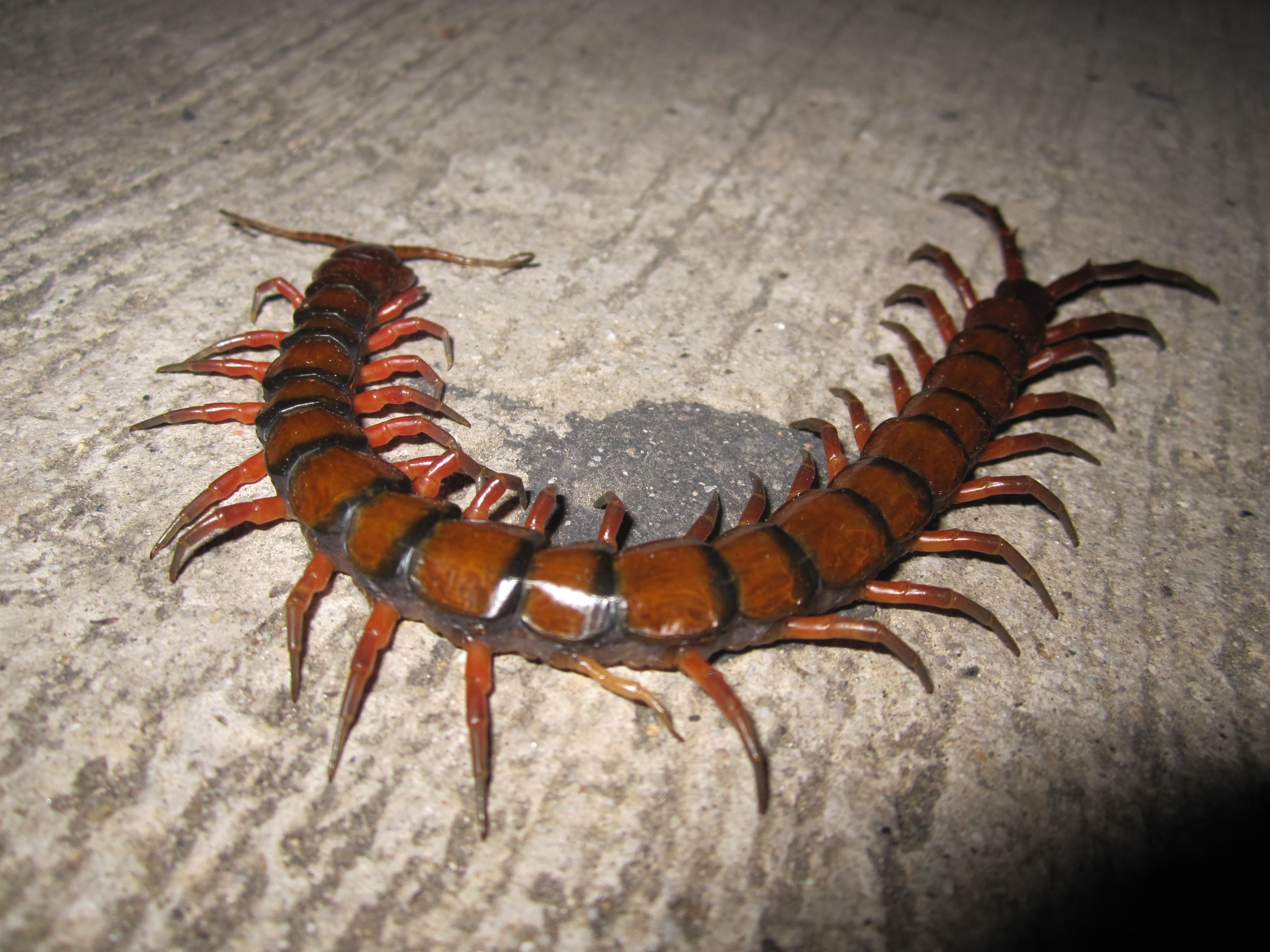
The Giant Centipede (Scolopendra gigantea), also called the Amazonian giant centipede, is among the largest centipedes on Earth, reaching lengths of up to roughly 30 cm. A formidable nocturnal predator of neotropical forests, it occurs in Trinidad, where it hunts a remarkable range of prey using a potent venom delivered through modified front legs.
Identification
Scolopendra gigantea is a robust, elongated centipede that can exceed 30 cm in length, making it one of the largest species in the world. The head and trunk range from dark brown to reddish-brown, while the legs are typically olive-green tipped with yellow claws.
The body is divided into segments, each bearing a single pair of legs, with an odd number of leg pairs (usually 21 or 23). The first pair of legs is modified into curved, fang-like forcipules that inject venom into prey.
Ecology
This centipede is a nocturnal carnivore with a non-waxy, permeable exoskeleton, so it shelters in moist microhabitats by day, beneath rotten logs, rocks, and leaf litter, to avoid drying out. At night it actively hunts, overpowering prey with a fast-acting neurotoxic venom that causes near-instant paralysis.
Its diet is exceptionally broad for an invertebrate, including large insects, spiders, tarantulas, scorpions, worms, and snails, as well as small vertebrates such as lizards, frogs, snakes, small birds, mice, and even bats. In some cave populations it climbs walls and hangs from the ceiling to snatch bats in flight, capturing prey heavier than itself.
Status in T&T
The Giant Centipede is part of Trinidad's neotropical invertebrate fauna and is found in forested and garden habitats across the island. It has not been assessed by the IUCN Red List, and it is not considered a species of conservation concern.
Its bite is venomous and intensely painful to humans, often causing severe localized swelling along with chills, fever, and weakness, but it is very rarely dangerous to a healthy adult. The centipede is not aggressive toward people and bites only defensively when handled or disturbed.