Reptile
Reptile
Fiddle-String Snake (Mapepire Corde Violon)
Imantodes cenchoa cenchoa
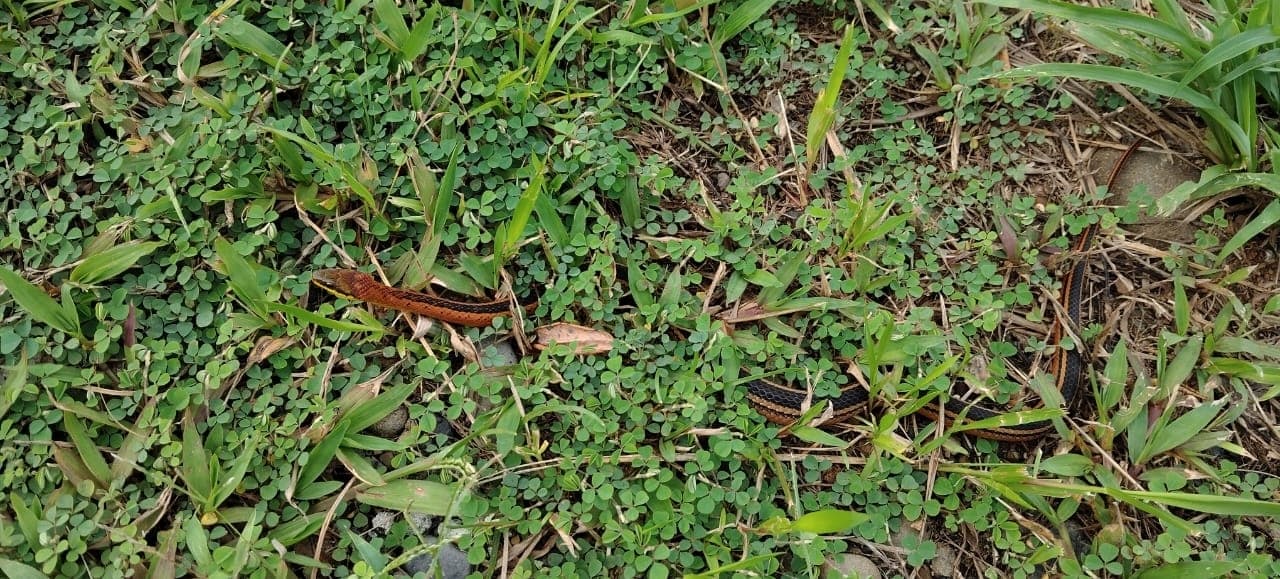
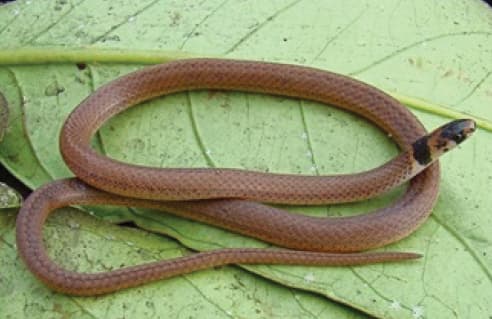
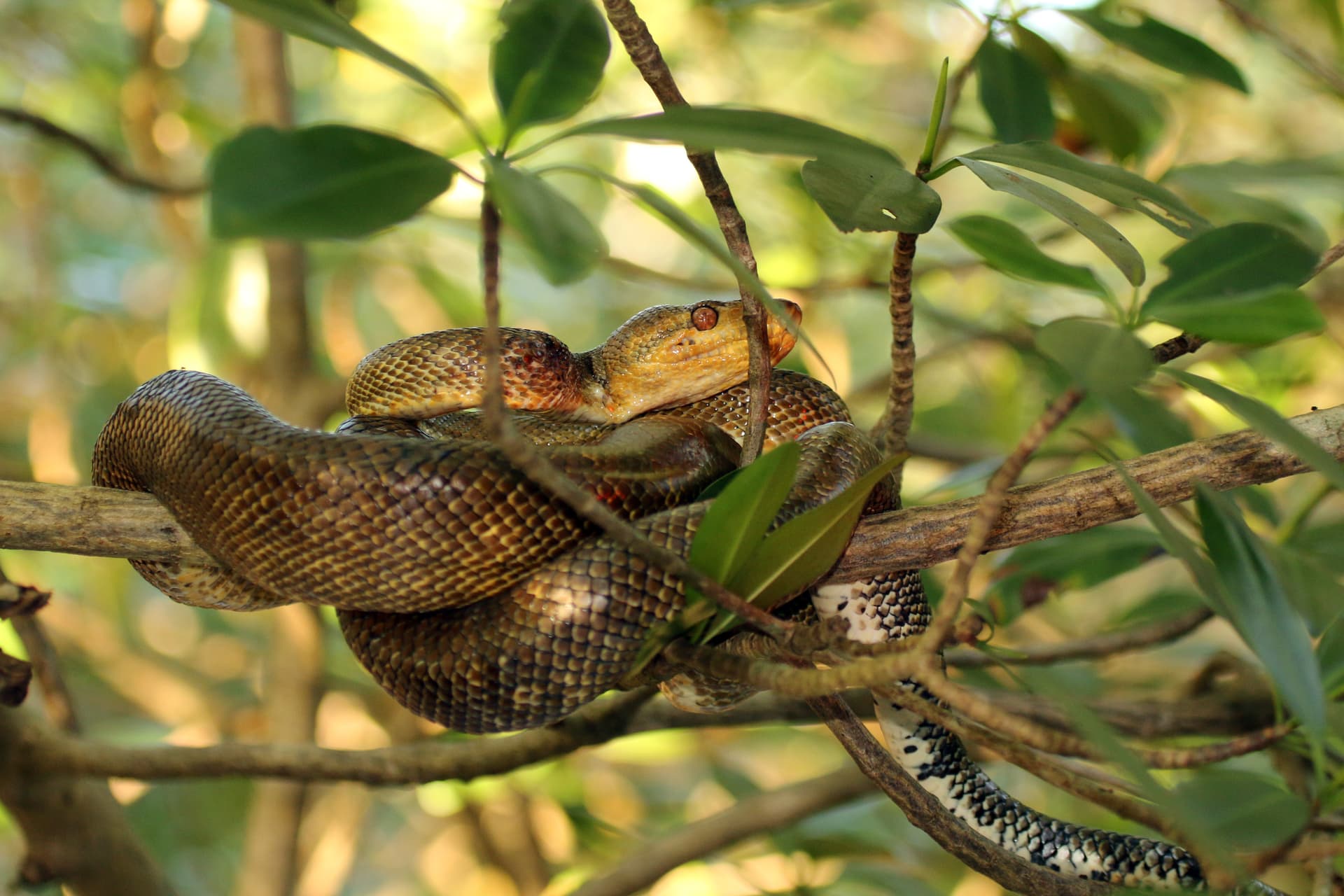
The Fiddle-String Snake, known locally as the Mapepire Corde Violon (mapepire violin string), is one of the most morphologically extreme snakes in T&T.
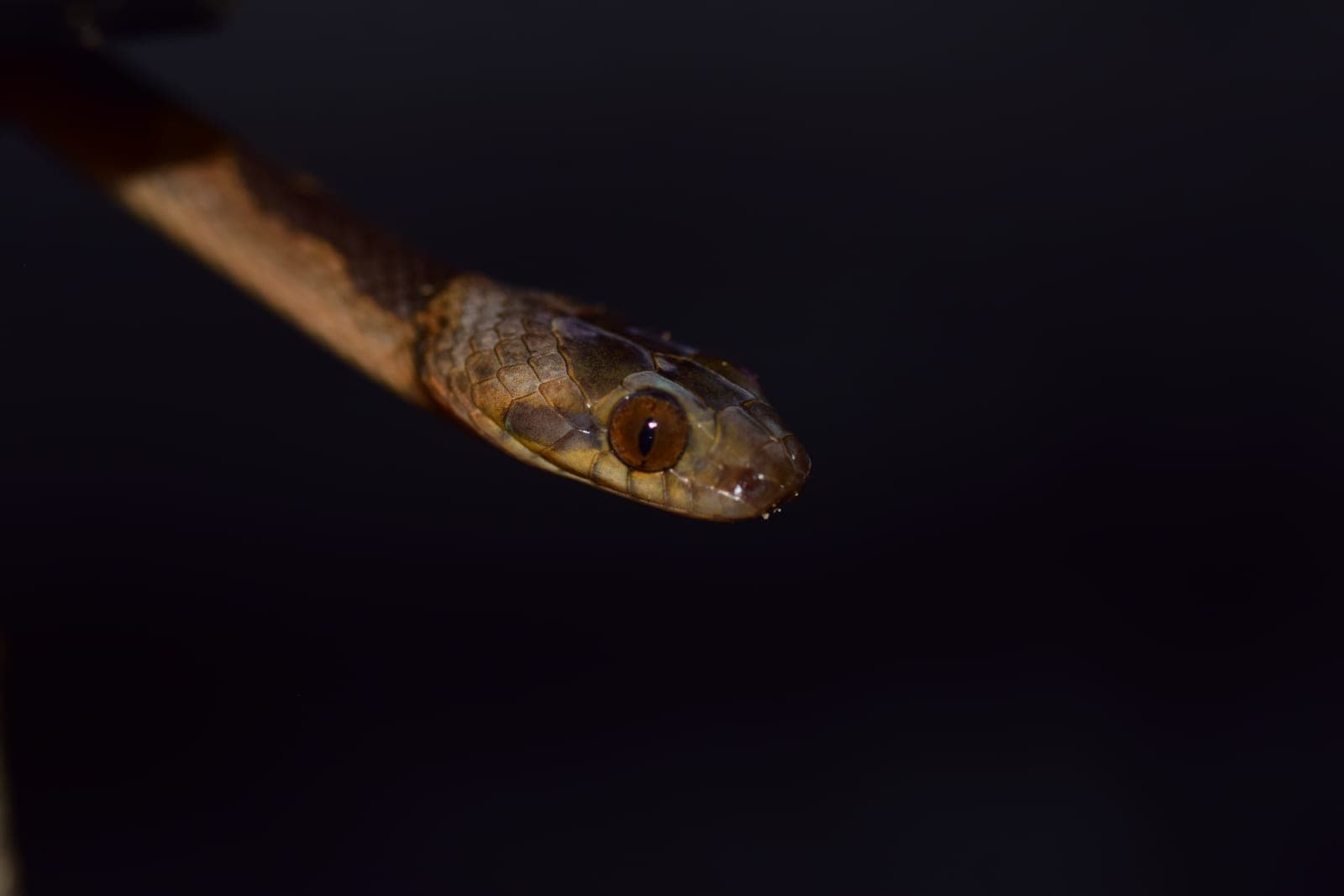
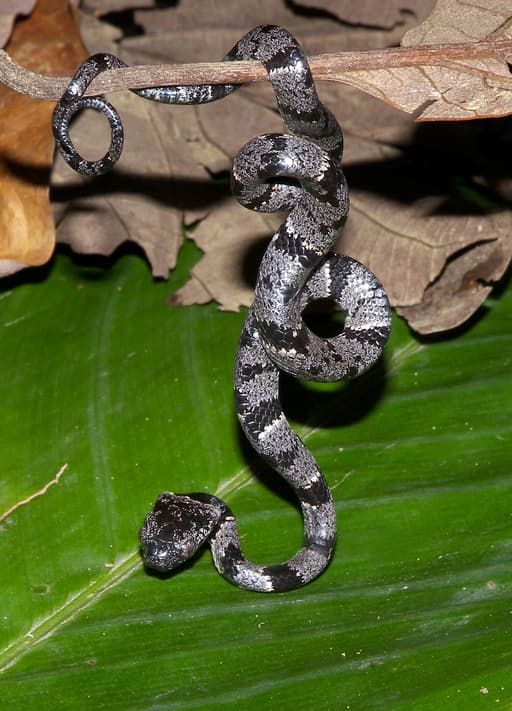
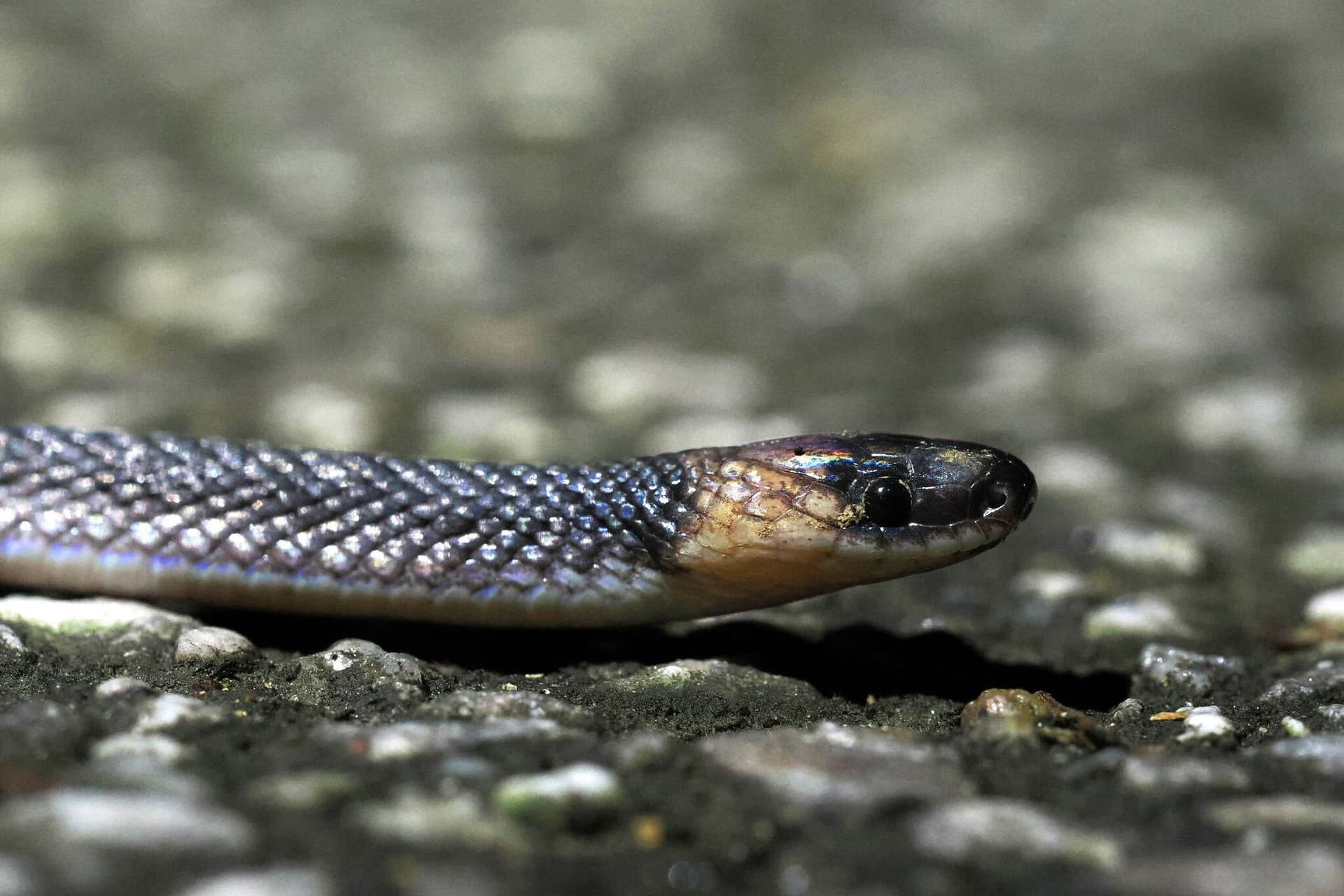
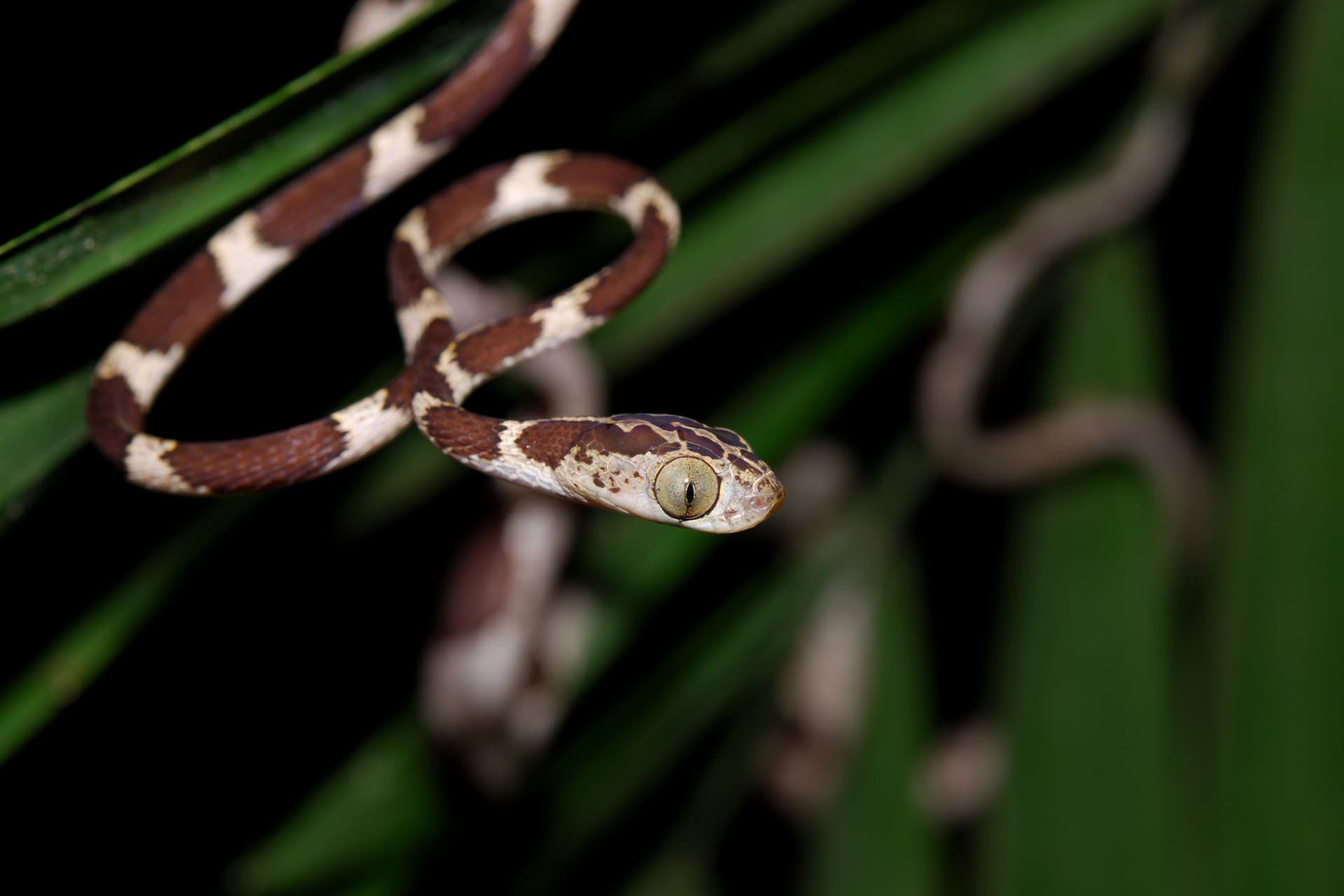
The Fiddle-String Snake, known locally as the Mapepire Corde Violon (mapepire violin string), is one of the most morphologically extreme snakes in T&T. Its extraordinarily narrow body, combined with a disproportionately large, flat head and huge eyes, gives it a profile unlike anything else in the local fauna. Nocturnal and arboreal, it hunts sleeping lizards and frogs in low forest vegetation. Completely harmless to humans.
Description
Imantodes cenchoa cenchoa is one of the slenderest snakes in the world relative to its length: the body can be so narrow that the large, oval, disc-shaped head appears almost absurdly oversized. Adults reach approximately 80 to 100 cm but are so thin and lightweight that they can rest across a single leaf without bending it significantly. The very large eyes are adapted for nocturnal low-light vision. The dorsal pattern is brown or reddish-brown blotching on a pale cream or whitish-tan ground, providing cryptic camouflage against pale bark and dead leaves.
Ecology
The Fiddle-String Snake exploits the nocturnal torpor of its prey. After dark, small lizards on thin branches and the underside of leaves enter a semi-dormant state, making them accessible to a patient, lightweight predator. The extreme slenderness of this snake allows it to extend two-thirds of its body horizontally from a branch, suspended only by the prehensile tail anchored behind, to reach lizards and frogs on otherwise inaccessible perches. This cantilevered hunting posture is one of the most striking behaviours of any snake in T&T.
Conservation
Rear-fanged, the Fiddle-String Snake produces Duvernoy's gland secretions used to immobilise lizard and frog prey, but these are harmless to humans. The "mapepire" in its French Creole name (corde violon = violin string) is somewhat misleading; this is one of several non-venomous snakes in T&T that shares the mapepire label, in this case likely because its nocturnal arboreal habits gave it an unsettling reputation. Found on both Trinidad and Tobago in humid forest understorey. Fully protected under the Conservation of Wildlife Act.
Threats
- Habitat loss and forest fragmentation reducing arboreal understorey
- Persecution due to the mapepire name