Reptile
Reptile
Dos Cocorite
Pseustes poecilonotus polylepis
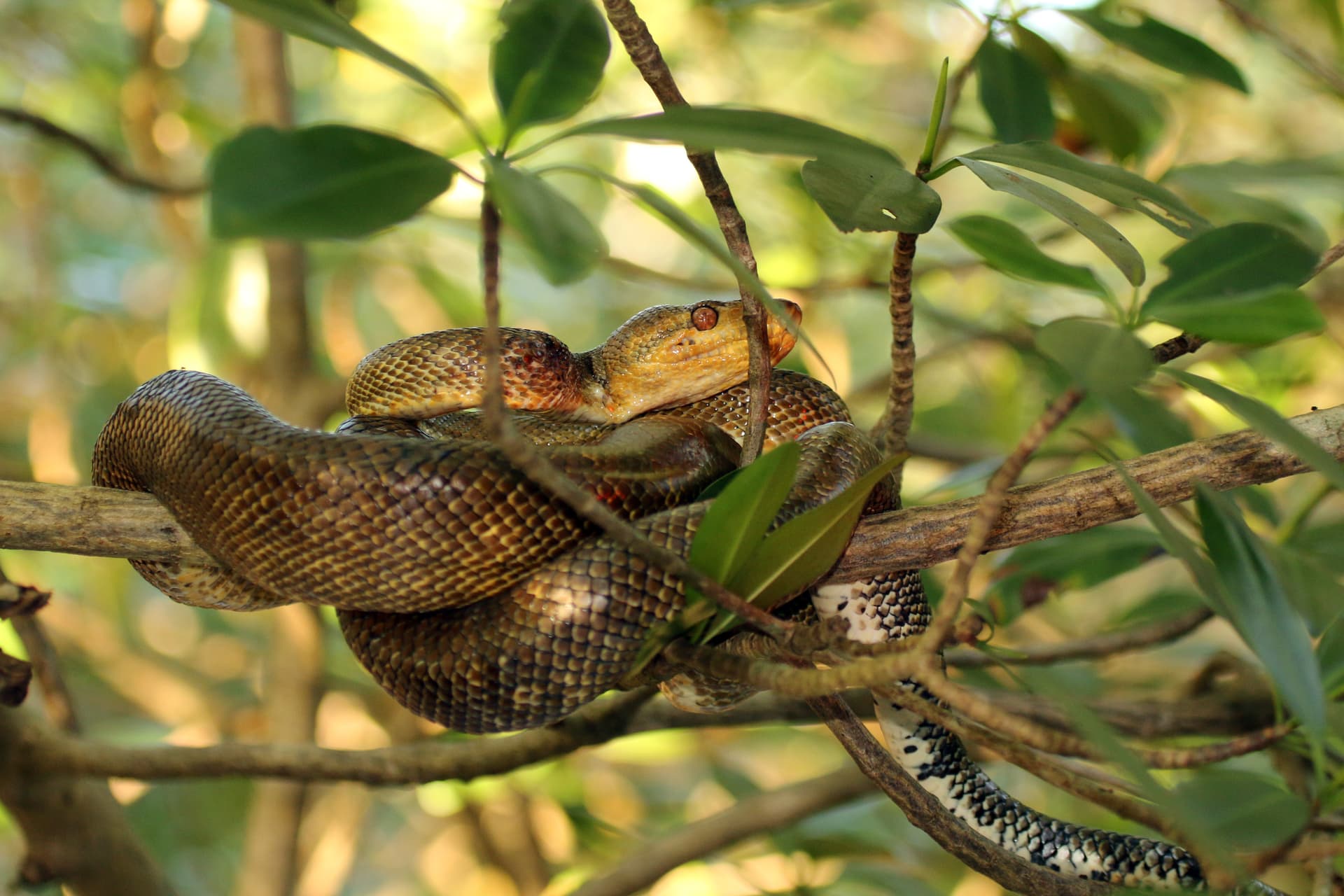
The Dos Cocorite is a large, iridescent arboreal colubrid found in Trinidad.
The Dos Cocorite is a large, iridescent arboreal colubrid found in Trinidad. Its French Creole name refers to the cocorite palm (Bactris minor), in which it is occasionally found. A powerful climber and opportunistic predator of birds, eggs, lizards, and small mammals, it shares with its close relative the Yellow-Belly Puffing Snake the reputation for an alarming defensive display that is entirely harmless.
Description
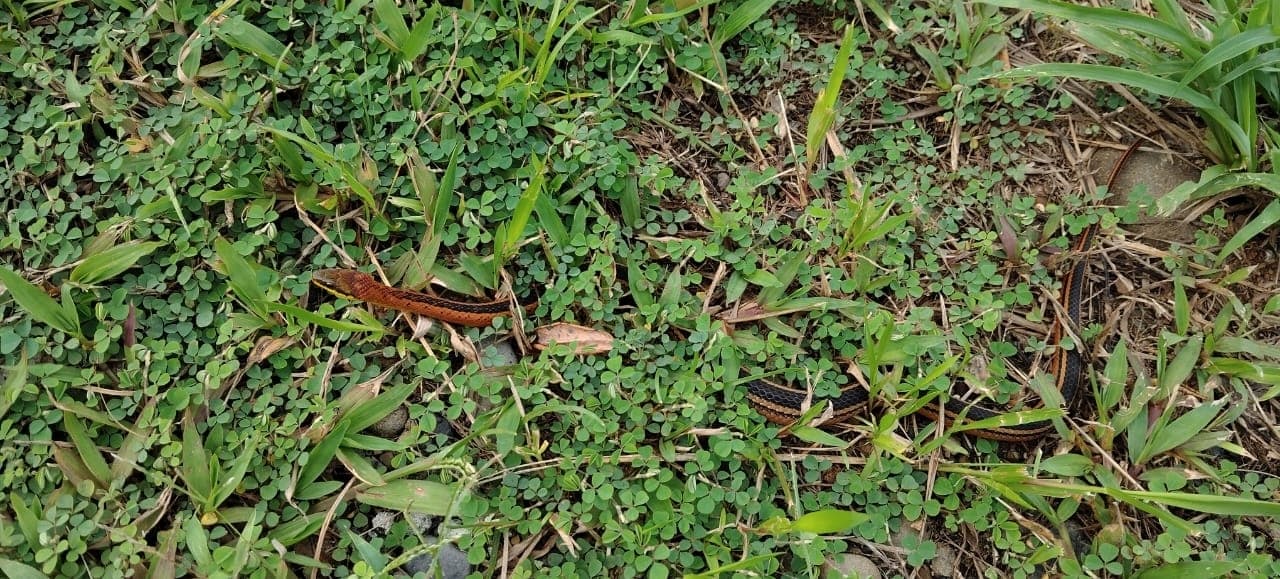
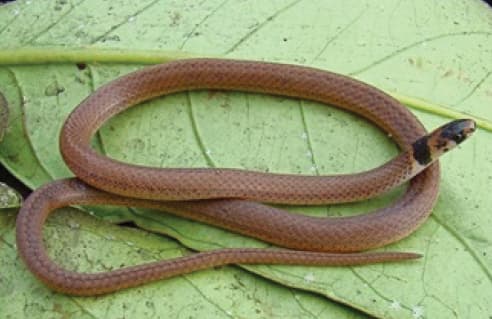
Pseustes poecilonotus polylepis is a large, moderately slender snake reaching up to 2 m or more. The dorsal surface is brownish, greenish, or olive-grey, with each scale often bearing a lighter central area that produces a strongly iridescent, reticulated appearance in sunlight, with blue, green, and bronze shimmering visible in good light. The belly is pale yellow. The head is elongated with large eyes, and the tail is long and tapered. The subspecies polylepis reflects the relatively large number of scales in this population.
Ecology
Primarily arboreal and diurnal, the Dos Cocorite forages through trees and tall secondary growth in search of roosting birds, bird nests, eggs, and chicks, as well as lizards and small mammals. It is a powerful constrictor for its prey size, using rapid strikes and body coiling to subdue birds before swallowing them whole. When threatened on the ground or cornered, it inflates the neck region, vibrates its tail, spreads its neck skin slightly, and strikes. This display is alarming but the bite is not medically significant.
Conservation
Both Pseustes species found in Trinidad (this species and the larger P. sulphureus) are ecologically important nest predators in forest habitats. Their presence regulates bird and small mammal populations in a way that has cascading effects on forest seed dispersal and insect control. Both are fully protected under the Conservation of Wildlife Act. The Dos Cocorite is restricted to Trinidad; no records exist from Tobago.
Threats
- Persecution due to large size and defensive display
- Habitat loss and deforestation reducing arboreal habitat