
Wildlife Sanctuary · Trinidad
Northern Range Game Sanctuary
Game Sanctuary · Conservation of Wildlife Act
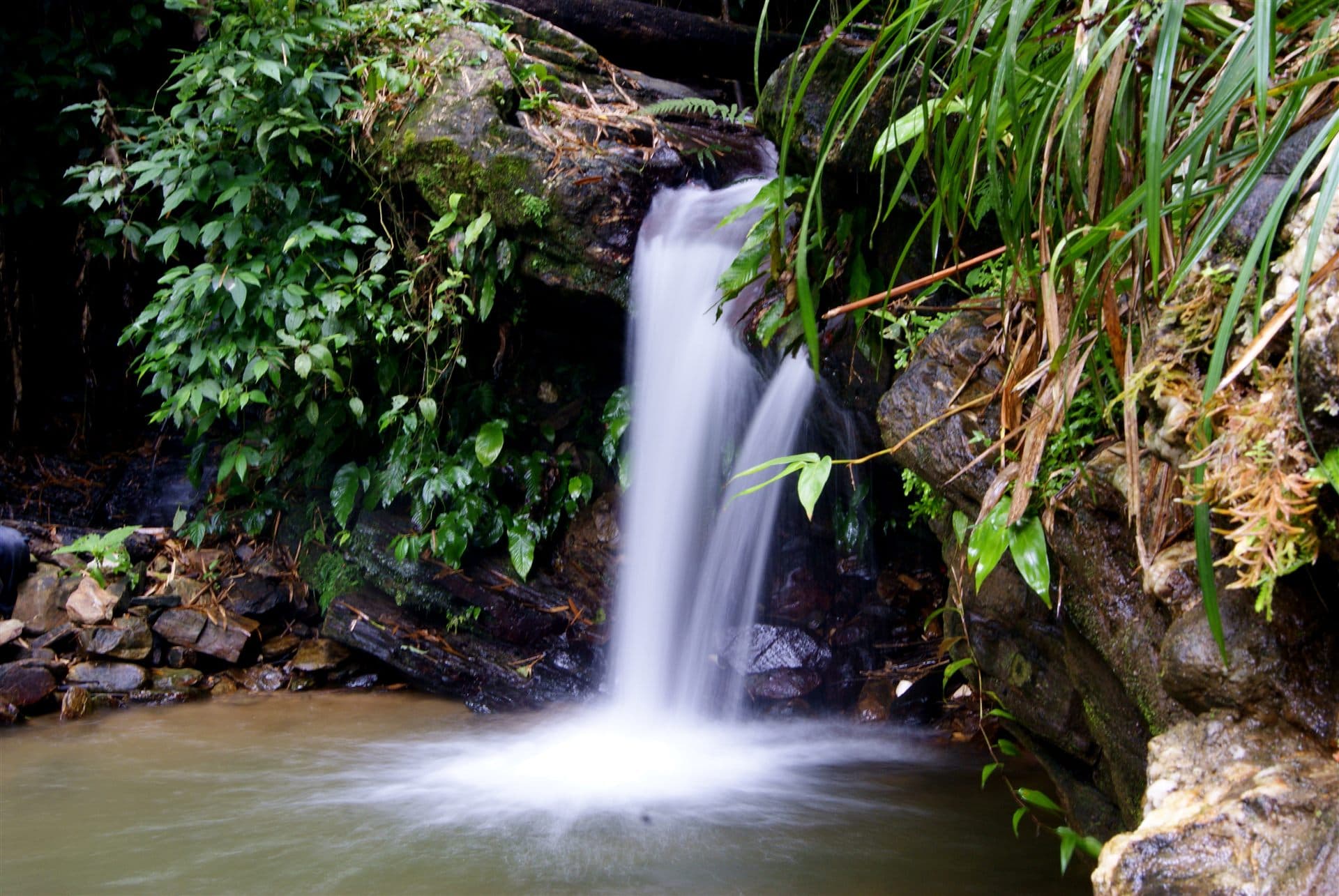
Photo: anaxmedia · Asa Wright Nature Centre, Northern Range, Trinidad (CC BY-SA 2.0)
The Northern Range Game Sanctuary covers the forested mountain spine running east to west across northern Trinidad - from the Chaguaramas peninsula in the west to Toco in the east - protecting one of the most biologically rich areas in the Caribbean and the primary watershed for the island's water supply.
The Northern Range Game Sanctuary covers the forested mountain spine running east to west across northern Trinidad - from the Chaguaramas peninsula in the west to Toco in the east - protecting one of the most biologically rich areas in the Caribbean and the primary watershed for the island's water supply.
Rising to 940 metres at El Cerro del Aripo (Trinidad's highest point) and 936 metres at El Tucuche, the Northern Range supports a vertical sequence of habitats from lowland rainforest and lower montane forest through tropical cloud forest to elfin woodland at the exposed summits. Over 430 bird species have been recorded across the range, including the critically endangered Trinidad Piping Guan (Pawi, Aburria pipile) - now restricted to roughly 150 km² of the eastern range with a population estimated at only 70–200 individuals - as well as the Oilbird, which roosts and breeds colonially in the Aripo Cave system. Mammals include ocelot, red brocket deer, peccary (quenk), howler monkey, capuchin monkey, silky anteater, porcupine, armadillo, and agouti. The summit forests harbour the critically endangered Golden Tree Frog (Phytotriades auratus), which breeds exclusively in a single bromeliad species (Glomeropitcairnia erectiflora) and is confined to Aripo and Tucuche. The Luminous Lizard (Riama shrevei) and the endemic snake Leptophis stimsoni are also restricted to the upper Northern Range. Of 59 endemic plant species recorded for Trinidad, 32 have been collected within the Northern Range.
As Trinidad's water tower, the forests of the Northern Range feed rivers and reservoirs supplying the majority of the island's domestic and industrial water demand. The Game Sanctuary designation under the Conservation of Wildlife Act (Chapter 67:01, First Schedule) prohibits hunting throughout the gazetted area. The Forestry Division has additionally designated portions of the Northern Range Forest Reserve as Prohibited Areas under the Forests Act, requiring permits for access and providing a second layer of regulatory control over the landscape. The Northern Range is also recognised as an Important Bird and Biodiversity Area (IBA TT001) by BirdLife International, covering approximately 36,570 hectares.
Bushfire during the dry season is the most immediate and recurring threat to forest integrity, with denuded slopes slow to recover under repeat fire cycles. Squatting settlements - particularly on the steep western foothills - have caused significant forest loss and contribute to erosion and watershed degradation. Quarrying for limestone, sand, and fill material causes direct habitat destruction and is a persistent enforcement challenge. Illegal hunting, including targeted pressure on the already depleted Pawi population, continues despite sanctuary status. Climate change is projected to intensify dry-season drought and increase fire frequency, compounding existing pressures on both the forest ecosystem and the freshwater catchments it sustains.
Why This Matters
The Northern Range is Trinidad's water tower. Stretching east to west across the northern spine of the island, its forested mountain system intercepts rainfall from the northeast trade winds and releases it slowly into the rivers, reservoirs, and aquifers that supply drinking water to a large proportion of the island's population. The Arena, Caroni, Arouca, Maracas, and Ortoire river systems all begin in these forested slopes. Without intact forest to regulate that water cycle, the downstream communities that depend on it face floods, droughts, and degraded water quality. Protecting the Northern Range Game Sanctuary is, in the most direct possible sense, protecting the water supply of a nation.
The biological richness of this mountain system is also without parallel in T&T. Over 430 bird species have been recorded across the range; 32 of Trinidad's 59 endemic plant species grow here; the Golden Tree Frog, found nowhere else on Earth, lives only on the two highest summits. The Oilbird colonies in the Aripo Caves, the ocelots that patrol the forest at night, the howler monkeys calling at dawn, the Pawi whose entire global range fits within roughly 150 square kilometres of the eastern Northern Range: all of these are the products of a forest system that has been largely intact for thousands of years. That intactness is fragile.
It is worth reflecting on what Trinidad would lose if the Northern Range forests were degraded beyond recovery. Not just biodiversity statistics; not just scenic value. The water security of the island, the climate regulation of the north, the existence of species found nowhere else on Earth. The Northern Range Game Sanctuary exists to prevent that outcome. The laws that protect it are strong. The question is whether they are applied with the seriousness that the stakes demand.
Legal Protections
This sanctuary is gazetted under the Conservation of Wildlife Act. Hunting, trapping, and disturbance of wildlife within its boundaries is a criminal offence. Penalties include fines and imprisonment. If you witness illegal activity within this sanctuary, report it immediately.
Report a ViolationCurrent Threats
- Bushfire and fire-savannah formation
- Hillside squatting and informal settlement
- Quarrying (limestone, sand, fill material)
- Illegal hunting (including pressure on Pawi)
- Watershed degradation from deforestation
- Climate change - intensified dry-season drought and increased fire frequency
Primary Sources & Legal Citations
- Conservation of Wild Life Act, Chap. 67:01 · First Schedule, Item 1
- Forests (Prohibited Areas) Order, Chap. 66:01 · Subsection (10)[GN 155/1989 (effective 27 September 1989)]
- BirdLife International Important Bird & Biodiversity Area · IBA TT001: Northern Range[Approx. 36,570 ha]
Location
Northern Range Game Sanctuary is centred at approximately 10.730° N, 61.280° W.
Related Protected Areas
Morne L'Enfer Game Sanctuary
Game Sanctuary · Conservation of Wildlife Act
Trinity Hills Game Sanctuary
Game Sanctuary · Conservation of Wildlife Act
Valencia Game Sanctuary
Game Sanctuary · Conservation of Wildlife Act
Central Range Game Sanctuary
Game Sanctuary · Conservation of Wildlife Act
Southern Watershed Game Sanctuary
Game Sanctuary · Conservation of Wildlife Act
Bush Bush Wild Life Sanctuary
Game Sanctuary · Conservation of Wildlife Act